



“Most of my clients that were newcomers didn’t have any idea what was happening or where to go.”
Many Northwest Territories residents know how the panic and confusion of evacuation felt this summer. But immigration consultant Arun Singh says the experience was impossible to navigate for some people who only just got here.
“Communication was the issue,” said Singh, of ECEN Immigration, at a Yellowknife gathering this month where new arrivals talked about challenges they faced during August’s evacuation. The evacuation, triggered by nearby wildfires, lasted for three weeks.
Singh, who evacuated to Calgary with his family, said newcomers arriving at evacuation centres needed to provide identification as proof of their NWT residency. But evacuating so soon after landing in Yellowknife in the first place allowed them little time to assemble the right documentation.
“You arrive to a totally new city where you have never been before. You’re with your family and have limited funds. You wouldn’t know what’s going to happen or how you’re going to manage,” he said.
Advertisement.
Advertisement.
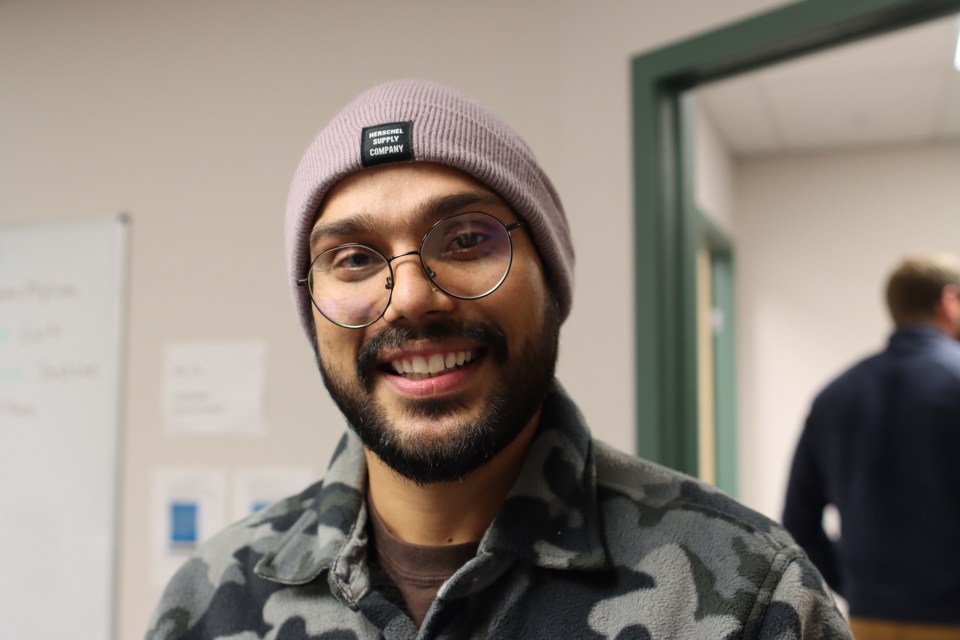
Singh said three clients who had received work permits and immigrated to Yellowknife never came back after evacuating. One is now staying in Manitoba and the other two are in British Columbia.
He feels the process would have been smoother for newcomers if there was one place for everyone to receive all the crucial information they needed.
Scott Robertson, a registered nurse and healthcare consultant, also attended the November 15 meeting at the NWT Intercultural Centre, an immigration support agency based in Yellowknife’s Diamond Plaza building.
“I heard some of the challenges in the meeting, and the one that came out the loudest was the need for clear communication,” he agreed.
Advertisement.
Advertisement.
During the evacuation, Robertson said, he was responsible for providing technical and operational expertise to help plan and execute the evacuation of patients and healthcare staff.
“The need to have clear, consistent and frequent messaging is important. Yellowknife has not seen an evacuation on this scale before,” he said.
“In any complex situation where I have been involved in the past, it can be challenging because the information changes so rapidly.”
Robertson used the Covid-19 pandemic as an example: when a new vaccine came out, it was important for front-line workers to learn about the dosage, government officials needed to learn about the costs involved, and patients had to be informed about safety steps.
“These are all very good messages that needed to be created for different audiences. That’s the same during an evacuation. Different people have different needs,” he said.
Robertson said it can be difficult to create resources for people who don’t have English as their first language. In the world of healthcare, he said, it can happen that by the time you send information “to someone who can read it, translate it and send it back to you, the information has changed.”

Emphasizing the importance of connections in the city during a crisis, he said even a “small emergency” for a newcomer without those connections is really a big emergency.
“Finding information about what you need and where to go can be a really hard thing,” he said. “Who can you reach out to in those situations?”
Advertisement.
Advertisement.
This month’s meeting was organized by Malini Sengupta and Alex Kovacevic to celebrate National Francophone Immigration Week. The two have jobs attracting and retaining newcomers to Yellowknife through a federal settlement program, helping immigrants and refugees to “overcome barriers specific to the newcomer experience.”
“We knew this activity needed to be done. During francophone week, we wanted to do an activity together. We noticed there was no activity like this after evacuation,” Sengupta said.
“We felt that from the get-go, being in the settlement service, post-evacuation we sadly had immigrants who faced [unique] challenges.”
Kovacevic said their jobs focus on looking into gaps newcomers face when they first step into the city.
“A lot of people said the information was not clear enough,” he added.
Wildfires aren’t the only challenge
International migration to the Northwest Territories has been steadily increasing since 2021.
According to NWT Bureau of Statistics reports, the territory had a net gain of 303 residents through people moving from other countries in the first half of this year. It’s too soon to know if the summer wildfire crisis had any impact on immigration later in the year.
But the story within Canada is different. Generally speaking, the NWT loses more people to southern provinces than it gains from them each month. (The most recent period reported, April to June 2023, was an exception – 759 people arrived while 688 left for somewhere else in Canada, a net gain of 71 people.)
Advertisement.
Advertisement.
For people who just got here, no matter where they came from, the evacuation isn’t the only issue.
Andrea Donaldson, who moved to the city from Calgary shortly after the evacuation in October, said she was “alarmed” by the high cost of rent.
Donaldson said the evacuation may have helped to make newcomers “easy targets” in their hunt for accommodation, which was already hard to find. She also found private parking fees to be “ridiculously high.”
“In Canada, housing is a crisis. It’s not just in Yellowknife. But when somebody was willing to rent me one bedroom for $2,500 with shared facilities, that was a bit alarming for me – and it pushed me to the point of thinking that these are just price gouges,” she said.
Besides social media, where locals sometimes extend a helping hand, she said newcomers to the city like her can be left to fend for themselves.
Donaldson hopes those in charge, including the NWT’s newly elected MLAs, work to ensure newcomers are given adequate assistance when they move to the territory.
“We know the NWT has the capacity to go down to -50C. Who can survive outside in the cold?” She asked.
“We need to be in a committed relationship with everybody that came. We’re inviting people into our home. What do we have to offer?”
