



Yellowknife’s animal shelter had more than 50 bales of straw waiting to keep dogs warm in some of the world’s coldest temperatures. The problem? The straw was hundreds of kilometres away.
Extreme cold warnings have been in place across most of the Northwest Territories for a week or more. In Yellowknife, the temperature dipped to -41C on Wednesday.
The weekend prior, the NWT SPCA shelter had appealed on Facebook for anyone who could make the trip to Hay River and pick up the bales for its outdoor dog houses.
Scott Yuill, of Harley’s Hardrock Saloon, answered that call, volunteering to take his trailer down with a crew of three: Kevin Trider, Keegan Tuccaro and Liam Wong.
The highway between Hay River and Yellowknife was exceptionally icy – at least one accident was reported to RCMP – and Yuill found that a challenge, but said he’d do it again “in a heartbeat.”
Advertisement.
Advertisement.
His business, he said, organizes fundraising events for the SPCA throughout the year and had recently finished removing snow from the shelter’s yard.
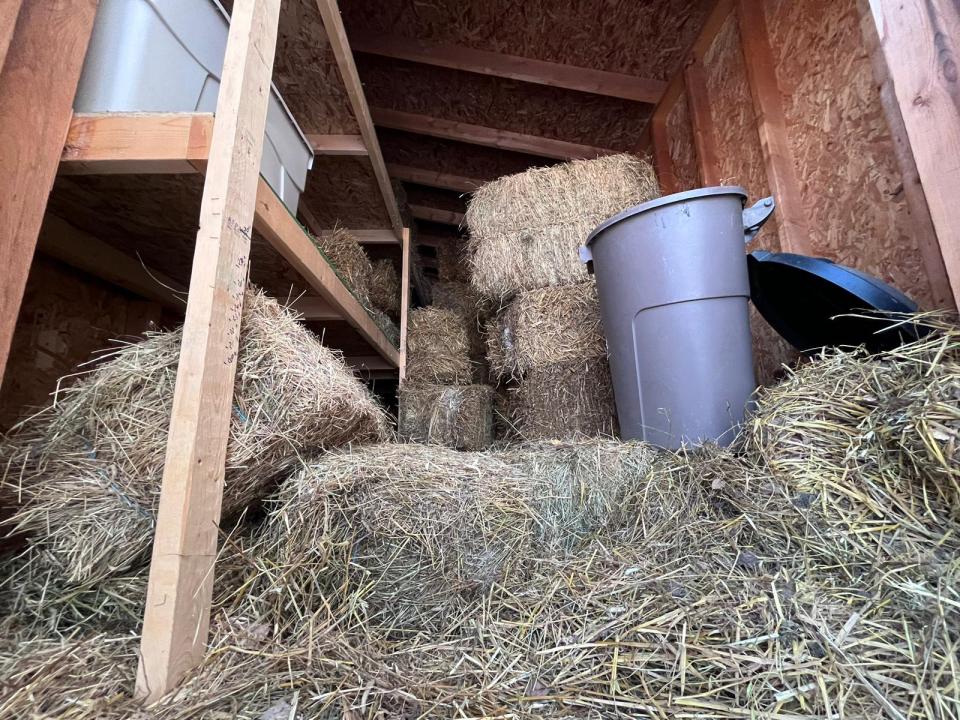
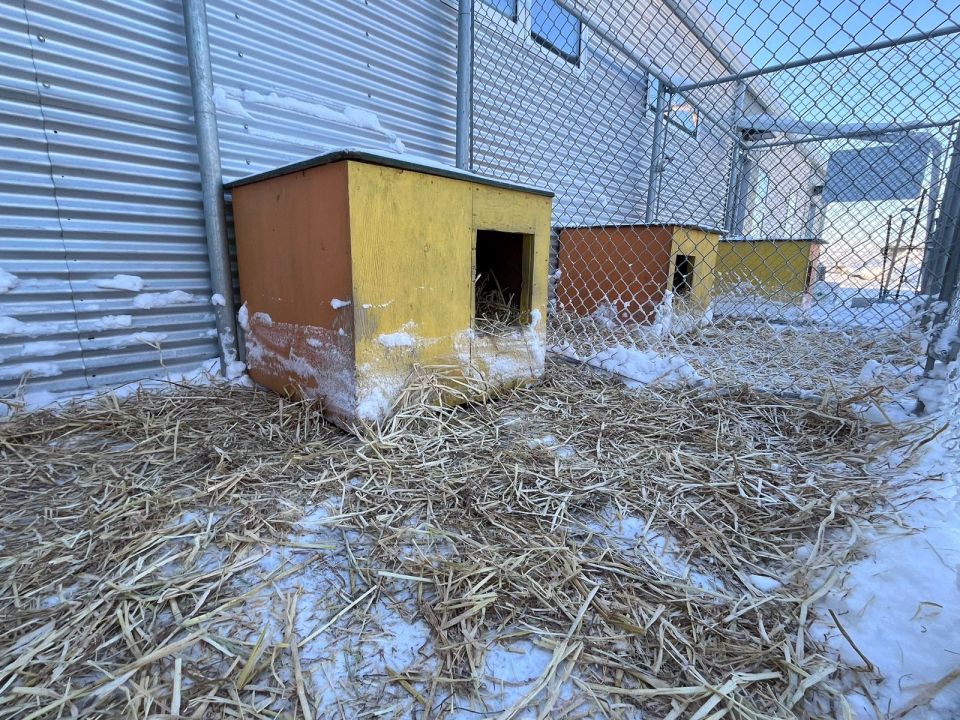
Yellowknife resident Tia Hanna purchased the straw bales on New Year’s Day to support animals at the shelter. She’s also working to help dogs in Tłı̨chǫ communities through a Facebook group named the Tłı̨chǫ Animal Care Group, which she started in October with Dana Mackenzie and Amy Maund.
Hanna says the group hopes, in the long term, to find funding to help the community government in Behchokǫ̀ build an animal shelter.
For now, the group is seeking land to set up insulated dog houses.
Advertisement.
Advertisement.
“We’ve been hearing a lot of people who don’t have straw. I just see a lot of inadequate housing for dogs,” she said.
“I notice a lot of the houses are not really built for northern climates. They are more like rain shelters … the snow gets in them.”
Shelter demand isn’t easing
Nicole Spencer at the SPCA says a summer full of wildfires has made straw a hot commodity in Alberta. One bale of straw can fill four to five dog houses, she said, depending on how big the bale is.
While straw is a big help to dogs that live outdoors, in this week’s weather, Spencer said the shelter is trying to keep as many dogs as possible indoors.
“When we ask for help, a lot of people and a lot of businesses step up. We’re very fortunate for that,” Spencer said.
“This straw will go a long way to helping dogs stay warm, especially in this very cold weather.”
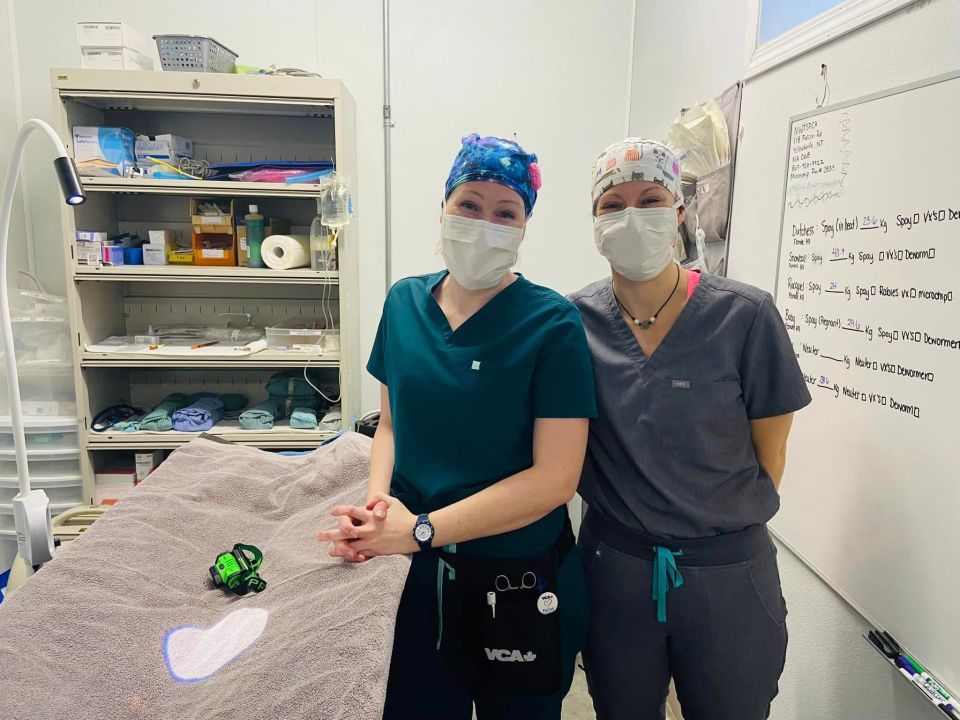
Now stocked up on straw, the SPCA held a spay-neuter clinic this week involving Dr Kellie Haggett and Jordan Reid, who came from Nova Scotia to treat dogs and cats at the shelter and from nearby communities.
As of Wednesday afternoon, the two said they had completed 20 surgeries. They expected to take care of up to 45 animals during the six-day clinic.
Advertisement.
Advertisement.
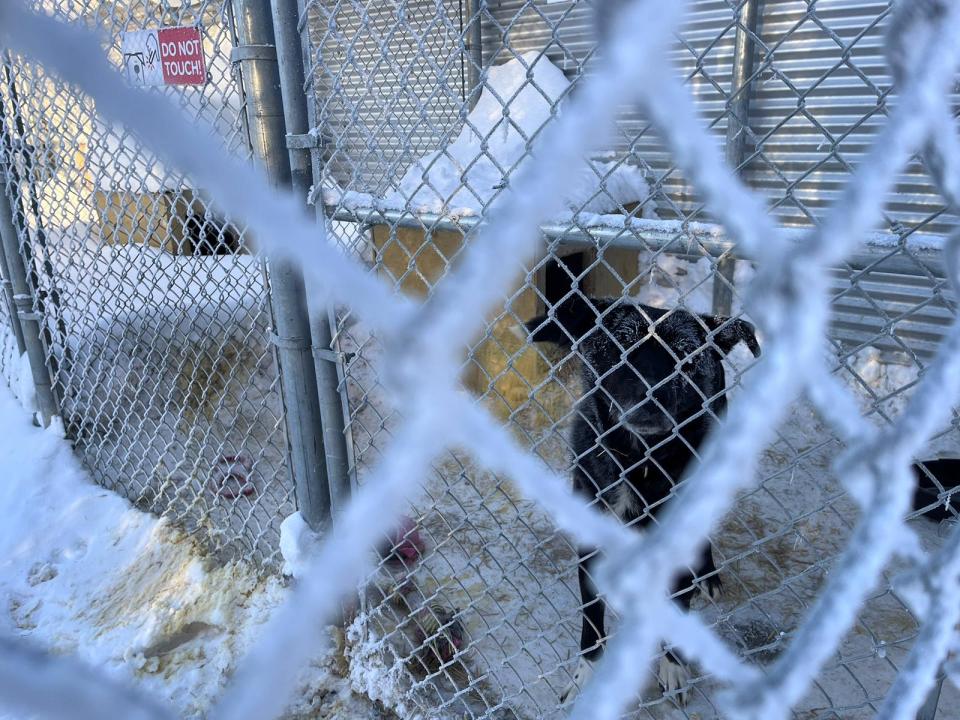
The number of dogs needing homes in the NWT remains high, despite efforts to spay or neuter as many as possible.
While dozens of dogs and cats were moved south during this summer’s evacuations, and some didn’t return, Spencer said the SPCA was still overwhelmed with fresh requests to take in dogs within weeks of evacuation orders ending – and the situation hasn’t improved.
“We have dogs waiting to come in. We have puppies waiting to come in from the communities. It’s exactly the same as it was months ago. We don’t anticipate it getting much better,” she said.
“It doesn’t take very long for the population of dogs in communities to get out of control.”
In Behchokǫ̀, Chief Clifford Daniels said that means dog attacks are an ongoing issue that needs to be addressed.
Chief Daniels says his community government has been discussing possible solutions to the problem.
“Some of our citizens, they fear just walking around the community at times,” he said. “We need to have responsible owners out there. I think it’s more education.”
