


The federal government says new investments in Canada’s national defence will improve Arctic security and benefit northern residents.
Federal defence minister Bill Blair released a long-awaited defence policy update on Monday, detailing $8 billion in new defence spending over the next five years and nearly $73 billion over the next 20 years.
The policy update – titled Our North, Strong and Free – promises to assert Canada’s sovereignty in the Arctic and increase the Canadian Armed Forces presence in the region, while prioritizing reconciliation by consulting Indigenous people.
The update includes a commitment to build infrastructure that can be shared between the armed forces, territorial governments and northern communities where possible.
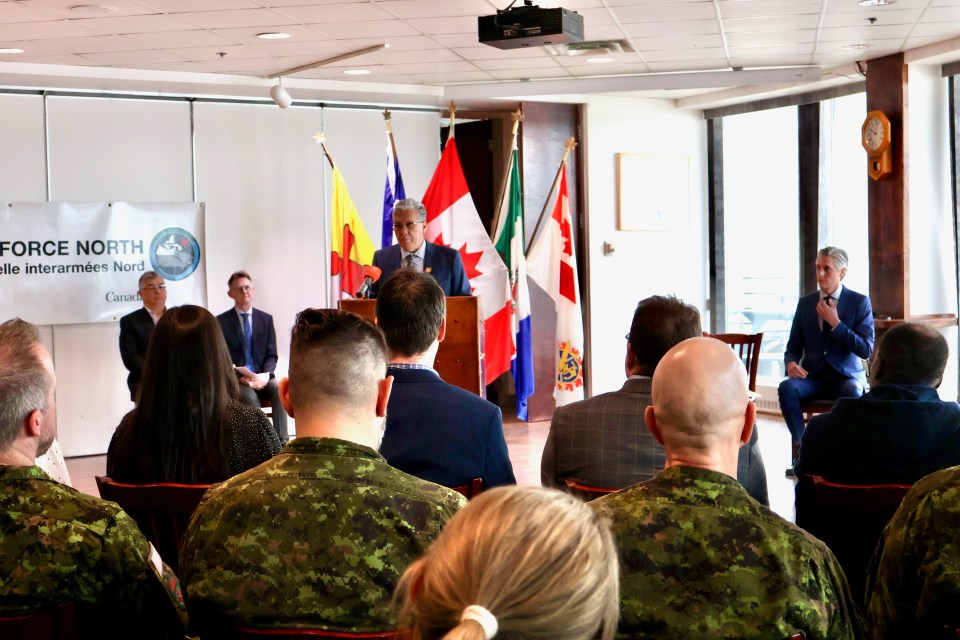
“As we proceed with all of these investments, northerners will be at the heart of our work,” northern affairs minister Dan Vandal said during a Monday visit to the Yellowknife headquarters of Joint Task Force North, or JTFN.
Advertisement.
Advertisement.
“We will engage Indigenous peoples and northern communities with respect and real partnership, in line with the principle of ‘nothing for us without us.’
“These investments will keep Canada safe, but they will also create economic opportunities for Indigenous peoples and northern communities and support good middle-class jobs.”
What’s in it for the North?
Northern-specific commitments in the update include $218 million in spending over 20 years on a network of northern operational support hubs, consisting of airstrips, logistical facilities and equipment, as well as stockpiles of materials.
Vandal said consultations with communities will help inform where those hubs are located.
Advertisement.
Advertisement.
The policy update also promises to establish a satellite ground station in the High Arctic.
The federal minister said other new investments will enhance Canada’s ability to detect and respond to threats in the Arctic, including a new fleet of early-warning aircraft, tactical helicopters and specialized maritime sensors.
He said the federal government is looking into all-terrain vehicles adapted for ice, snow and tundra, and the acquisition of submarines that can operate under the ice.
Accompanying Vandal in the JTFN visit, NWT Premier RJ Simpson said he was hopeful the new federal investments will help to address the North’s infrastructure gap in a climate-resilient way.
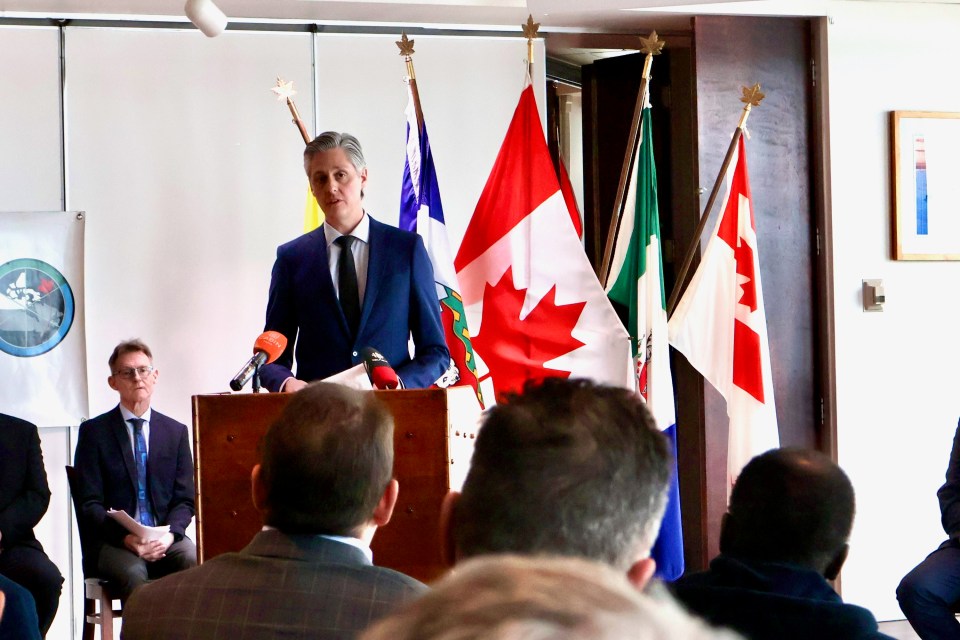
“This collaboration will be essential as we navigate the impacts of climate change in the North. Our temperatures are rising up to four times the global average,” he said. “This disproportionate impact has observable and devastating effects on our regions, including more and more intense and frequent floods, fires and drought.”
Simpson said he looked forward to discussing with the federal and Indigenous governments how the new funding will support NWT communities.
The broader update
The policy update highlighted how climate change in the Arctic is making the region more accessible, including the opening of new shipping routes. Meanwhile, Ottawa said the Canadian Armed Forces are increasingly relied on to assist in domestic emergencies. The update also raised concerns about challenges to global stability and new and disruptive technologies.
Other commitments in the policy include defence procurement reform, more regular policy reviews, and improvements to recruitment and retention to address an “unsustainable” gap in the military labour force.
Advertisement.
Advertisement.
The federal government said the new spending will bring it closer to the Nato defence spending target of two percent of each contributing nation’s GDP.
Ottawa projects defence spending will reach 1.76 percent of Canada’s GDP by 2029-30 and exceed a Nato target that 20 percent of defence spending should be directed toward equipment.
Pledged spending in the policy update between 2024-25 and 2043-44 is as follows:
- Tactical helicopters – $18.4 billion
- Sustaining naval vessels – $9.9 billion
- Ammunition supply and production – $9.5 billion
- Sustaining military equipment – $9 billion
- Worldwide satellite communication – $5.5 billion
- Intelligence and cyber operations – $2.8 billion
- Long-range missile capability – $2.7 billion
- Civilian capacity – $1.8 billion
- Maritime sensors – $1.4 billion
- Electronic health platform for military personnel – $497 million
- Airborne early-warning aircraft – $307 million
- Satellite ground station – $222 million
- Northern operational support hubs – $218 million
- Nato Innovation Fund – $107 million
- Improving childcare for armed forces personnel – $100 million
