


Advertisement.
Residents in Fort Providence say a new energy project will provide jobs for youth, increase awareness of renewable energy and could lead to further benefits.
A study of the Mackenzie River’s potential to generate energy using an in-stream turbine has received federal funding, Big River Service Centre LP announced last week.
The company, primarily owned by the Fort Providence Métis Council, aims to become the first in the Northwest Territories to achieve zero-carbon status using hydrokinetic technology.
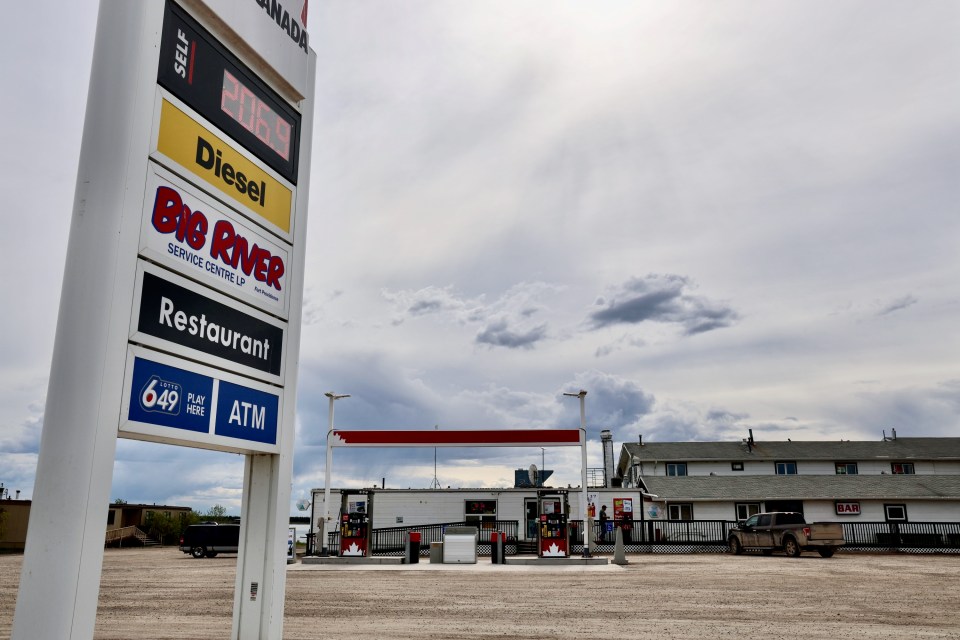
“We all know power is not cheap,” said Linda Croft, Big River’s general manager. The company is currently best-known for its gas station along Highway 3 between Yellowknife and the south.
Advertisement.
Advertisement.
If Fort Providence can “get rid of the diesel, get rid of the emissions and that sort of thing and rely on what the Creator gave us for zero [emissions], that’s just phenomenal,” Croft said.
Big River said it spends nearly $200,000 a year on electricity generated from diesel or propane.
Croft said she feels “pride and excitement” about being involved in the renewable energy initiative.
The project will be led by the Canadian Hydrological Turbine Testing Centre, a non-profit research institute associated with the University of Manitoba.
Advertisement.
Advertisement.
Jason Collard, chief executive officer of Gonezu Energy – an Indigenous-owned renewable energy company based in Fort Providence – said a researcher from the university will come to the NWT this summer to measure flow rates on the Mackenzie River near Fort Providence, Jean Marie River, Fort Simpson and Wrigley.
Collard said the goal of the study is to determine if hydrokinetic turbines placed in the water can generate enough power to displace diesel-generated electricity.
Researchers will also study the potential of establishing a micro-grid in Fort Providence.
Four positions are open for youth interns from the community to be involved in the project. They will receive training, work with researchers, and travel to Winnipeg to see a turbine in action.
Croft said that’s “huge” for the hamlet, where there are limited job opportunities.
“This is a big thing, to provide local youth the opportunity to take part in something that could possibly change their lives,” she said.
Rogan Youngpine, an electrical apprentice at Gonezu, said youth are leaders in reducing reliance on the fossil fuels that produce greenhouse gas emissions.
“They are the ones that are going to have to deal with the consequences if we don’t,” he said.
Advertisement.
Advertisement.
Gonezu held an information session on the project at Fort Providence’s community hall on Wednesday last week. More than 30 people came to learn about the initiative and share their thoughts.
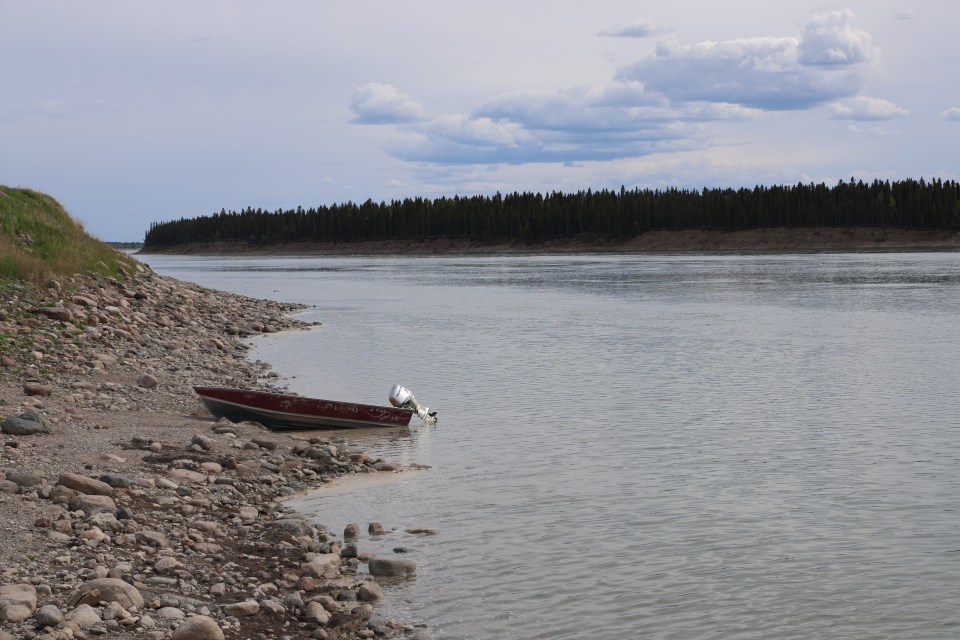
Collard explained that hydrokinetic technologies produce renewable energy by harvesting the kinetic energy of water, or the energy that results from its motion. He said the technology is in its early stages but has been successfully installed in Manitoba and Alaska.
There are 11 communities across the territory where similar technology may be used, he said.
Residents were offered a $100 gift card to complete a traditional knowledge survey that asked about trends on the Mackenzie River.
Youngpine said it’s important to get community feedback for the project.
“They have the most experience on the river, first-hand knowledge,” he said. “You can do a bunch of studies and not know much, and when we get information from the public, they just have the best experience.”
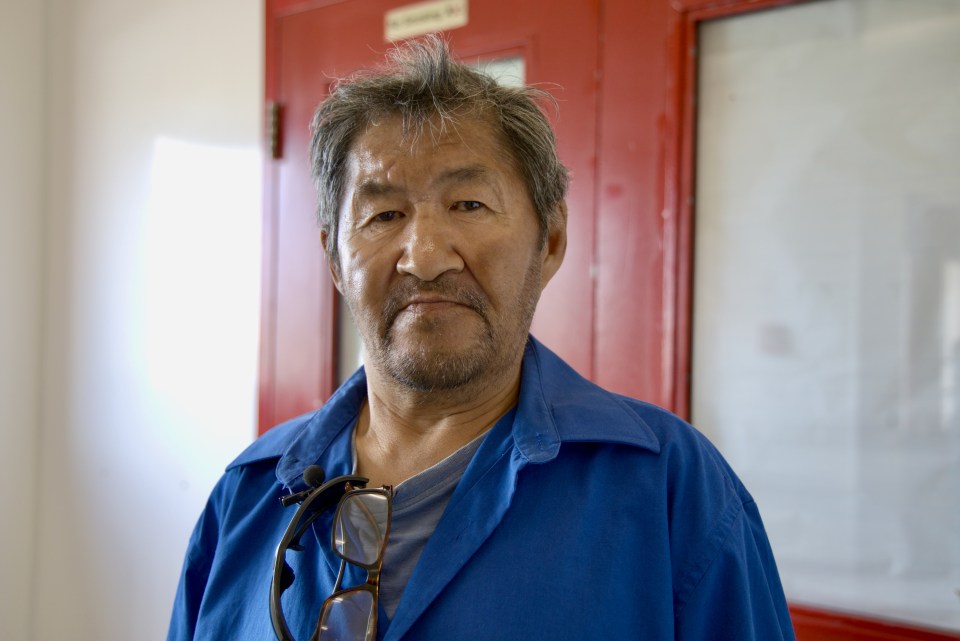
Elder Lucas Elleze was among those sharing that knowledge. He said this is the lowest he’s ever seen the water.
“I’ve been up the river all my life,” he said. “It was good. Lots of water and lots of fish, it was nice. Now you can’t do nothing, you can’t set nets now.”
Advertisement.
Advertisement.
Bradley Thom, a Deh Gáh Got’îê First Nation councillor, has also noticed changes to the ice thickness and how the water freezes in the winter. He said his dad used to help build the ice bridge across the river before the Deh Cho Bridge opened in 2012.
“I remember he would say in the middle of November that they would be open for lighter traffic. But now, when it comes to Halloween, there’s no snow on the ground,” Thom said.
“The changes that have happened over the last 30 or 40 years are quite large, and we’re definitely lucky to have the Deh Cho Bridge built when we did, because it was kind-of around that time when it seems the ice thickness was not as thick as it used to be.”
Richard Lafferty is a commercial diver who lives in Fort Providence and whose family has long been involved in shipping and barging. He said he’s supportive of the hydrokinetic energy project.
“I think it’s a great idea. I think it’s long overdue,” he said.
Lafferty said it’s important for communities to look at renewable energy sources as the North is affected by climate change.
“We’re seeing it first-hand and in real time,” he said. “It’s best that we take any action we can to use the existing resources rather than non-renewable resources.”
If the study determines the project is viable, the next step will be applying for funding for a demonstration project.
Advertisement.
Advertisement.
The project aims to ultimately feed power into Fort Providence’s energy grid.
If there is any surplus power, the people behind the project say that power could be used in an electric vehicle charging station.
Correction – June 4, 8:24 MT. Because of an editing error, this article initially stated the Big River gas station is on Highway 1. It isn’t, it’s on Highway 3.
