



The latest report on the state of the NWT’s education system indicates some improvements as well as persistent gaps.
The GNWT’s 2022-23 report on its junior kindergarten to Grade 12 system was released earlier this week.
The report found year-on-year increases in high school enrolment, the number of educators, enrolment in Indigenous-language programs, the six-year high school graduation rate, and enrolment in junior kindergarten and kindergarten.
But school attendance rates are trending downward and gaps remain between the graduation rates of Indigenous and non-Indigenous students, as well as between those of students in Yellowknife and small communities.
The report recommended more support for students’ well-being through the middle grades and more focus on mathematics and science.
Advertisement.
Advertisement.
Education minister Caitlin Cleveland said the GNWT “will continue to collaborate with education bodies, communities, families, and Indigenous governments to address the gaps identified in this annual report, and support NWT students as they learn and grow.”
Cleveland said adoption of a new BC-based curriculum and a pilot program for school support assistants showed how the territorial government is working to improve the education system.
Among NWT children aged four to five years old, 94 percent enrolled in junior kindergarten and kindergarten in 2022-23, a four-percent increase from the previous year. Of those who attended junior kindergarten, 38 percent were developmentally “on track” by kindergarten, compared to 32 percent of children who did not attend. The report said that difference “is not large” but suggested participation in early learning programs is beneficial.
Overall school attendance across the NWT was 73.3 percent in 2022-23, meaning on average students missed more than one day of school a week. The attendance rate was 82.3 percent in Yellowknife, 70.5 percent in regional centres and 63.5 percent in small communities.
Advertisement.
Advertisement.
The six-year high school graduation rate was 59 percent in 2022-23, a four-percent increase from the previous year. Of high school students in Yellowknife, 88 to 93 percent completed their courses in 2022-23, compared to 84-89 percent in regional centres and 76-81 percent in small communities.
Students in Enterprise, Sachs Harbour, Tsiigetchic, Dettah, Kakisa, Nahanni Butte, Saamba K’e, Wrigley and Wekweètì must travel to other communities or use distance learning to complete high school.
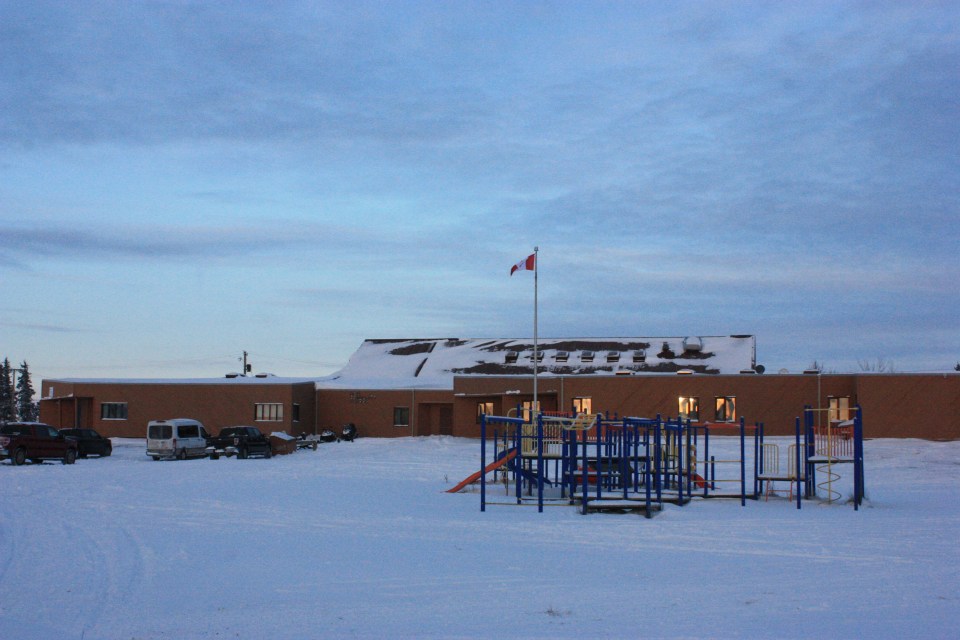
Across the territory, there was a 3.1-percent average of instructional time missed due to unplanned school closures in 2022-23 – largely the result of wildfire evacuation, weather, staff illness and infrastructure issues. (While there were no school closures due to Covid-19, the report noted the pandemic may still have had some impact on performance measures in 2022-23, alongside wildfires and floods.)
Schools in the South Slave experienced the highest proportion of time missed due to school closures – four to 4.5 percent across Hay River’s four schools and 7.2 percent at Chief Sunrise Education Centre in Kátł’odeeche First Nation.
Other figures outlined in the report include:
- 7,370 students enrolled full-time in Grades 1-12, more than 63 percent Indigenous
- 3,229 students enrolled in Indigenous-language programs, the highest on record in Yellowknife and regional centres
- An average of 74 percent of students scored 50 percent or higher on language and social studies diploma exams
- An average of 61 percent of students scored 50 percent or higher on math and science diploma eams
- 64 percent of Grade 4 students and 55 percent of Grade 7 students reported “high quality” connectedness to adults at school
