


After six days out of action, the ferry outside Tsiigehtchic reopened on Tuesday afternoon and began trying to shift a backlog of traffic.
The NWT government told Cabin Radio the MV Louis Cardinal took days to fix because of “specialized work and parts needed for essential maintenance to the fire suppression system.”
The territory said technicians had worked late into Monday night and from early Tuesday morning to get the ferry ready to pass a Transport Canada inspection.
After this article was first published, the Department of Infrastructure said the problem with the fire suppression system – which was not specified – had not been “easily visible to staff.” Transport Canada inspectors, however, had identified the issue on Thursday last week.
“Technicians were originally scheduled to be on-site to perform annual service on the system in June 2024 but were turned back due to wildfires in the Yukon. The service work required a combination of specialized parts not available in the region and locally sourced parts and supplies,” the department added.
Advertisement.
Advertisement.
Since the ferry closed last Thursday, residents, tourists and truckers have been waiting on all sides of the crossing to continue their journeys. The ferry carries Dempster Highway traffic across the river as well as connecting the community of Tsiigehtchic, population 200, to both ends of that route.
Beaufort Delta tour company Polar Pack Arctic Adventures said the ferry’s closure, coupled with wildfire activity in the North, has resulted in lost business amounting to $10,000.
“It’s too bad the ferry’s been down for a while,” said owner Enoch Pokiak. “It’s not only me that’s been like this, it’s a lot of other people too.”
Pokiak said tourists have cancelled trips in anticipation of future closures and travel disruptions such as this, affecting work up to a year away.
Advertisement.
Advertisement.
Residents in Tsiigehtchic have been dealing with a declining stock of food and medication, according to Gwichya Gwich’in Council president Mavis Clark.

“The big thing is we don’t get our groceries delivered,” said Clark, adding that prescription drugs from Inuvik haven’t been available for almost a week.
Residents without boat access of their own couldn’t attend medical appointments while the ferry was down, Clark said.
Nestled between the Mackenzie River and the Arctic Red River, Tsiigehtchic is used to closures on the Dempster come spring breakup and the fall freeze, when the ferry is out of action because of ice in the river on either side of the winter road season. But a closure now is out of the ordinary, Clark added.
“It’s a little bit of a disruption, but we’re used to it because we’re isolated quite a bit on our end,” she said.
“For others, you should see the lineup. There’s quite a bit of a lineup and there’s no place for them to take a shower, get food, get water or drink. It must be very frustrating for them.”
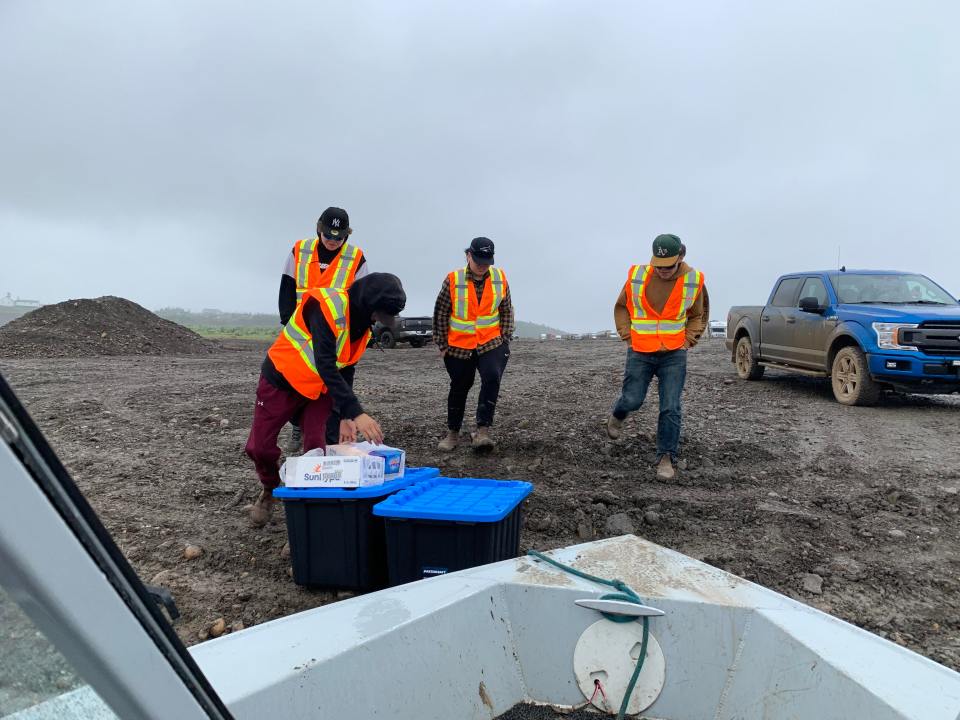
The Gwichya Gwich’in Council hired trucks to bring provisions to people stranded on both sides of the highway, according to Clark, adding that residents with boats took food out to people, too.
Around 50 or 60 people were waiting to cross, the majority of them tourists, according to former MLA and Tsiigehtchic resident Frederick Blake Jr.
Advertisement.
Advertisement.
“A lot of them were saying they didn’t expect to get treated like that. I just explained to them that’s usually the northern hospitality you get up here. They really appreciated that,” said Blake of the food deliveries.
“Everybody made the best of it and a lot of the tourists had the chance to try some fish patties from the community.”
Tyler Gregory, a civil engineer from the United States, had been waiting at the crossing since Thursday to head home after a vacation took him to Alaska and across the Beaufort Delta.
“I really enjoyed being in the Town of Inuvik for multiple days,” said Gregory. “Everyone’s been so wonderful out here, and it’s been such a great experience.”
Gregory attributes his positive experience to the kind people, good food and pleasant weather in Inuvik these past few days.
However, Gregory said the quality of communication from the territorial government about the ferry closure had been “absurd.” He found updates from the NWT’s Department of Infrastructure to be unreliable, vague and inaccurate.
“I don’t think they know what’s going on, because they provide different information than the workers who are actually here at the ferry,” said Gregory.
“They’re the ones that are supposed to be in charge and reporting this information, and they’re just providing canned messages that aren’t even close to the truth.”
Advertisement.
Advertisement.
Blake, by contrast, felt the Department of Infrastructure had shared updates online in a timely manner, while acknowledging that the crew on the ground had specialist skills.
Gregory doesn’t understand how the fire suppression system on the ferry could come to need essential maintenance in the middle of the season. He argues any inspection and repair should have occurred before the season began.
“My understanding is that the ferry has been operational this whole time – it’s not like the ferry broke down,” said Gregory.
“This ferry sat there in April and May and you would have assumed that inspection, maintenance and repair – all of this – would have been taking place before they started putting it into service.”
Gregory wonders if that ultimately means the ferry ran last month without meeting federal fire suppression standards.
“This is 100-percent human error,” he said, referring to the agencies responsible for overseeing ferries. “This is an oversight in inspection, maintenance and repair that, frankly, could have been avoided.”
“We know the importance of our ferries in the NWT in connecting our communities, residents and businesses,” the territorial government said in a statement, noting the fire suppression system is now “fully operational and we do not anticipate any further work to the system.”
“We apologize for any delays and inconvenience this may caused travellers,” the department added.
