



Portable toilets and fencing have been removed, power has been shut off and many residents have moved on, but a tent encampment near Yellowknife’s downtown remains.
The NWT government told people living at the encampment, located in the parking lot of the vacant Aspen Apartments, they would have to leave the site by September 10, a deadline that was then extended by two days.
Toyeke Adedipe, a spokesperson for the Department of Executive and Indigenous Affairs, told Cabin Radio territorial officials have been regularly visiting the encampment on 51 Street to speak with people living there about alternative sheltering options, and to offer transportation and secure storage for their belongings.
On September 18, she said they were told approximately six people and their belongings remain at the encampment, three or four of whom regularly stay there overnight. At its peak, the NWT government estimated 17 to 25 people were living at the site.
Adedipe added people still staying at the encampment indicated donations of mattresses and other items are not wanted as they are being ruined by rain and left as waste. She said the territorial and city government and local non-governmental organizations have removed large furniture items that have been left at the site.
Advertisement.
Advertisement.
“It has been requested by people staying at the site that these items no longer be left there,” she wrote.
When will construction on the site begin?
Territorial officials originally said the encampment needed to be dismantled as work on the site was set to begin on September 16. A tender for renovations on the Aspen Apartment complex, however, was not issued until that date and closed on Friday, as first reported by NNSL.
Adedipe said a change to the procurement schedule had pushed back the start of renovations. She said a new date for that work will be identified once a contractor is selected.
“The GNWT continues to work directly with those who remain to find a timely and positive resolution to vacating the property so renovations can begin on time at Aspen Apartments,” she wrote.
Advertisement.
Advertisement.
Adedipe said the NWT government is “exploring next steps and options available if residents refuse to vacate the site” in time for work to begin.
Territorial officials have said all encampment residents have indicated they are able to stay at shelters or have other housing options. The NWT government has said it would not offer a new location to re-establish the encampment but people could choose to camp elsewhere on their own.
Shelter barriers
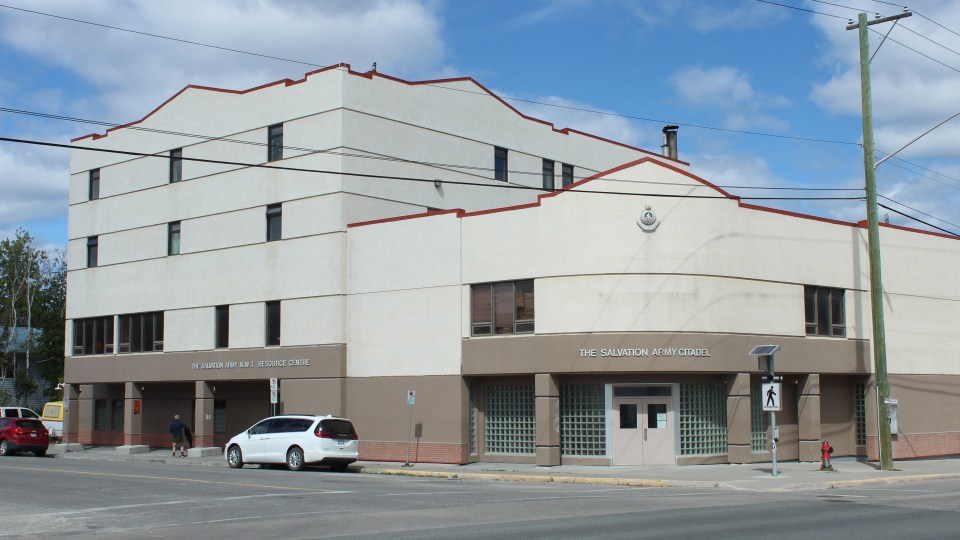
Tony Brushett is the executive director of Yellowknife’s Salvation Army, which operates a men’s emergency shelter. He said there’s “plenty of options being looked at” for people who are still living at the encampment.
“There are multiple people working around the clock to try and figure out the best case scenario for this here. I know they want that tent encampment space back as soon as possible because it is actually technically a construction zone at this point,” he said.
“But the key here now is getting people in and out of the cold within the next four weeks because we all know once we get mid-October, the temperatures will likely drop below zero at night.”
Even though Brushett said shelters are an option, “there’s a lot of different barriers” for some people.
He said, for example, that Yellowknife’s shelter system separates men and women, which is an issue for some couples.
“Especially if these are folks who did have a home together, they have a life together and now basically the system is saying you have to separate,” he said.
Advertisement.
Advertisement.
Other challenges Brushett highlighted include people may be barred from certain shelters, and some shelters search for drugs and alcohol. He said the encampment is also a community of its own.
He added that for people who are not used to staying in shelters, it can be difficult adapting. He said shelters require people staying there to leave early in the morning and be on the street all day until they have to return by a certain time at night.
“I think most of the folks in the encampment are not used to staying in shelters,” he said. “My understanding is the vast majority did have some form of an apartment living at some point.”
During a public briefing on the encampment earlier this month, territorial officials also spoke about a lack of secure space to store belongings, chaotic environments that can overwhelm people, and difficulty housing people with pets as barriers.
Expanding shelter capacity
People experiencing homelessness in Yellowknife far exceed existing shelter capacity.
During the public briefing, John MacDonald, deputy minister for the Department of Executive and Indigenous Affairs, said emergency shelters in the city had capacity for 68 people while transitional housing had space for 108 people. He said that left 30 to 60 residents without shelter.
The NWT government has said it is working with non-governmental organizations to expand capacity at existing emergency shelters ahead of winter.
Adedipe said an additional 19 overflow spaces are now available when needed.
Brushett said the Salvation Army is working to finalize increasing its capacity and suspects the 31-bed shelter will be able to add eight to 10 beds over the winter. He said that will involve the use of bunk beds, having an additional staff member when the shelter is open and hiring a part-time cleaner.
