



Curious about how much respiratory illness is in your NWT community?
The territorial government has launched a new wastewater monitoring dashboard to track the presence of Covid-19, flu and RSV (respiratory syncytial virus) in six communities.
The dashboard shows detection levels of the viruses in weekly wastewater samples from Behchokǫ̀, Fort Simpson, Fort Smith, Hay River, Norman Wells and Yellowknife. It also shows trends over the past year.
The territory has said wastewater monitoring provides early warning signs of virus activity, which helps public health officials to plan and respond.
“Having a stable wastewater collection system that we’re doing in-house is a great way for myself to monitor the trends of what’s happening to the viral activity,” Dr Kami Kandola, the NWT’s chief public health officer, told Cabin Radio.
Advertisement.
Advertisement.
“We don’t necessarily always have tests available, so if people are having Covid-like symptoms or flu-like symptoms in the summer, we could say what’s trending.”
Didn’t the NWT already have a dashboard?
The territory has been monitoring wastewater for Covid-19 in several communities since 2021 and began monitoring for flu and RSV in 2022.
While those results were previously published online, they have not been publicly available for months.
Kandola said the NWT government ended its previous Covid-19 dashboard in January, as Covid-19 was not overwhelming the territory’s healthcare system. She noted, however, there were some Covid-19-related hospitalizations over the summer.
Advertisement.
Advertisement.
“We’re viewing Covid as an endemic virus,” she said.
“So we’re not in a pandemic. It’s just like with other viruses, it continues to evolve.”
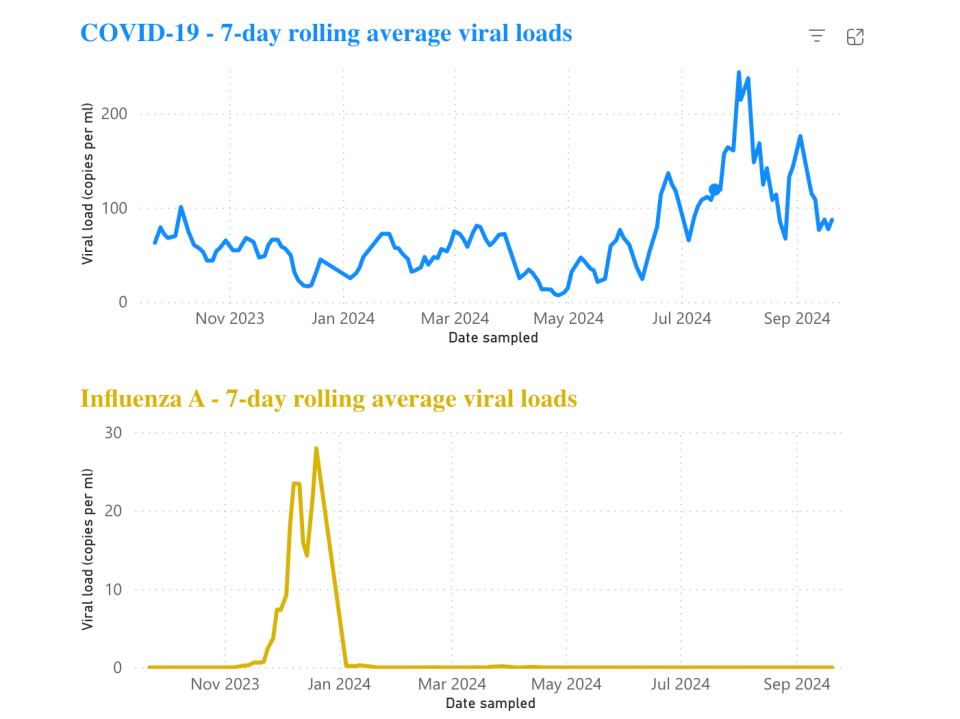
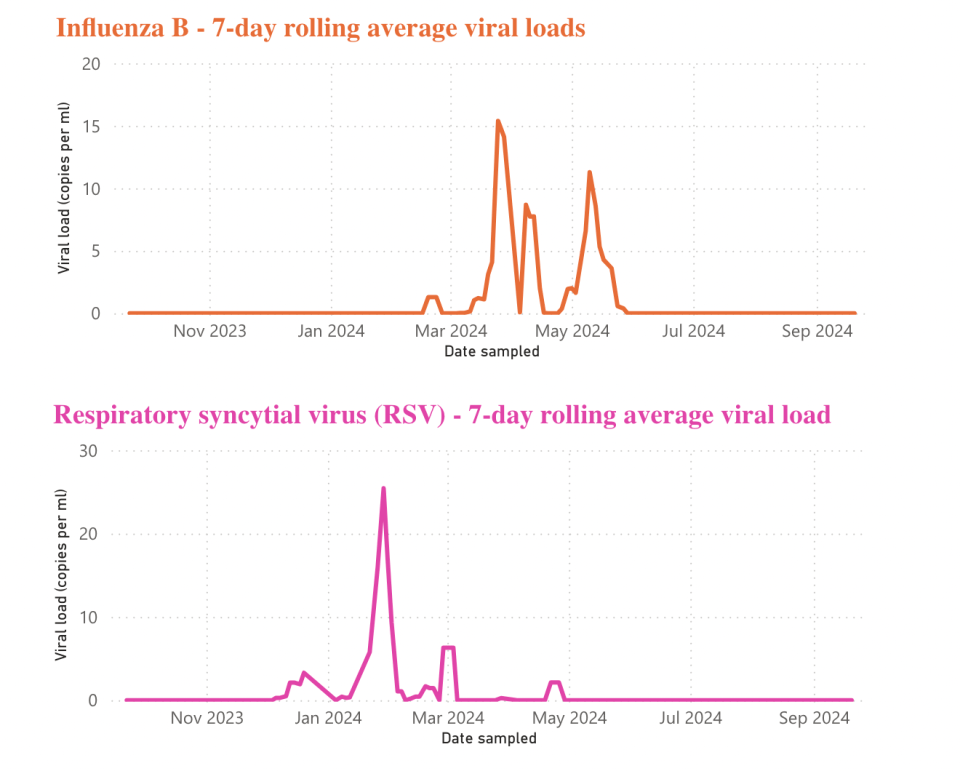
Kandola said the GNWT decided to launch the new wastewater monitoring dashboard before the territory heads into this year’s flu season.
Last year, Kandola said, the territory saw 79 hospitalizations for RSV, 80 percent of whom were children under the age of five. She said there were 74 flu hospitalizations, a third of whom were people 65 and over, and 44 hospitalizations for Covid-19, with people aged 65 and older accounting for half of them.
“Last year was a pretty intense season when you look at respiratory activity,” she said. “We’re hoping that if we can raise awareness, people should get their fall vaccines early.”
New options this year
According to David Maguire, a spokesperson for the Department of Health and Social Services, the territory is currently working on dates and locations for this year’s vaccine clinics.
“We expect clinic opportunities will be similar to years past with a mix of methods and options,” he wrote in an email, “including booked appointments in some smaller communities, walk-in days/afternoons, mass clinics and outreach opportunities.”
In a public notice issued on Friday, the NWT Health and Social Services Authority stated it planned to release a schedule for flu and Covid-19 vaccinations “in the coming weeks.”
Advertisement.
Advertisement.
Kandola said the territory plans to offer several new vaccine products this year.
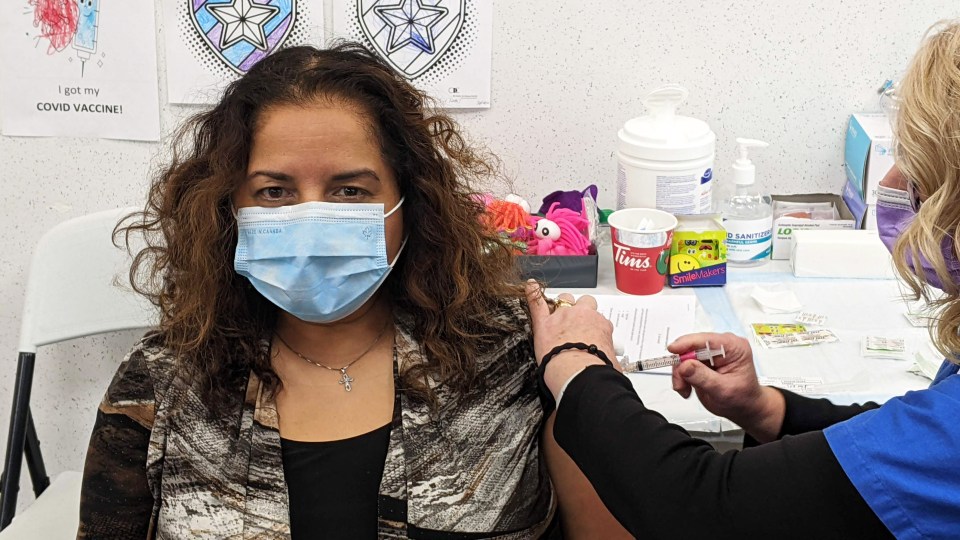
That includes FluMist, a vaccine delivered as a nasal spray. Kandola said it will be offered to children between the ages of two and five, noting that young children are at high risk for Influenza A and related complications.
More: GNWT advice on ways to stop infections spreading
Another difference this year, she said, is the territory will be offering vaccines with protection against four influenza strains. There will be a high-dose flu vaccine available for people aged 65 and older.
The territory also plans to offer Nirsevimab, an injectible antibody that prevents severe RSV disease in infants and young children. Kandola said that will expand the RSV protection the NWT can provide to babies born in RSV season.
