



The NWT’s finance minister says the territory has made “a lot of changes” to procurement since it revamped Yellowknife’s hospital, a project the auditor general has criticized.
Stanton Renewal, which involved the construction of a new Stanton Territorial Hospital and renovation of the city’s old hospital through a public-private partnership – known as a P3 – was the focus of a blistering auditor general’s report released on Tuesday.
The report found big changes were made without evidence and analysis, information was missing from procurement records, and the NWT government could not verify $71 million actually went to local and NWT businesses as it had claimed.
The cost of the project had also risen by hundreds of millions of dollars, the auditor general’s office found.
Speaking after the report was made public, finance minister Caroline Wawzonek told reporters it “validated” the findings of the NWT government’s procurement review.
Advertisement.
Advertisement.
She said work completed over the past few years aligns with recommendations in the report.
“That’s helpful to hear that and to know that what we’re doing, making those changes, is good,” she said.
Since the start of Stanton Renewal, Wawzonek said, the territory has made improvements to ensure northern benefits are being delivered and changed contracting policies so proponents are better aware of monitoring requirements.
The minister said the territorial government had also streamlined procurement data, guidelines and documents; created a procurement committee; and made changes to the territory’s capital planning.
Advertisement.
Advertisement.
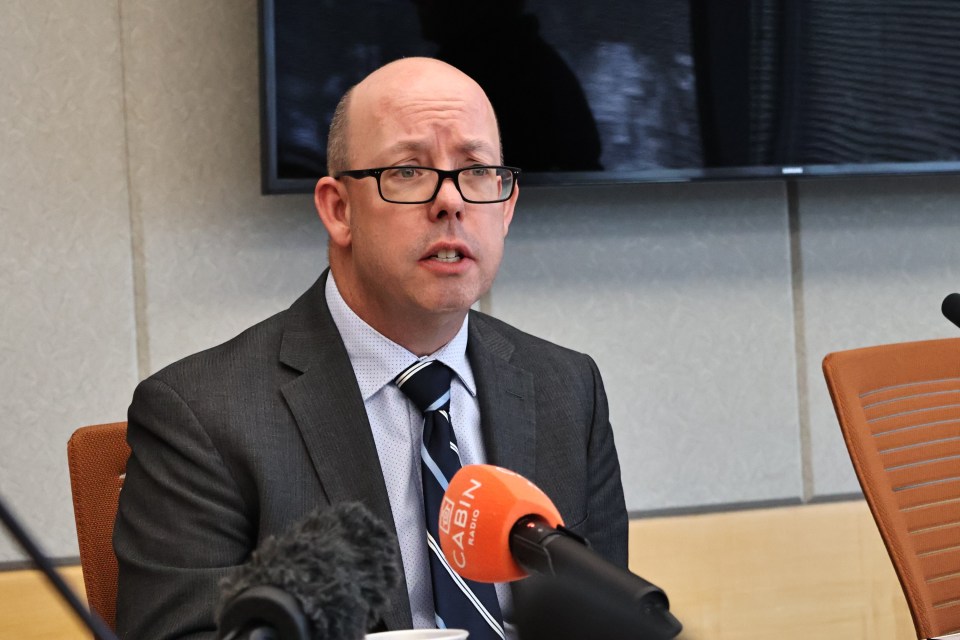
Deputy auditor general Andrew Hayes noted during a press conference that while the NWT government said it has implemented policies that would prevent issues highlighted in the report from occurring again, the territory was not following some requirements that were previously in place. He said that included the retaining of procurement documents.
Hayes said in future audits involving procurement and related issues, the auditor general’s office will look for the improvements that the NWT government says it has made.
“I think it’s reasonable for the people of the Northwest Territories and the Legislative Assembly to expect that the government is doing better now, based on what they’re saying here,” he said.
The legislature’s committee on public accounts, made up of four regular MLAs and one minister, said in a statement that the audit “raises many serious questions” about the P3 partnership that require further review.
Auditor ‘perplexed’ by GNWT decisions
One of the biggest findings in the auditor’s report was that the NWT government had failed to consider key costs when planning the Stanton Renewal project, such as annual property taxes, and had not publicly reported the total cost estimate.
The auditor’s general office estimated the cost of the 30-year project had swelled 62 percent, from the $750 million initially reported in 2015 to an eye-watering $1.21 billion.
The report concluded the NWT government could not show the project provided good value for money.
Hayes said he was “perplexed by the series of decisions that were reached by the government without doing updated analyses to identify the value for money.”
Advertisement.
Advertisement.
“These decisions come with important costs for the population and for the government,” he said. “We’re talking about amounts in the hundreds of millions of dollars and we’re talking about costs that will last the life cycle of this project, which is almost 30 years.”
One of those decisions was changing the project from renovation and expansion of the existing hospital to construction of an entirely new hospital without determining whether a P3 process would still be the best fit.
The report was also critical of the territory’s decision to lease the old hospital building to third-party developer Ventura in 2016 and then, just one year later, sublease the entire space back, making the NWT government a tenant in its own building for three decades.
Doing so cost at least $78.6 million more than planned, the auditor general’s office estimated.
Minister defends decision to sublease building
The territory began delivering services in the renovated old hospital, now called the Łıwegǫ̀atì building, earlier this year.
Wawzonek, who was not the finance minister in 2016, defended the territory’s decision to sublease its own property. She said the cost per bed of using Łıwegǫ̀atì is significantly lower than the price tag to build a new facility to house those services.
“We’re happy to see we do now have two facilities,” Wawzonek said, referring to Stanton Territorial Hospital and the Łıwegǫ̀atì building.
“Now there’s a healthcare campus that’s being provided. It’s one that brings all healthcare services together.”
Advertisement.
Advertisement.
Wawzonek said the NWT government had initially planned for Ventura to lease out space to a commercial tenant to pay off the cost of renovations. She said the territory later decided to use the facility to deliver healthcare services.
“My understanding of some of the evolution is that … the studies that get done around what the needs or anticipated needs or projected needs might be do change,” she said.
“It was a very dynamic moment in time when the decision was being made.”
NWT disagrees with one recommendation
The NWT government agreed to all of the recommendations in the audit save for one, which called on the territory to publicly report detailed and complete costs for the Stanton Renewal project, including costs related to the leasing arrangement.
Both Hayes and Wawzonek said that boiled down to a disagreement over whether the lease agreement was part of the P3 project.
While the territory argues the leasing arrangement was “delivered under a different organizational structure,” Hayes said it has roots in the P3 with Boreal Health Partnership, the consortium awarded the Stanton Renewal contract.
“Ultimately, in our view, in order to get a full understanding of the cost of this project, these lease costs need to be included,” he said.
