



Advertisement.
Widgeons and warblers and gulls, oh my!
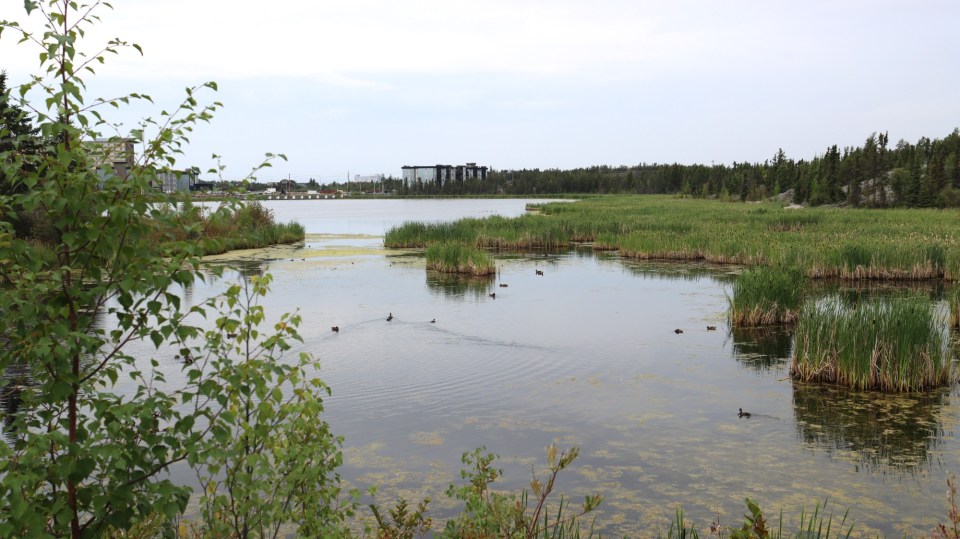
Around 25 people took to the Niven Lake trail in Yellowknife on Saturday morning to learn about birds that frequent the area at this time of year.
Local birder Reid Hildebrandt led the free bird walk, which was hosted by Ecology North.
He says the trail is “a great hotspot” for studying waterfowl. You can also see and hear songbirds.
Advertisement.
Advertisement.
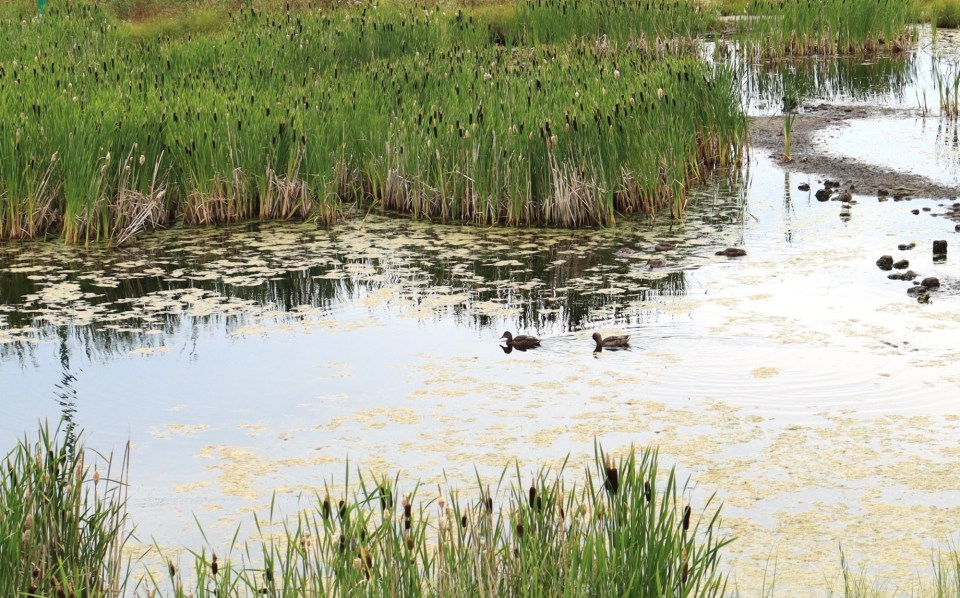
Before stepping on the trail, attendees watch as mallards swim and dip their heads in the water to eat.
Hildebrandt explains that male mallards lose their distinct green heads during the summer, making them appear similar to female mallards.
The male ducks also become flightless for a period while they molt, he says.
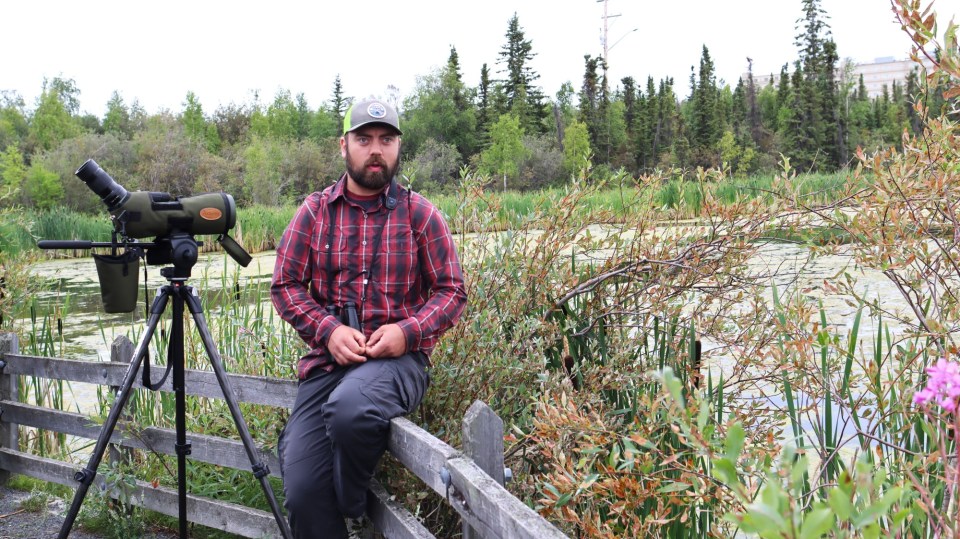
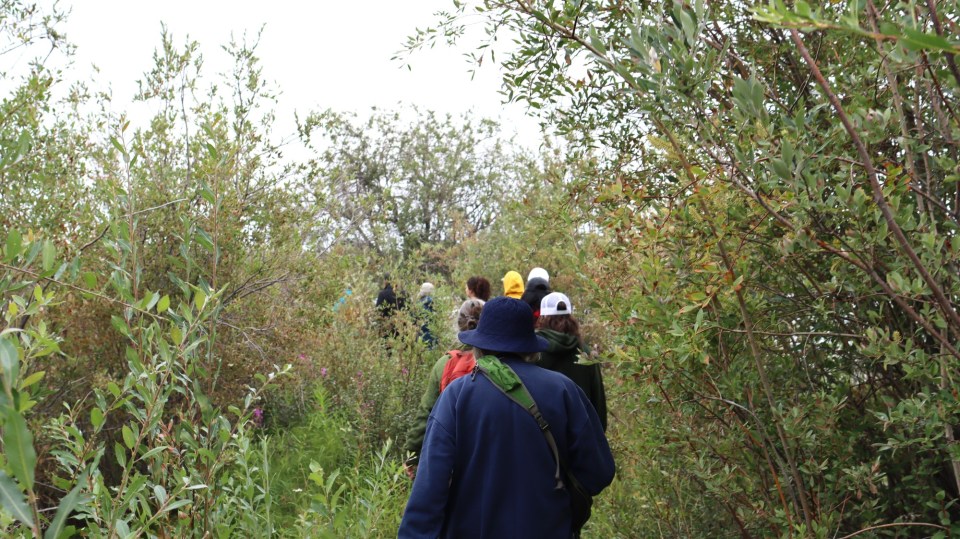
While walking along the trail, Hildebrandt points out sparrows in the trees.
Advertisement.
Advertisement.
“White-throated sparrows are super unique in the bird world because, for a songbird, they have two different colour morphs and they sexually reproduce with each other,” he says.
Hildebrandt says the brown sparrows are better homemakers while those with bright white stripes are better at defence and protection, so they choose one another.
He then alerts birders to a ruby-crowned kinglet, which he says is the smallest bird you can see in Yellowknife, but it has the loudest song.
Then Hildebrandt spots something he says he’s never seen on the Niven Lake trail: a clay-coloured sparrow with distinctive brown and grey patches bordering its head.
“They’re a very scarce breeder in the Yellowknife area,” he says. “A few of them get seen every year but I’m just not sure I’ve ever seen one in August before.”
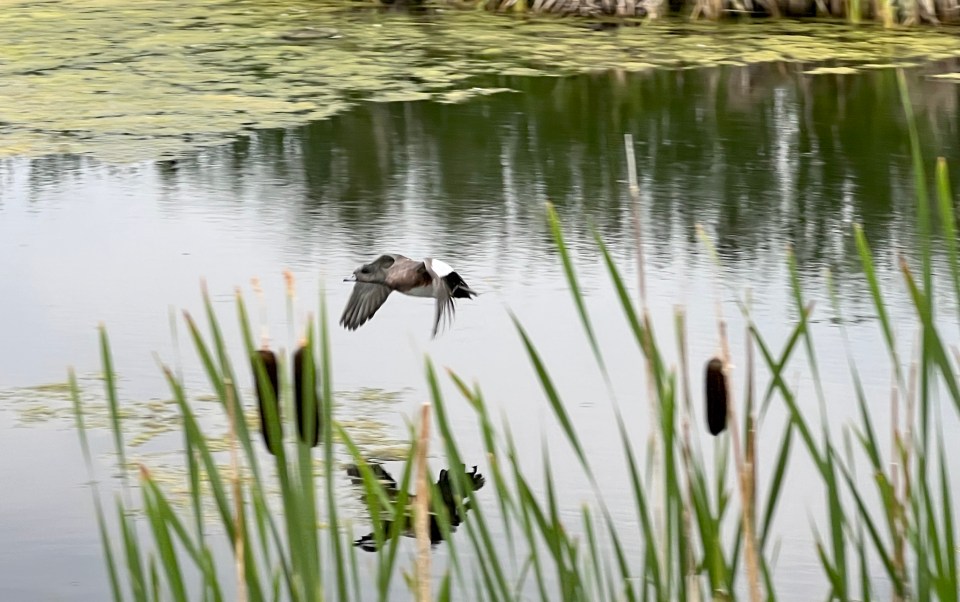
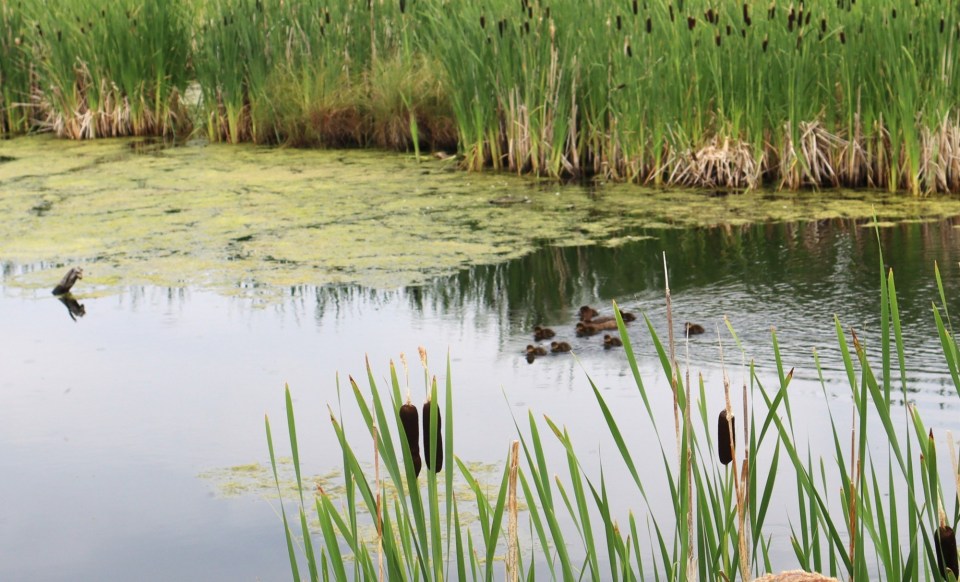

Continuing along the trail and looking out at the water, a family of lesser scaup swim by. The fuzzy ducklings practise their diving skills, plunging themselves under the water.
“Lesser scaup are the most abundant waterfowl on this lake,” Hildebrandt says.
He adds there are large numbers of American wigeons, mallards and green-winged teals on Niven Lake as well as some northern shovelers, all of which make an appearance during the walk.
Advertisement.
Advertisement.
At one point, Hildebrandt hears the cackling call of a sora rail, which he describes as looking like “a miniature marsh chicken” that is usually heard but not seen.
There are three kinds of birds that Hildebrandt says are abundant on the Niven Lake trail in May, June and July but absent at this time of year: red-winged blackbirds, tree swallows and Bonaparte’s gulls.
Before ending the first part of the walk around Niven Lake, birders see a horned grebe, a kestrel, Pacific loons and a red fox.
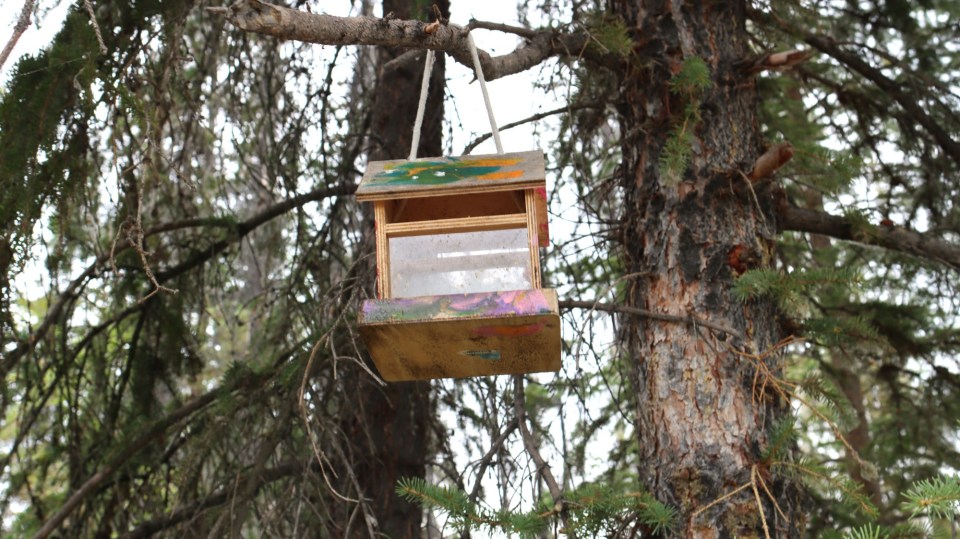
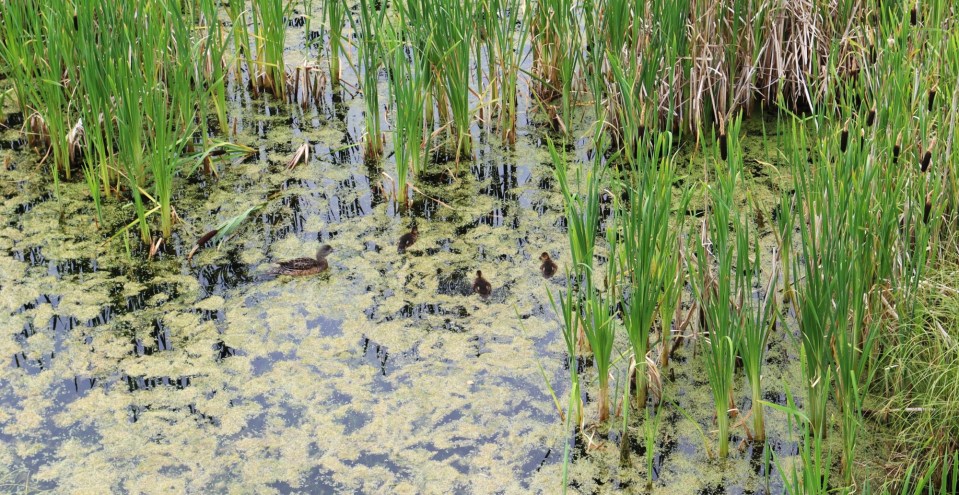
A few birders join Hildebrandt as he continues the walk to Rotary Park.
Just as they begin strolling along the boardwalk, a mated pair of sandhill cranes flies overhead and lands on the shore of Yellowknife Bay. One of them performs a courtship dance, hopping up and down and flapping its wings.
Hildebrandt explains that the cranes mate for life and are likely here to feed.
Continuing along the boardwalk, he points to warblers flitting through the trees and makes a sound to attract the songbirds.
He then hears the unexpected sound of a red-eyed vireo.
Advertisement.
Advertisement.
Continuing on to the end of the boardwalk to look across Yellowknife Bay, birders observe gulls and a Caspian tern. Hildebrandt points out two lesser yellowlegs in the grass.
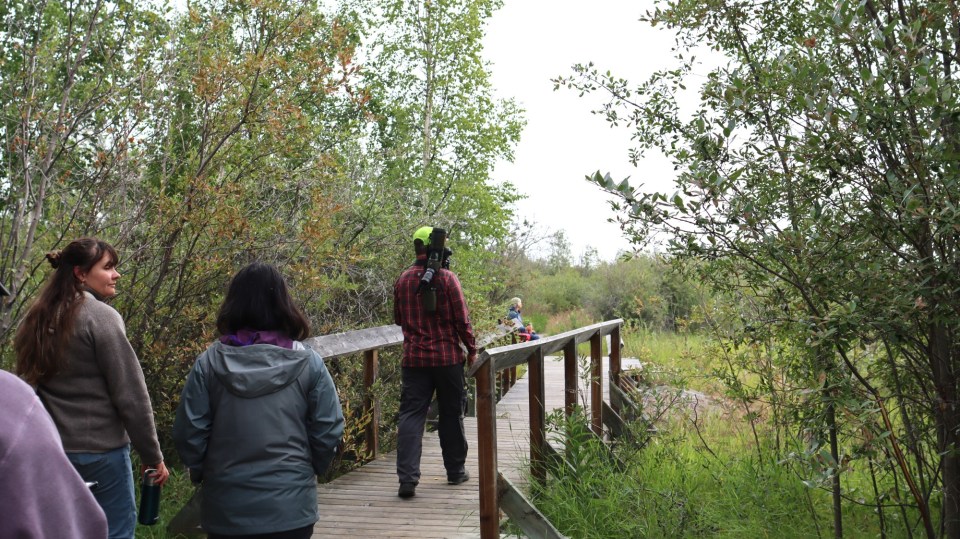
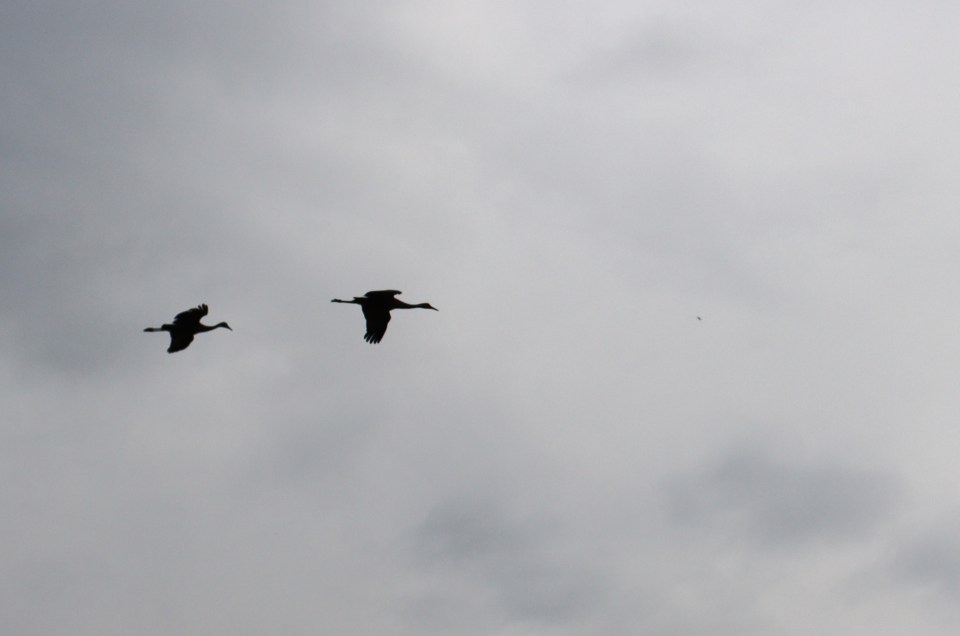
Using a spotting scope, he shows birders semipalmated sandpipers on the shore of a rock. The small birds are dwarfed in size by gulls sharing the rock.
In the distance, a bald eagle flies toward Old Town. In the other direction, a loon swims near the houseboats and dives under the water.
As the birders leave the area, so do the sandhill cranes.
One of the birders jokes to Hildebrandt that he must have set up the encounter as they fly overhead.
