


Advertisement.
When residents of Fort Providence received an evacuation order a week ago, many had to leave their dogs behind as they made their way to Hay River.
Now, those dogs are in the care of essential workers who remain in the community as crews battle a wildfire on the edge of town.
RCMP officer Kevin Devoe and others have been regularly patrolling the streets of Fort Providence, feeding every dog they encounter and posting photos on Facebook so their owners are assured of their wellbeing.
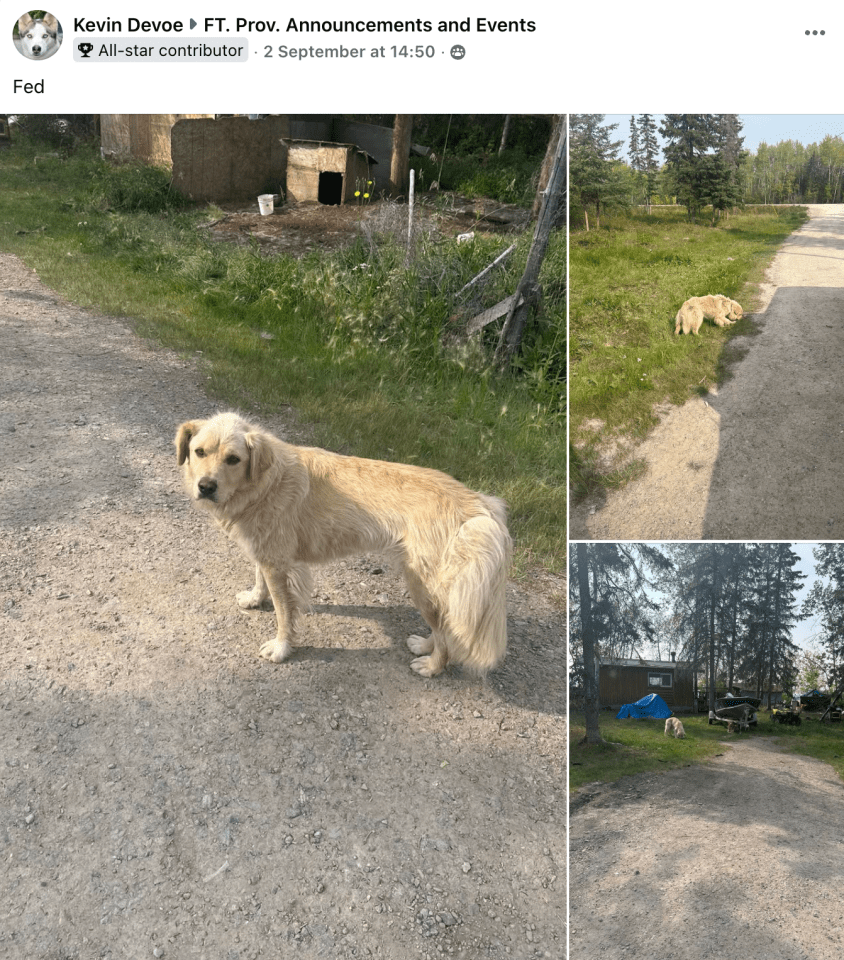
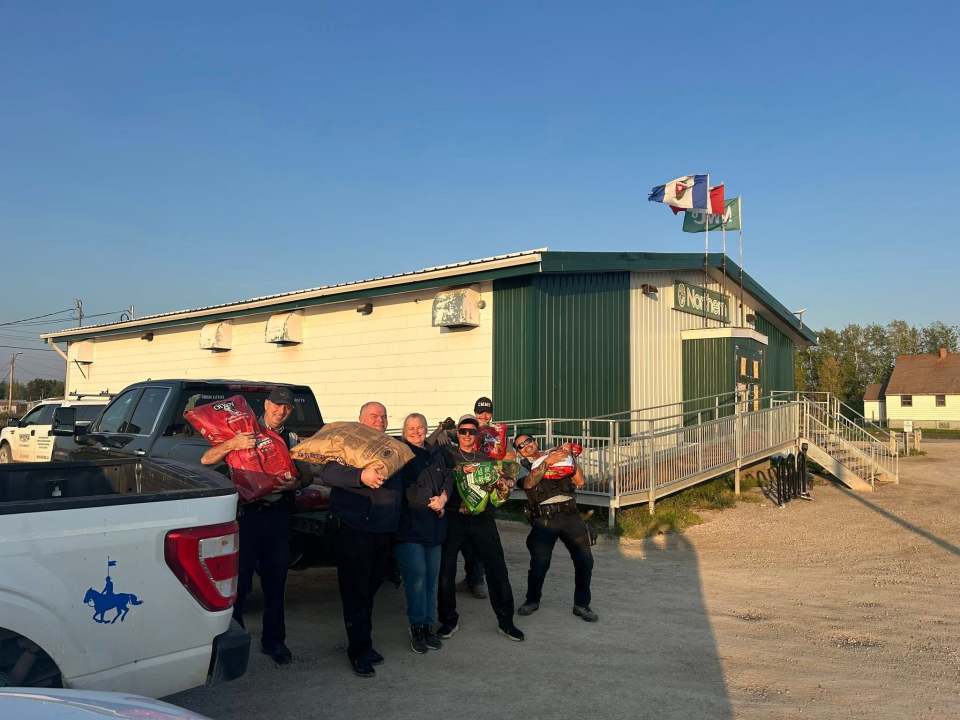
Devoe said he’s far from the first to take on this kind of work during an evacuation, having seen it done by police officers across Canada in Northern Ontario and Quebec.
Advertisement.
Advertisement.
“It seems like the natural thing to do,” said Devoe.
He explained the volume of calls to the RCMP detachment has fallen off because hardly anyone is left in town.
“Besides patrolling, there’s not much more to do after that, so we have a lot of free time that we go out and feed the dogs. We’re bringing them food, they’re wagging their tails, or they’re happy to see us,” said Devoe.
“That brings us a little bit of enjoyment as well. And then I can pass that on to the community members that have been evacuated.”
Advertisement.
Advertisement.
Devoe called the firefighters who are working to protect the community “the real heroes.”
“It’s just incredible to watch the unfolding of this attack on this massive fire. It’s like a coordinated dance,” Devoe said. “They had their sprinkler system set up in no time to attack this fire.”
The evacuation has caused some emotional upset, Devoe said.
“I’m just so glad that we’re able to do this small bit to help people who are evacuated. I mean, I can’t imagine those folks, and if I can provide a little sense of comfort to them, I feel like I’m doing my job.”
Driving Whati pets to safety
Between Fort Providence and Whatì, another community handed a wildfire-related evacuation order in the past two weeks, more than 1,000 people have had to leave their homes.
Whatì residents got to return over the past weekend. That also meant the end of a project to create a temporary home in Yellowknife for dozens of canine evacuees.
While Devoe and colleagues looked after Fort Providence’s remaining dogs, the Tłı̨chǫ Animal Care Society had a different task – get as many Whatì dogs as possible to safety when wildfire ZF048 threatened the community.
Whatì has been connected to Yellowknife by an all-season road since 2021. The society was formed by a group of people who first helped dogs in nearby Behchokǫ̀ during an evacuation two years ago.
Advertisement.
Advertisement.
When Whatì had to evacuate, Amy Maund said she, other society members and residents formed a 15-person team and set up 20 dog crates in a 28-ft cargo trailer.
The community government opened its culture centre to act as a staging area for pets, Maund said. Some owners brought animals and helped load them onto the trailer while society members went door to door to round up others.
Jessica Martin-Bedard, a teacher in Whatì, is proud that the community has reached a point where “every dog is known – we have no more strays, every dog has an owner.” In NWT communities, she added, that isn’t always the case.
Martin-Bedard said residents found that buses leaving Whatì for evacuation centres elsewhere couldn’t also accommodate pets, so the Tłı̨chǫ Animal Care Society stepped in and took animals to Qimmiq, a Yellowknife kennel and dog daycare.
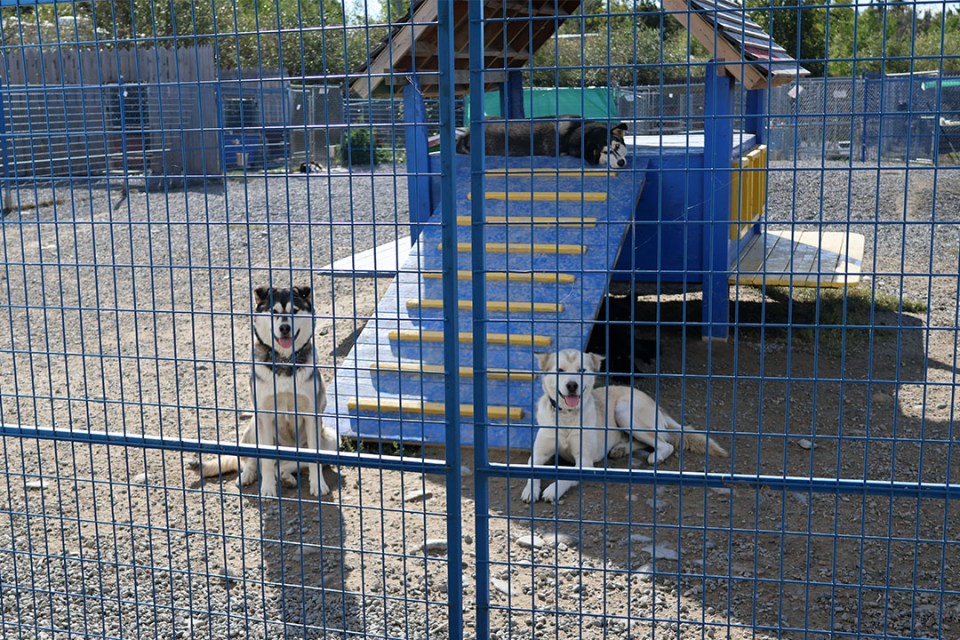
Qimmiq is spread across three lots on the city’s Curry Drive. Owner Christy Lewylle set about dedicating one of those lots to Whatì evacuee dogs.
In all, the society says 53 pets were brought from Whatì to safety while 19 stayed in the community and were cared for by volunteers using food the society left behind.
Of the 53, all but 10 stayed at Qimmiq. Four dogs were cared for by evacuee owners who found space for them elsewhere in Yellowknife, two were surrendered to the NWT SPCA – the city’s animal shelter – and four cats were boarded at the NWT SPCA as Qimmiq isn’t set up to accommodate cats.
‘Many communities aren’t prepared’
As of last week, Maund said the Whatì operation had already cost the society between $15,000 and $20,000, including gas, dog food, medical bills and boarding costs. The society is accepting donations to help cover those sums.
Advertisement.
Advertisement.
Calling Whatì a “model community” in terms of how its residents support and care for their pets, Maund says plans should now be developed for other communities so pets can be readily moved to safety in future evacuations.
“We really, really do need to put something in place,” she said, “because many communities aren’t prepared to support the animals when these situations occur, and there’s also no funding set aside for it.”
While acknowledging that “humans always come first,” Maund said evacuations without plans for pets can cause further distress.
“Animals should be able to be evacuated with their owners. I really hope that in the future, the territory can start including pet evacuations in some of their emergency plans and some funding to care for them when they’re evacuated,” she said.
“We have owners in the past, like with the Behchokǫ̀ evacuation, that wanted to go back into unsafe areas to try to rescue their pets, and that puts them in an unsafe situation too. The emotional stress and the burden of worrying about a pet that you’ve had to leave behind, that’s horrible for any family.”
Martin-Bedard said wildfires are now an annual reality in the NWT and “it should be in every community’s plan to also have a plan for evacuating the pets, either along with the owners or separately, but not being completely left out.”
“I don’t know what we would have done if Christy from Qimmiq would not have landed us this space here,” she said at the kennel last week.
“I have no idea where those 43 dogs would be.”
Ollie Williams contributed reporting.
