



On a chilly morning in Yellowknife this week, eight brave souls took a dip into Great Slave Lake near Jolliffe Island to test how far they could swim.
Davonna Kagyut from Inuvik said the amount of energy it took to swim in the cold water for a matter of minutes was “shocking.”
“I think my biggest takeaway is just that you can’t be too confident in your ability when you’re in cold water,” she said, adding that “your condition can deteriorate really quickly.”
Kagyut and the seven other swimmers – who travelled to Yellowknife from Nunavut, Newfoundland and Labrador, British Columbia and Ontario – were participating in a three-day boot camp to learn about the risks of cold water and life-saving skills.
Kagyut said experiencing swimming in cold water first-hand was “humbling but gives me a greater respect for the water now.”
Advertisement.
Advertisement.
She said she was encouraged to be more bold in telling others to wear life jackets on the water, “regardless of the temperature, regardless of how good a swimmer they are, regardless of how good a boat driver they are or they’re travelling with – because you just never know what could happen.”
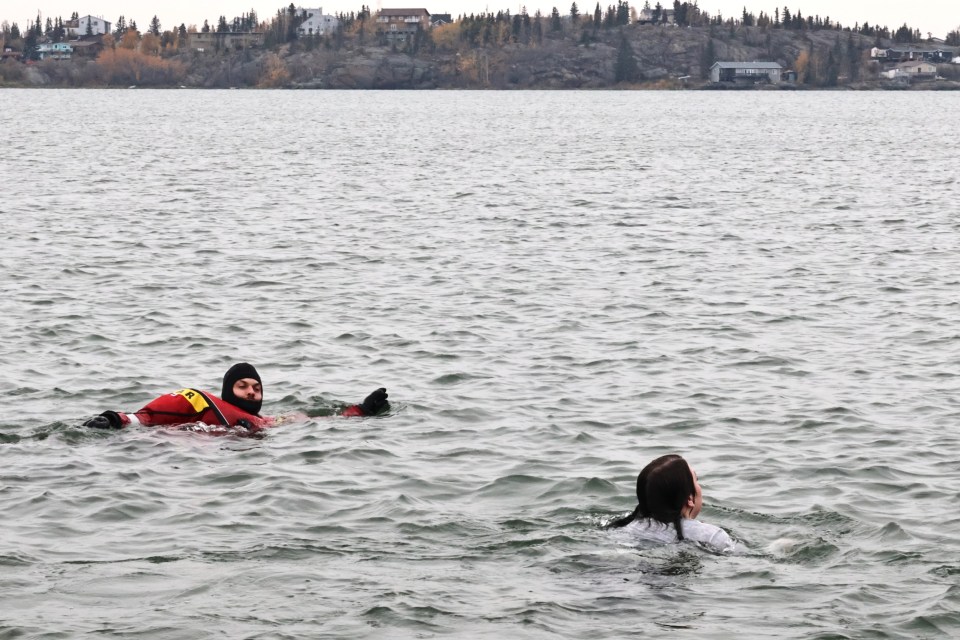

The SARSmart Cold Water Awareness Boot Camp, hosted by the Canadian Safe Boating Council and Playsafe Productions, included hands-on learning and teaching sessions with Dr Gordon Giesbrecht – also known as Professor Popsicle – an expert in cold weather survival.
The cold-water swim took place on Monday, the camp’s third day.
Charlene Gear, a participant from Postville, Labrador, was the first to take the plunge. She impressed many spectators by swimming all the way to a buoy and back.
Advertisement.
Advertisement.
“It was really hard. It was a lot harder than I would have expected,” she said, adding she was swimming against a bit of a current.
“It wasn’t so much the cold that bothered me, it was the actual physical activity of it.”
Gear said what she plans to take back home is how to regulate your body if you end up in cold water.
“For me, it was a lot of deep breathing after you come to the surface, just kind-of being aware of your surroundings and then taking deep breaths to control yourself and calm yourself down and not panic,” she explained.
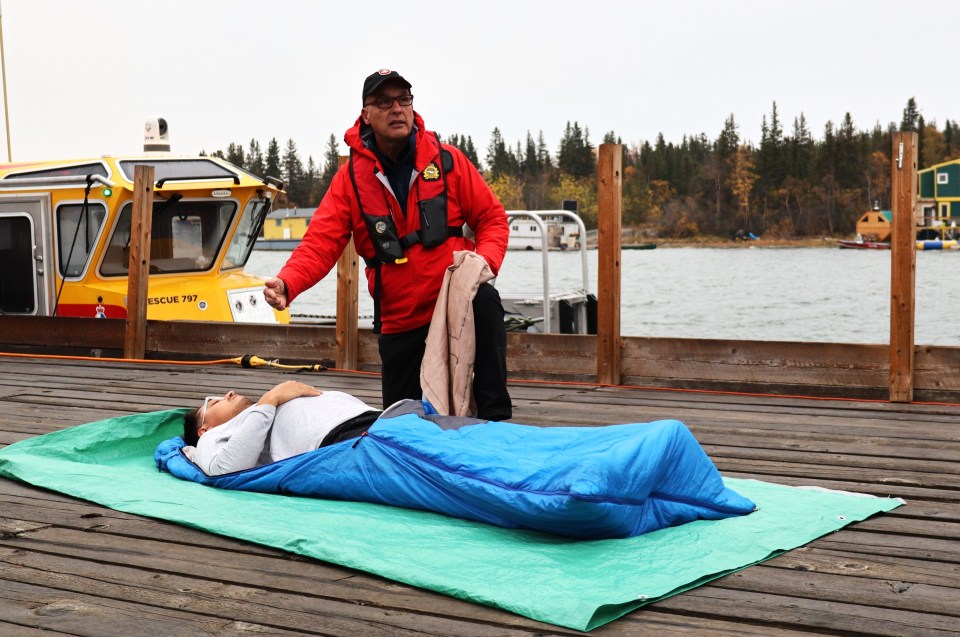
“This whole project is intended to educate those in the northern communities about the dangers of cold water immersion,” said Ian Gilson of the Canadian Safe Boating Council.
He said the course examines how to survive if you are accidentally immersed and how to care for someone who has been in cold water and is potentially hypothermic.
Gilson said cold water is “the great equalizer” as it hampers a person’s ability to swim regardless of their skill level.
He noted that cold water safety is particularly vital in northern communities.
Advertisement.
Advertisement.
“Here, all year long you’re dealing with cold water,” he said. “It’s really important that they be up to speed on exactly how to handle their situation.”
The boot camp will also feature in an educational video series that will be shared with northern communities.
Correction: October 6, 2025 – 10:36 MT. This story initially misnamed Davonna Kagyut as Davonna Kasook, which is her maiden name.
