



The Tłı̨chǫ Government and Yellowknives Dene First Nation have signed a memorandum of understanding to work together in advancing the proposed Arctic Economic and Security Corridor.
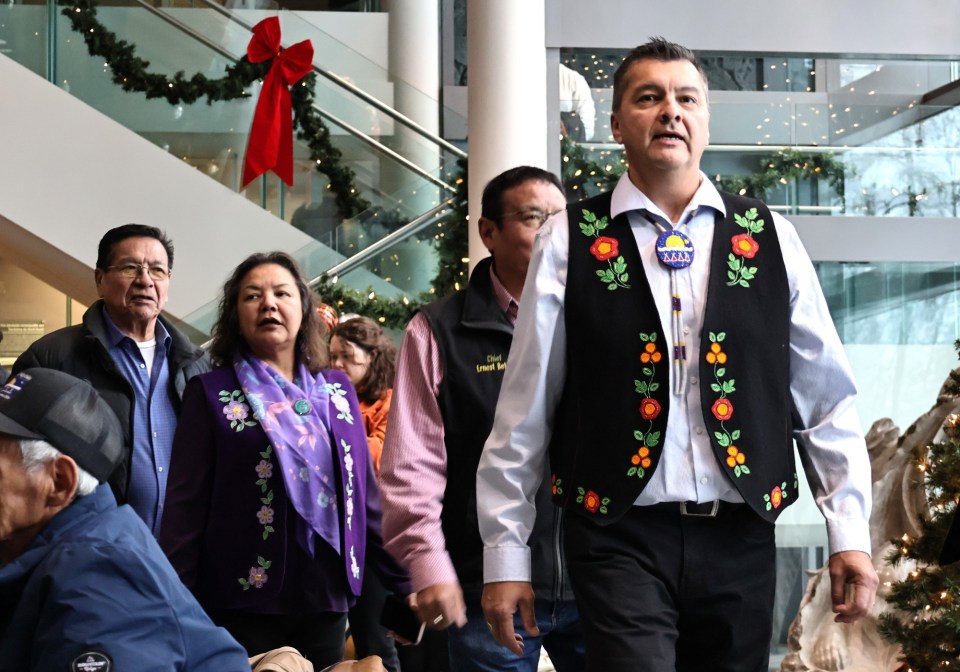
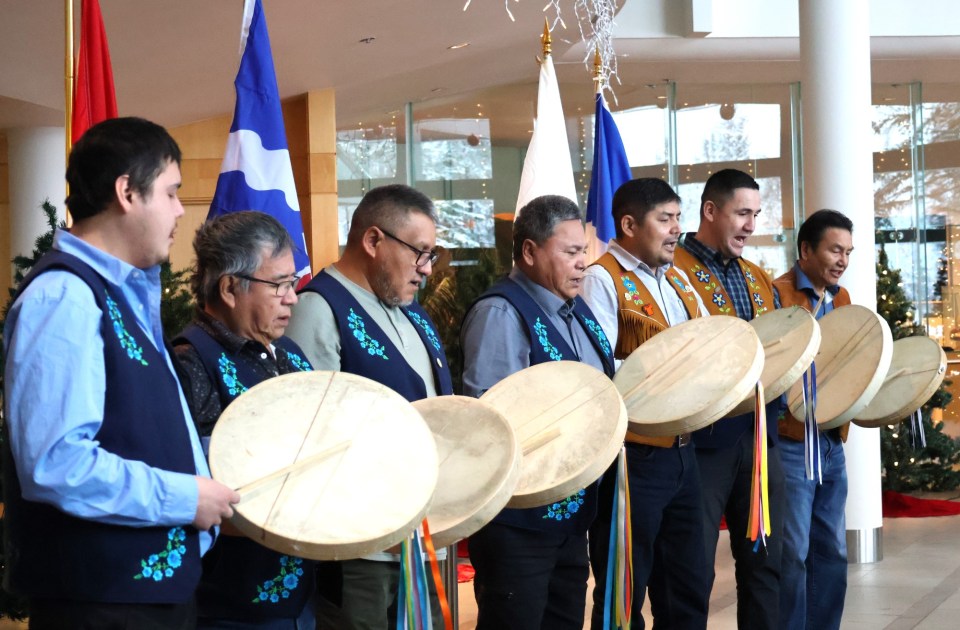
Tłı̨chǫ Grand Chief Jackson Lafferty and Yellowknives Dene First Nation Dettah Chief Ernest Betsina signed the agreement at the NWT Legislative Assembly on Monday.
“We’ve learned from past experiences with industries coming into our backyard and then making all of the decisions,” Grand Chief Lafferty said.
“We’re going to flip that around. Now we’re going to lead the mega-project, the two nations coming together. It will be on our terms going forward.”
Chief Betsina said the memorandum is an early-stage agreement that aims to increase coordination and communication between the two First Nations regarding the proposed project.
Advertisement.
Advertisement.
He said work will focus on understanding the project and what decisions lie ahead, ensuring members are informed and involved, and identifying long-term opportunities for members and businesses.
“Any major project must reflect the voices of the people who live here,” he said.

The Arctic Economic and Security Corridor combines the Slave Geological Province Corridor and Grays Bay road and port projects. It envisions an all-season road through the Slave Geological Province in eastern NWT and northwestern Nunavut, connecting potential mineral resources in the area to the NWT’s existing highway system at the south end and Arctic tidewater to the North.
Betsina said one important factor with the proposed project is its potential impact on caribou migration and calving grounds. He said the First Nations want to ensure the road does not affect caribou to the east.
Advertisement.
Advertisement.
“Caribou is of utmost importance,” he said, adding that the knowledge of Elders is important as “they are our scientists, they are our PhDs.”
The corridor is among the Tłı̨chǫ Assembly’s current priorities and is on a second-tier list of major projects the federal government is considering advancing, but which Ottawa says require further development.
Lafferty said as the NWT’s diamond mines reach their end, the North is looking for economic opportunities.
“We’re ready to take on this mega-project in the Northwest Territories,” he said. “It will be an economic boost for the Northwest Territories and for our people of the North.”
Jackson also pointed to a new $1-billion Arctic Infrastructure Fund promised in the latest federal budget. NWT MP Rebecca Alty recently said private investment will be needed alongside that fund, and other sources of cash like loans, to get major northern projects “across the finish line.”
Beyond the Tłı̨chǫ Government and Yellowknives Dene First Nation, the Nunavut and NWT governments as well as Nunavut Tunngavik Inc are among those advocating for the Arctic Economic and Security Corridor to get federal funding.
In a statement on Monday, NWT Premier RJ Simpson said the new agreement between the two First Nations “strengthens the foundation for a unified northern approach” to the project and reinforces the message that “major northern projects must be advanced in full partnership with Indigenous governments.”
“The North is ready and today’s signing is an important step forward,” Simpson stated.
