


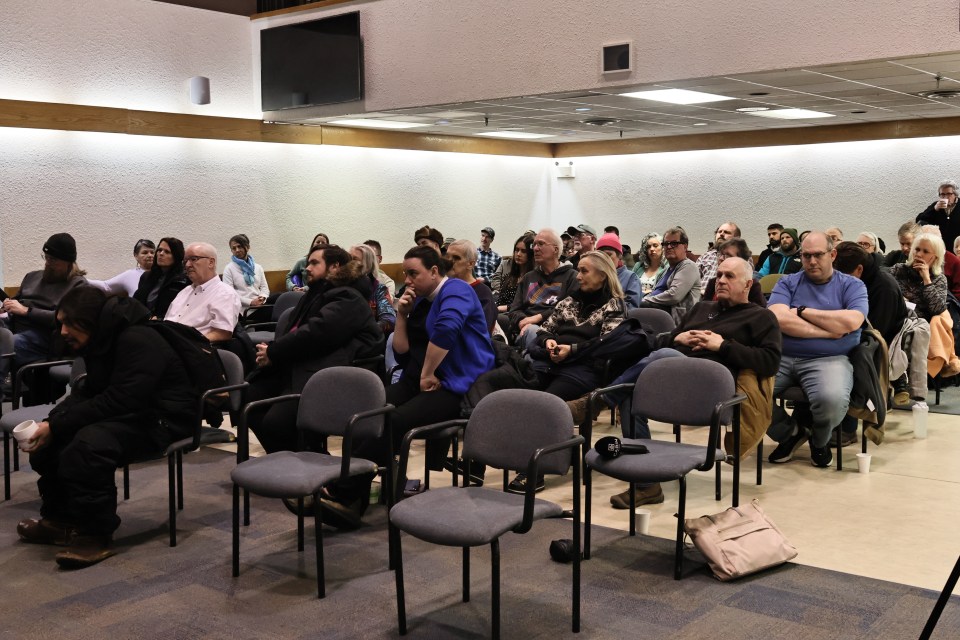
Residents gathered at downtown Yellowknife’s Northern United Place to discuss community safety and crime prevention during a town hall session on Wednesday evening.
The public meeting was announced last month to seek community-driven solutions as the territory “continues to grapple with drug trafficking, violent assaults, break-ins and theft.” The GNWT also plans to introduce new legislative measures during February’s session to tackle crime.
This was the third town hall organized by Range Lake MLA Kieron Testart and Yellowknife Centre MLA Robert Hawkins, following discussions about healthcare and immigration.
Lou Rankin, who works at Aurora College, told attendees she has observed a “huge change in safety.”
Rankin said many marginalized individuals appear to be seeking basic necessities such as warmth and public washrooms. She suggested the possibility of mobile warming stations or increased access to washrooms as practical measures that could help address some of the related issues.
Advertisement.
Advertisement.
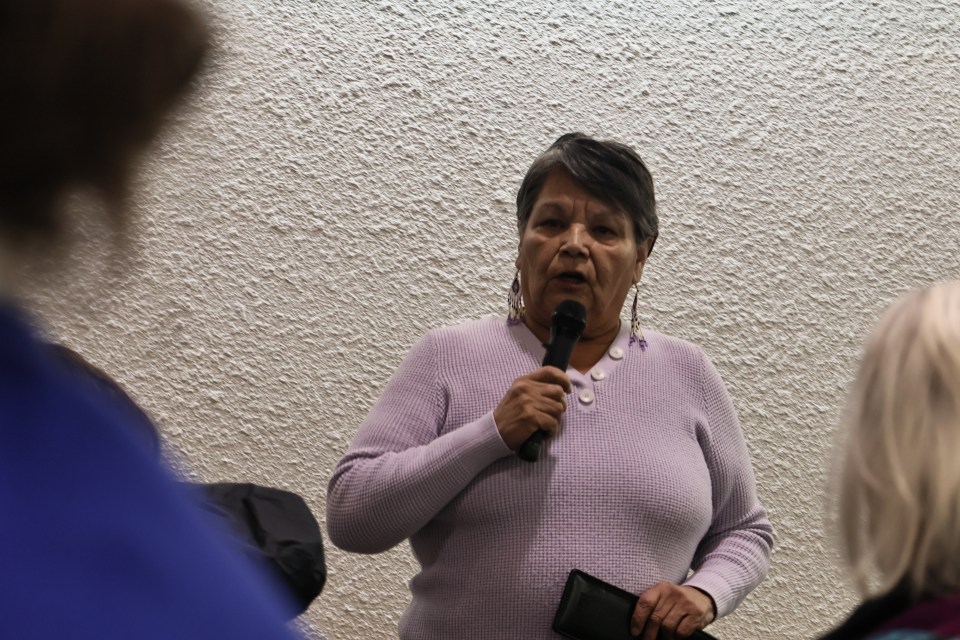
Noeline Villebrun said addiction and crime affect communities across the territory, not just Yellowknife, and noted these issues do not reflect traditional Dene values.
Villebrun emphasized the need for solutions focused on dignity, healing, and community support rather than punishment, and highlighted gaps in services – including insufficient healing centres and programs that fail to incorporate Dene principles.
“If the issue is alcohol, then we need to limit the access to liquor stores. We have mail order. You can pick up the phone and order your liquor from the store right to your home,” she said. “We don’t need those contracts.”
Whitney Deware described an experience at the emergency department with her daughter where, she said, unhoused people were using the waiting room as a shelter.
Advertisement.
Advertisement.
Deware also said she had witnessed an RCMP officer aim a gun at a man in the hospital, calling the response excessive and raising concerns about safety in the emergency department. (Details of the incident could not be immediately verified.) She said the situation made her daughter frightened and expressed a broader need for safe spaces for people experiencing homelessness.
“We need different solutions where people can go to be safe, not just my daughter who’s sick, but the people who are experiencing homelessness in the city,” she noted. “They need a place where they can be safe, where everyone else can be safe as well.”
Deware said her neighbourhood has been affected by youth-related crime, including vandalism, the theft of her children’s bicycles, and middle school students drinking and using drugs nearby, leaving her children feeling unsafe.
While one person highlighted recent assaults involving security guards, another raised concerns about a nearby encampment, asserting that young girls visit it in larger numbers during the summer. They alleged vehicles frequently stopped for drug deals.
Testart said crime in the community has become more visible now than it was before and is an issue often raised by constituents. He said the meeting was intended to provide a space for residents to discuss safety-related challenges they face.
Some solutions already brought forward are increased RCMP funding and new legislation such as the Trespass Act, Civil Forfeiture Act and Scan, which the NWT government is designed to help shut down properties involved in drug-related activity.
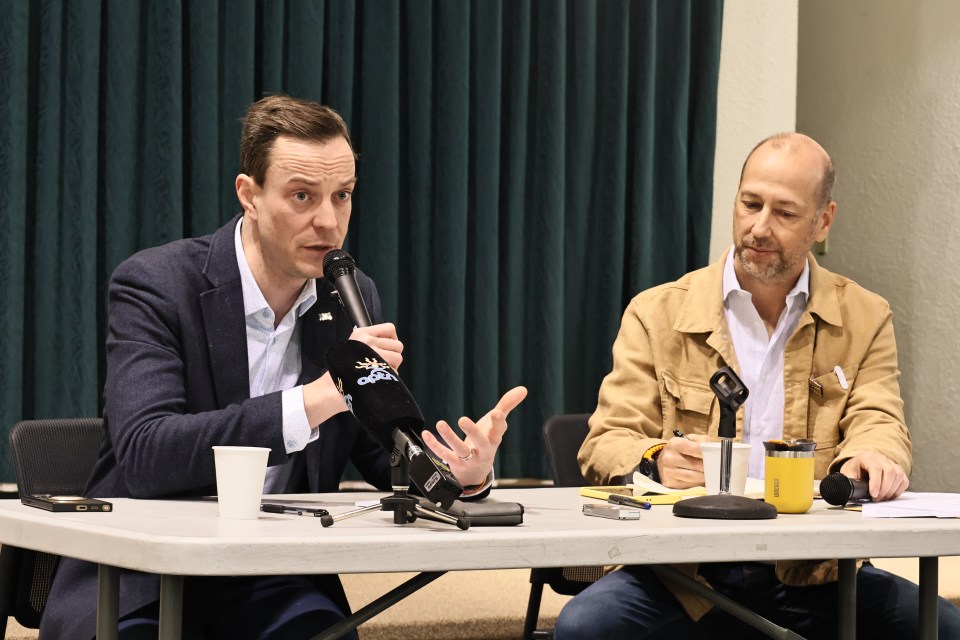
“There are measures that are taking place. We recognize it’s not enough and we need to do more,” Testart said.
“That’s part of the conversation – where do we need to focus our resources? Because the government has a lot of resources but not infinite resources. We need to make sure people feel safe.”
Advertisement.
Advertisement.
Testart said a series of break-ins right before Christmas triggered people to reach out to the MLAs.
In the coming months, he said he hopes to see legislation passed alongside increased funding for municipalities, public safety officers and RCMP support. He also noted that establishing a local treatment centre could help reduce the drug trade.
Testart said the Residential Tenancies Act also makes it “very hard” for evictions to take place.
“Right now, if you see guns and cash from drug dealers and if they’re not convicted, you have to hand it right back. That’s because we lack civil forfeiture legislature, so that’s one example of why we need that to move quickly,” he explained.
“Our crime is higher than the national average and northerners are feeling it every day. We need to give RCMP these tools, we need to give communities the tools they need to succeed.”
