


In March 2023, a Fort Simpson teacher was photographed dragging a four-year-old Dene student across the school parking lot by her snowsuit.
That photo sparked outrage in Fort Simpson and beyond.
Bernice Gargan, a former Dene Zhatıé teacher at Łı́ı́dlı̨ı̨ Kų́ę́ Elementary School, says so much can be traced back to that incident.
In interviews, Gargan and others described how it created a rift in the community between people who supported the child’s family and those who supported the teacher.
To some, the incident triggered memories of mistreatment and abuse from their time in residential school.
Advertisement.
Advertisement.
Three years later, multiple investigations have been launched into the Dehcho region’s education system and the village remains divided.
In the first of a three-part series examining why education in the Dehcho is under so much scrutiny, we spoke with the teacher and the student’s mother to better understand what happened that day and afterward.
In part two, we’ll examine the fallout from a second alleged incident in 2024.
In part three, we’ll look at the investigations that have taken place, what we know about their outcomes, and what the future looks like for education in Fort Simpson.
Advertisement.
Advertisement.
Residential school legacy
To better understand the March 2023 incident, it’s important to know the context within which the Łı́ı́dlı̨ı̨ Kų́ę́ Elementary School operates. Like many schools in the Northwest Territories, students’ parents, grandparents – and in some cases great-grandparents – are survivors of the residential school system.
Lapointe Hall and Bompas Hall were federal hostels built in 1959 to accommodate students attending the Fort Simpson Federal Day School.
Lapointe Hall was “plagued by incidents of illness and reports of ill-treatment of students,” according to the National Centre for Truth and Reconciliation, or NCTR, which reports that a student named Michael Antoine died there. Parts of the site where Lapointe Hall once stood are visible from the classrooms of Fort Simpson’s current high school.
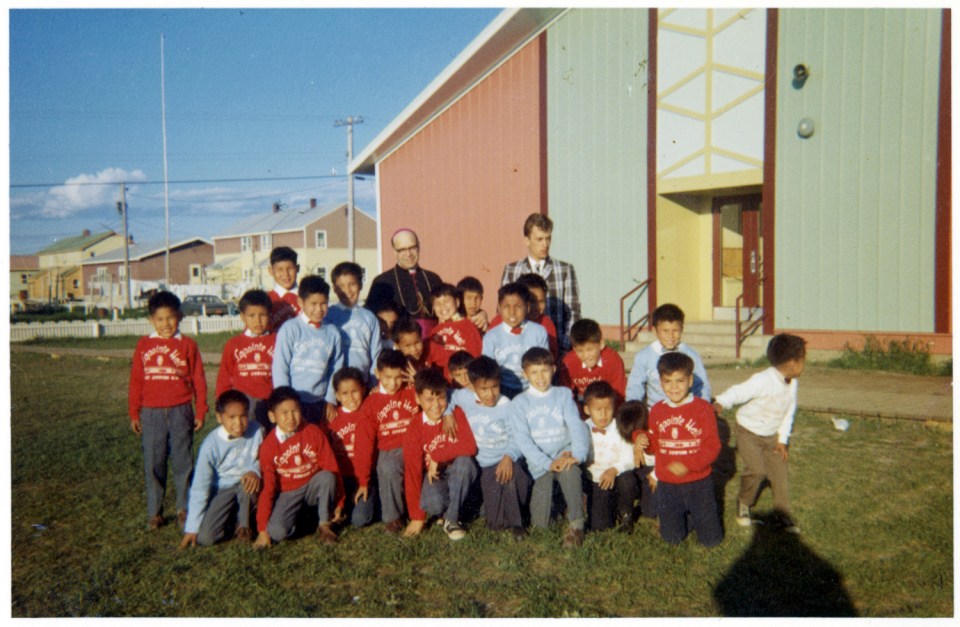
At Bompas Hall, the NCTR reports that three students – Irene Sabourin, Lynda Mcpherson and Nancy Tsetso – died between 1961 and 1982.
By the mid 1970s, Bompas Hall was used to teach the younger grades of the federal day school and eventually became the Bompas Elementary School, named after William Carpenter Bompas, who in 1884 became the first bishop of Mackenzie River.
In 2019, the elementary school was renamed the Łı́ı́dlı̨ı̨ Kų́ę́ Elementary School, though a sign for Bompas Elementary still hangs on the side of the building.
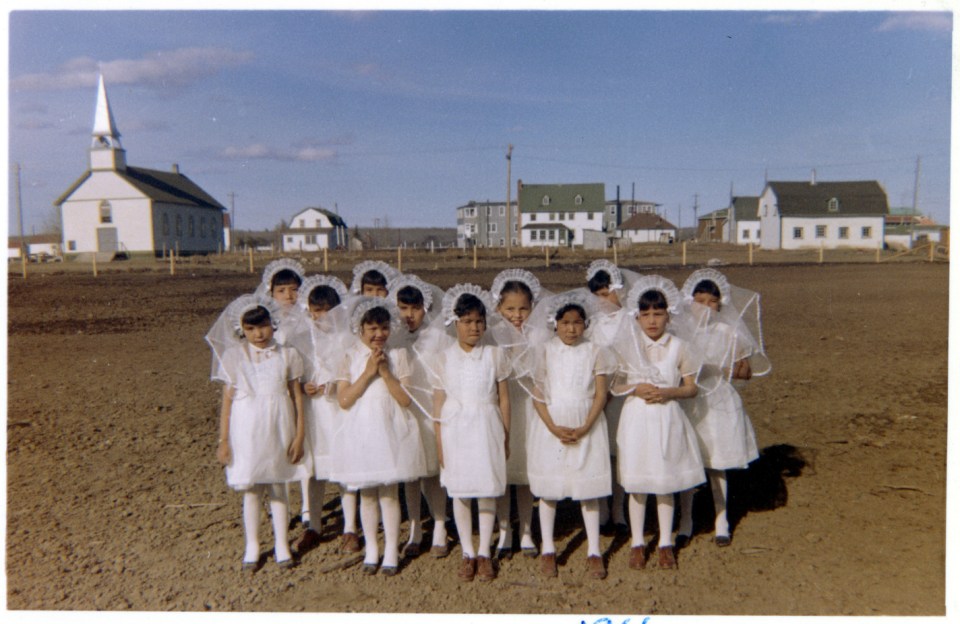
Gargan, who lived at Lapointe Hall while attending Thomas Simpson Secondary School (now called Líídlįį Kúę Regional High School), said the way the child was dragged across the parking lot in 2023 reminded her of how students were punished at those institutions.
She said she took two months off work to cope with distress following the event.
Advertisement.
Advertisement.
“Because of those things that I went through, I really protect the kids at their school,” said Gargan.
“A teacher should never lay their hand on a child or even say any negative things to a child. They’re there to teach them.”
The incident
In describing what happened that day in March 2023, former elementary school teacher Val Gendron explained that children at the school often played a game where they slid down snowy hills on their bellies, pretending to be baby seals.
Usually, the kids would require a pull from a teacher to get themselves going down the hill.
Gendron said she was the only teacher supervising recess when she realized it was a few minutes past when the recess bell would normally ring. She began telling children to go inside to their classrooms, though a few stragglers remained in the school yard.
When only one child was left, Gendron said she asked another student to get the remaining child, Aubrey. When that effort was unsuccessful, Gendron said she then went herself to get Aubrey to go inside.
In a video of the incident captured by the school’s security cameras and published by the CBC, Aubrey is seen running out into the roundabout in front of the school when Gendron walks outside to get her.
She then asked Aubrey to come inside.
Advertisement.
Advertisement.

Gendron said some students had a history of straying away from the group and she had witnessed other school staff grab those students by their clothing to prevent them from running away.
“She’s fast, right?” said Gendron about Aubrey. “I’m not so fast any more, but I don’t really want to be chasing her all over the place, because she was just going to run away.”
“In my brain, I’m like, ‘Oh God, I can’t chase her.’”
In the video, Aubrey is seen running away from Gendron. The teacher takes a few quick steps toward her and grabs her by the hood of her snowsuit.
Aubrey screams as she falls to the ground.
Gendron can be heard asking Aubrey to get up before she begins to drag her toward the school’s doors.
“I should have said, ‘I’m gonna pull you like a seal,’ but I didn’t. I just said, ‘I’m gonna pull you then,’ but I kept stopping and saying, ‘Are you gonna get up?’” Gendron recalled.
Gendron said teachers watched the incident from the window, but no one came to her aid until she and Aubrey were inside.
Advertisement.
Advertisement.
Halfway through the lunchtime recess, Gendron said the school’s principal, Ben Adams, told her she had to go home because of the incident. He declined to discuss it with her, she said.
The following week, a photo someone had taken of Gendron dragging Aubrey was posted to social media.
“It was like a nightmare. That’s how I describe it – it was a nightmare,” said Gendron.
“I am sorry for that incident,” she said. “Do you think I really wanted to be getting the child in the school by pulling them like a baby seal? No. At that time, though, [when] she’s lying on the ground – I probably didn’t have my thinking brain on at that time.
“But I am human.”
Adams declined an interview request and did not respond to questions in writing, stating he couldn’t discuss issues related to students or personnel due to confidentiality concerns. The interim superintendent of the Dehcho Divisional Education Council, Terry Jaffray, also declined an interview and did not respond to questions in writing.
No charges laid
Shannon Cazon, Aubrey’s mother, said she went to the RCMP detachment in Fort Simpson the day after the incident to file a complaint against Gendron.
“They tried interviewing my then four-year-old-daughter and [asked] her what had happened,” said Cazon. “There was only so much that she would be able to say – it was as if they were talking to her as a young adult that was able to tell them exactly what happened.”
Advertisement.
Advertisement.
In a statement emailed to Cabin Radio, RCMP spokesperson Josh Seaward said: “After a thorough investigation of this matter, officers found no grounds existed to lay assault charges against the teacher.
“The decision of whether or not to lay charges was based on the totality of the circumstances, and a review of all of the available evidence, including the video.
“Given the situation, officers determined the actions taken were reasonable, in the interest of the safety of the child, and within the scope of the teacher’s duties.”
Seaward said section 43 of the Criminal Code would be applicable in this case. That section allows teachers and parents to use force “by way of correction” toward a child, as long as the force doesn’t exceed what is reasonable in the circumstances.
Repealing section 43, sometimes referred to as the “spanking law,” was included in the Truth and Reconciliation Commission’s 94 calls to action. In 2015, the federal government committed to repealing the section. Ottawa has yet to take formal steps toward doing so.
Desire for more communication
Gendron said she wished she could have had more communication with school leadership and Aubrey’s family following the incident.
She referenced a separate incident earlier in her career when a grandmother happened to walk past her classroom as Gendron was putting her grandchild in a timeout. (Gendron said she has since stopped employing timeouts as a method of discipline.)
“She complained to the principal that I was picking on her grandkid,” Gendron said.
Advertisement.
Advertisement.
In a meeting with the principal and the grandmother, the grandmother said the way Gendron raised her voice and the way she was disciplining the child made her think of her time in residential school.
Gendron said he hadn’t considered the possibility of someone being triggered in that way and that she apologized and explained her three-strike disciplinary method to the grandmother.
“It was good because I got out what I had to say and I was able to explain my position. She was able to explain her position and it all worked out,” said Gendron.
A week later, Gendron said, the grandmother called about an idea. She wanted to make beaded stoles for students, something that Gendron supported. It’s now a legacy project at the school, Gendron said.
She said that incident easily could have had a different ending.
“We had a good facilitator, a good leader who brought that situation to a good space,” said Gendron.
She alleges the leadership in place in 2023 discouraged communication and she wasn’t permitted to contact Aubrey’s family, nor send an apology letter.
During the fallout from the incident, Gendron said she would have liked more support from her employer to allow more communication with those involved.
Advertisement.
Advertisement.
“I’m sorry if it caused any negative emotions to anybody, none of that was my intent,” said Gendron of what happened in the school parking lot.
“None of my intent was to do anything but get the child into the school, and no one was coming to help.”
The interim superintendent of the Dehcho Divisional Education Council did not respond to questions about the response to the incident. The Department of Education, Culture and Employment said it couldn’t speak to matters related to individual personnel matters or matters related to the investigation it initiated into the education council and its district education authorities.
‘This is our home community’
After the incident, Cazon said her daughter was afraid of going back to school.
At the same time, Cazon said her family faced a backlash for trying to hold Gendron accountable for her actions.
Some school staff, community members and the parents of some students advocated for Gendron to be reinstated at the school, Cazon said.
“Community members came to our family and asked for us to go against [the school district] and not against the teacher,” said Cazon, describing the view of some parents that Gendron had received no support when the incident happened.
When Aubrey’s family did not amend their stance, Cazon said, some Fort Simpson residents turned against them. To her, there was more support for the teacher than for her daughter, the injured party.
Advertisement.
Advertisement.
“We didn’t feel safe for her to continue her education within the school,” she said.
At the time, Cazon’s partner was working full-time in Wrigley. They decided Aubrey would spend the rest of the school year there.
“After those three months in Wrigley, we noticed a difference in her wanting to just be at school, just wanting to go out the door and to learn something new and exciting,” said Cazon.
Aubrey returned home to Fort Simpson the following summer.
“We decided that we shouldn’t feel like we have to put our daughter in another school,” said Cazon. “This is our home community. This is where I was raised. This is where I went to school.”
While the family continued to face tension upon their return, Cazon said she and Aubrey received a lot of support from two teachers and the school principal, Adams, who she said helped Aubrey rediscover her “love of education.”
Cazon said the whole saga left her traumatized to the point where she had to leave her job and take a year off.
“For a while there, I really looked down on myself as a mom, as a community member,” said Cazon.
Advertisement.
Advertisement.
“I was really ashamed of being Indigenous, because this is still happening to our children – what has already happened to our people through residential school.”
The aftermath
After the 2023 incident, former teacher Gargan said there was a noticeable change at the school. She said some parents pulled their children out of her class because she had spoken out against Gendron’s actions.
Gendron herself estimated about 20 children were pulled out of the school following the incident. Annual reports from the Dehcho Divisional Education Council, or DDEC, show student population gradually growing over this period, but they don’t document the number of students withdrawing from a school.
Gargan believes Gendron’s supporters at the school “refused to let her be accountable for what she has done wrong.”
“If I did that to a Caucasian child, I’ll be thrown in jail right away, no questions asked,” she added.
Some of the tension between staff and parents seeped into the pages of the DDEC’s annual report for the 2023-24 academic year. The report notes the elementary school had significant staff turnover.
“Staffing issues are detrimentally harmed by public debate and criticism on social media,” the report noted.
“This constant online scrutiny and barrage of negative comments affects our ability to recruit and retrain quality staff.”
Advertisement.
Advertisement.
Gendron later left her position at the school. She told Cabin Radio she retired, but that she couldn’t speak to the specifics of her departure.
She said she continues to be involved in education. When Cabin Radio spoke with her, she had just finished a literacy tutoring session with a student.
She said some parents have asked her to open her own school.
Reestablishing connection
While off work, Cazon said she worked on building Aubrey’s confidence, getting her back into school in Fort Simpson and building a positive routine.
She said there have been significant changes at the school since the incident in 2023, including improved communication between staff and parents and the implementation of Dene games at school.

In some ways, she said, the incident was a wake-up call her community needed.
Comparing the initial fallout to “an old western movie” pitting rival groups against each other, she believes the incident helped residents to think more carefully about Fort Simpson’s residential school history and its consequences.
“You can see the big disconnection between our culture, between our traditional values, between our Dene laws and principles,” said Cazon.
Advertisement.
Advertisement.
“You could see that wasn’t being taught in the school.”
She said Adams subsequently began implementing Dene laws, values and principles at the school.
“He threw himself right in there, trying to get things going, trying to wake up the community,” said Cazon.
Now, Cazon said she feels safe in the community again, adding people often invite her family to events and to share traditional knowledge.
“It has really moved forward in a big, big, positive way,” said Cazon.
“Three years after the fact, I’m completely proud of who I am and where I come from and what I built, not only for myself but for my children.”
However, the broader school system has struggled to move forward in the same way.
In 2024, a separate incident is alleged to have occurred at the same school. As concerns grew, MLAs began action behind the scenes. We’ll look into that in part two.
