



In 2024, less than a year after a teacher was photographed dragging a student by the hood of her snowsuit at Fort Simpson’s Łı́ı́dlı̨ı̨ Kų́ę́ Elementary School, a second teacher was accused of violence toward a child.
In this instance, the teacher allegedly struck an eight-year-old student in the classroom.
The child’s mother, who requested anonymity to discuss the sensitive nature of the situation, said the incident was caught on video.
“You can see the teacher and his hand go back to the side, facing back, and then a second later you see [the child] hit the floor,” said the parent.
She noted the video doesn’t show the teacher’s hand making contact with her son, but he indicated to her that he had been hurt in the incident.
Advertisement.
Advertisement.
Cabin Radio has not independently reviewed the footage.
The teacher allegedly involved in this incident could not be reached for comment.
This is the second in a three-part series examining how the Dehcho’s education system has become fractured, leading to multiple investigations.
Part one examined a 2023 incident that caused a longstanding rift in the community over the administration of education and triggered three separate investigations into the Dehcho District Education Council and its district education authorities.
Advertisement.
Advertisement.
After the second incident, the child’s mother felt the school’s administration didn’t take the matter seriously and didn’t take accountability for what happened.
“The way they handled it and disregarded a special needs family really left a dark thing with us,” said the parent.
After the incident, she said the teacher was absent from school for about a month before they returned to teach a different grade.
Meanwhile, the broader response to the incident – in early 2024 – showed territorial politicians beginning to involve themselves in the conversation about Dehcho education.
The mother said she had a meeting with Nahendeh MLA Shane Thompson, victim’s services coordinator for the Łı́ı́dlı̨ı̨ Kų́ę́ First Nation Amy Fraser, then-superintendent of DDEC, Philippe Brûlot and school principal Ben Adams.
The mother said she wanted acknowledgment of the harm caused, to understand how the situation was being handled, and counselling for her child. She said her child never received the support for which she asked.
Last spring, she was one of several parents who met with NWT education minister Caitlin Cleveland to share their concerns about what had transpired at the elementary school and to ask for the termination of Adams as principal.
“We need a new education system,” she said. “We need somebody that’s actually going to advocate for the kids and be there and wanting to respect Indigenous land and the way that we all grew up.”
Advertisement.
Advertisement.
Teachers, she said, should be provided with cultural sensitivity training to teach them about the long-lasting effects of the residential school system.
Asked about the training offered to teachers and other DDEC staff, Agata Gutkowska – a spokesperson for the Department of Education, Culture and Employment – said all NWT teachers are required to participate in GNWT-produced training called Living Well Together “to learn about the impacts of residential schooling so they can be responsive to the needs of families in the community where they teach.”
Gutkowska said the department also offers training such as the Kairos “blanket exercise,” which helps educators better understand the trauma associated with colonizing policies and practices, including residential schools.
The parent suggested that what happened to her child was a symptom of a wider problem of teacher burnout, something educators are experiencing across the country.
“Our teachers are running on fumes,” she said. “They’re not getting the help that they need.”
A Yellowknife MLA weighs in
By the spring of 2025, MLA Thompson – who is also the NWT’s speaker of the house – said his office and the local district education authority, or DEA, were receiving more concerns from parents about education-related matters in Fort Simpson.
Speaking with Cabin Radio earlier this month, Thompson said he couldn’t elaborate on what those concerns were due to privacy and confidentiality issues.
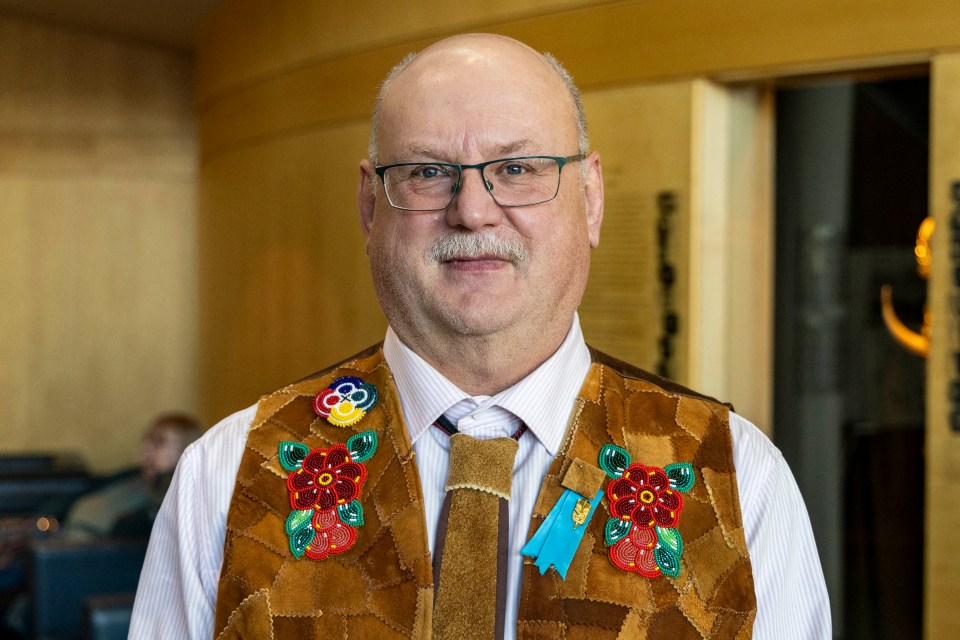
He said he was advised that due to his personal connections to the school (he has grandchildren who attend and a daughter who taught there), he should ask a colleague to raise the issues in the legislature.
Advertisement.
Advertisement.
Thompson said Dehcho MLA Sheryl Yakeleya already had a lot on her plate, so he tapped a Yellowknife MLA – Range Lake’s Kieron Testart – to champion the issue.
In May of 2025, Testart made an overnight trip to Fort Simpson to hear the concerns.
Thompson said Testart had the opportunity to meet with parents and the DEA without Thompson in the room.
“Essentially, it was a conflict between the elected school body [the DEA] and operational decisions that would be being made on their behalf,” Testart told Cabin Radio of what he heard.
He said that in his view, when the DEA complained about the way decisions were being made at the school, the minister did not take their complaints seriously.
“Basically, the minister and the department backed up the staff against the wishes of the community,” said Testart.
“This extended from a series of incidents related to harassment at one of the schools in Fort Simpson, and some issues related to child safety.”
Cabin Radio contacted past and present chairs of the Fort Simpson DEA to try to learn more about what was allegedly happening.
Advertisement.
Advertisement.
Renalyn Pascua-Matte, the former chair, said she wasn’t in a position to publicly discuss these matters. Amy Fraser, the current chair of the DEA, did not respond to an interview request.
Testart said he spoke with parents who said they planned to leave the community over the tension in the village.
“It is a small town, so they’re exacerbated by that proximity,” said Testart. “It becomes very much almost like cliques of people pointing fingers, and that wasn’t helping the situation either.”
He heard that some of these tensions had lingered since the 2023 incident involving Shannon Cazon’s daughter, Aubrey. He said the people he spoke with were concerned about how that event was handled.
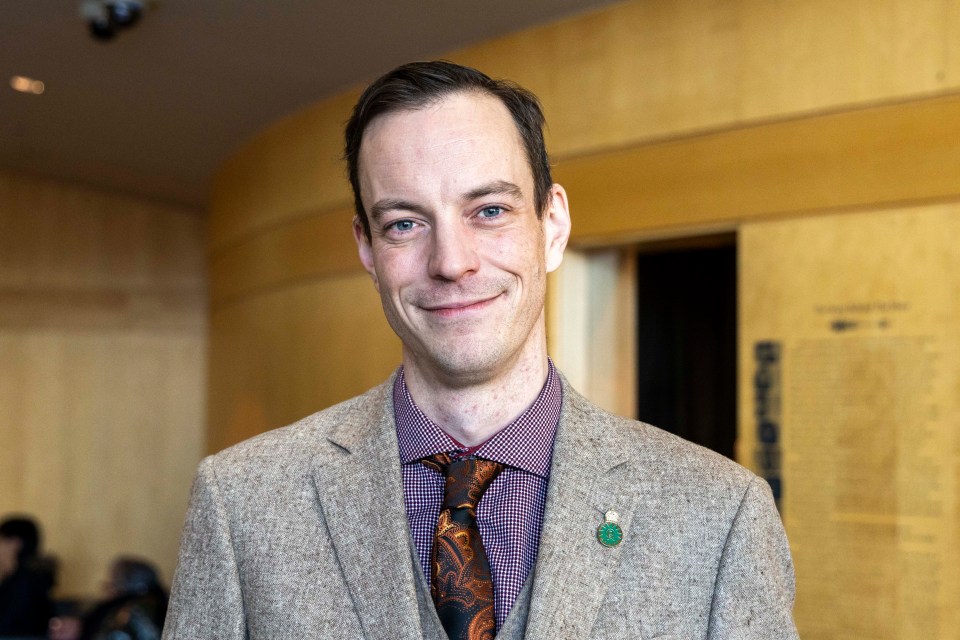
“Instead of trying to find a way to bring the parties together, to reconcile the event and to bring everyone back to a place of mutual understanding, it was a very heavy-handed approach that ultimately ended the employment of a very long-time educator who had a lot of very positive relationships with families in the community,” said Testart.
“That really left a divided community.”
Testart raised what he had heard in the legislature later in May 2025, saying in part: “It is heartbreaking to see duly elected community representatives and hard-working parents not getting the help they deserve to address very serious concerns.”
A complaint to the integrity commissioner
Thompson had not fully removed himself from the discussion around Fort Simpson’s education system.
Advertisement.
Advertisement.
In April 2025, he sent an email to the chair of Fort Simpson District Education Authority expressing his support for the DEA’s decision to ask the DDEC’s superintendent to terminate principal Adams.
Later that same day, the DEA chair sent a letter to DDEC superintendent Donna Miller Fry asking for that process to be initiated.
The following day, Thompson wrote from his legislature-issued MLA email account to the chair of the DEA, including a copy of his previous email and a letter on MLA stationery explaining his understanding of the role of the DEA – and supporting the decisions it made as an elected body.
That email ultimately found its way into the public gaze after Adams referred Thompson’s conduct to the territorial integrity commissioner, David Jones, alleging the MLA’s behaviour breached the legislature code of conduct and amounted to harassment.
In a response to the commissioner, Thompson’s lawyer said many of the MLA’s dealings with the principal had been in a personal capacity as the family’s appointed representative for matters related to his grandson’s education. He acknowledged an April 8 email sent from Thompson’s MLA email address should have come from his personal account, calling that “an error of judgment.”
In the end, the commissioner dismissed Adams’ complaint, saying “the public interest would not be served” by taking further action.
In providing context for the complaint, Jones wrote that Thompson has grandchildren who attend the elementary school and that his daughter previously worked as a teacher at the school.
“There were issues between her and Mr. Adams, and the superintendent of the Dehcho Divisional Education Council (the “DDEC”) relocated her to the high school which has a different principal,” Jones wrote. He noted that Thompson’s son-in-law also “had issues” with Adams and wouldn’t interact with him, leaving Thompson to act as the point of contact with the principal for matters related to his daughter’s son, who was enrolled in the school.
Advertisement.
Advertisement.
Broader issues
Testart said the unified position of the DEA was that a staffing change – the replacement of Adams – was justified in this instance. That decision wasn’t respected by the administration of the DDEC and the territorial government, Testart said.
“It raises a bigger question of: what is the role of an education body if ultimately a deputy minister in Yellowknife decides who gets hired and who gets fired, when those contracts are supposed to be held at the local level and that’s still unresolved,” said Testart.
“These parents and community members are elected for a reason. That’s why we have these boards. If it’s all just a puppet show for the department, then we might as well get rid of them.
“In this case, those issues really came to bear, because it was a tug of war between the wishes of the department versus the wish of the community.”
Testart said that during his trip to Fort Simpson, he only spoke with those raising concerns about Adams’ role at the school, not those who supported the decisions made.
Cabin Radio heard from community members who praised Adams’ work, including Shannon Cazon who said he helped her daughter, Aubrey, rediscover her “love of education.”
Bernice Gargan, a retired teacher at the elementary school, said Adams did a lot for the school.
“He’s full of energy, he’s musical, and the kids, the kids, really like him,” said Gargan.
Advertisement.
Advertisement.
“I’ve worked under a lot of principles before, but this one, he goes way above [and beyond].”
Terry Jaffray, the interim superintendent of the DDEC and Philippe Brûlot, the former superintendent each declined an interview request from Cabin Radio. Jaffray did not respond to questions in writing.
In the final part of this series, we’ll explore the status of all three investigations into the Dehcho Divisional Education Council and its district education authorities – and where this leaves the divided community of Fort Simpson.
