


Advertisement.
MLAs are suggesting the GNWT consider hunting bans and road closures to protect caribou herds with the upcoming construction of two new roads through the territory.
At a public briefing last Friday, the minister and staff from the Department of Environment and Climate Change updated MLAs on caribou harvest monitoring along the Tibbitt to Contwoyto winter road that connects Yellowknife to the territory’s diamond mines.
The GNWT opened six investigations this year into cases of illegal harvesting, wastage and wounding involving about 14 caribou, said ECC deputy minister Robert Jenkins. This is a decrease from the 48 caribou the GNWT said were wasted last year. including 22 pregnant cows along the winter road north of Yellowknife.
“Overall, I am happy with the level of compliance we saw over this year’s winter road season, and we will continue to work with our partners going forward to keep illegal harvest at a minimum,” said environment minister Jay Macdonald.
Advertisement.
Advertisement.
Caribou monitoring in the NWT is done using a collaborative wildlife co-management system between the GNWT and Indigenous governments. GNWT wildlife officers monitor hunting activity along the winter road, and assist Indigenous Guardian programs in monitoring caribou health and migration.
“Given the complex nature of the issue and the importance for all the co-management partners to work together, we really do invest time to get things right,” said Jenkins.
Jenkins said a joint management proposal with the Tłı̨chǫ Government for Bluenose East caribou will be going to the Wek’èezhii Renewable Resource Board this summer, and a joint management proposal for Bathurst caribou is expected to be ready for the renewable resource board in January 2027.
‘Too many roads’
MLAs’ questions on Friday focused primarily on how the GNWT is planning to protect caribou with the coming construction of the Mackenzie Valley Highway and the Arctic Economic and Security Corridor.
Advertisement.
Advertisement.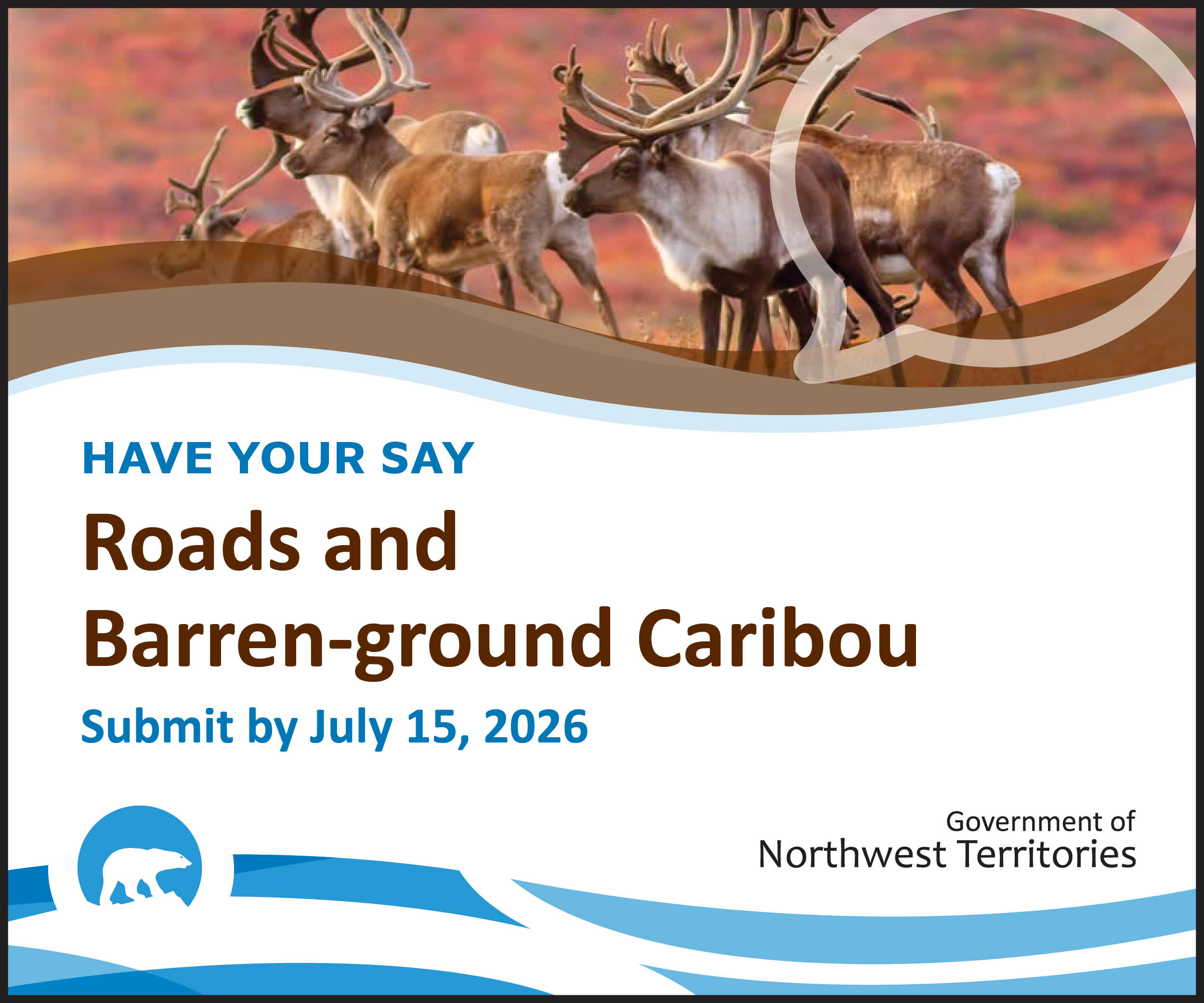
Each of those projects has been referred to the federal Major Projects Office. While neither is guaranteed to go ahead, both are moving ahead at a pace not previously seen.
Sahtu MLA Danny McNeely said the GNWT can set development standards around road slope and the materials used to ensure caribou migration is impacted as little as possible.
Macdonald said his department is involved in creating policies that consider “all aspects of caribou habitat management and the longtime conservation of the caribou” when it comes to the major infrastructure projects, and that guidelines for developing roads in caribou habitat will be released “very soon” for public engagement.
Yellowknife North MLA Shauna Morgan went further in her questioning and asked if the GNWT has considered simply not building any more roads as a means of protecting caribou.
“At some point, maybe there’s too many roads,” she said.
Jenkins said road construction in the NWT is done with the intention of having very little to no impact on caribou, and the effect the road will have on caribou herds is considered during environmental assessments to identify the mitigation actions needed.
Morgan said environmental assessments only look at the project presented to them. She asked where, within the NWT’s regulatory system, the cumulative impacts of multiple projects are considered together.
“I would say that an environmental assessment of a project is robust and can look at reasonably foreseeable things that would happen as a result of that project,” said Jenkins.
Advertisement.
Advertisement.
He said review boards assume that if the GNWT is building a road then it wants development to follow, and the boards therefore consider what development may occur because of it.
Frame Lake MLA Julian Morse and Mackenzie Delta MLA George Nerysoo asked if the GNWT is considering hunting bans along the proposed roads, and Nerysoo asked if mitigation measures would include road closures during caribou migration.
Jenkins said conversations about the Arctic Economic and Security Corridor “haven’t gotten to a place yet” for those discussions, but those tools would be considered.
