


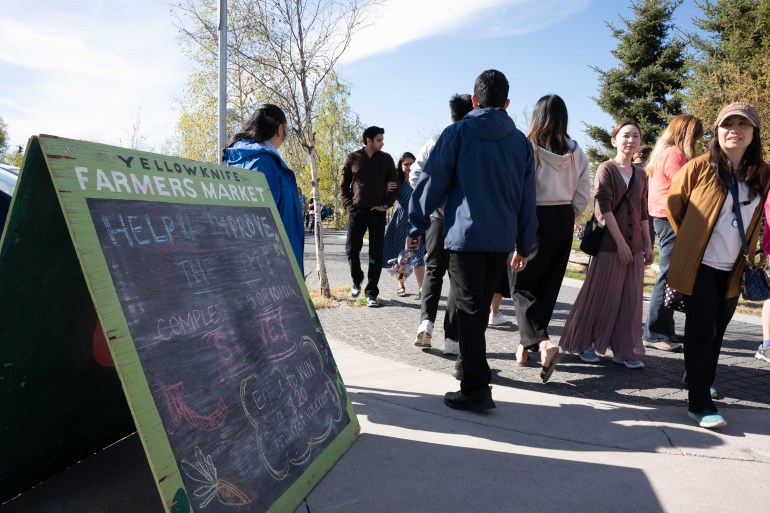
An estimated crowd of 900 gathered at Yellowknife’s Sombe K’e Civic Plaza on Tuesday, the first day of the city’s weekly summer farmers’ market.
With more than 40 stalls spread across the park, residents who had been hibernating through the winter were out in full force, spread across the green field while being enveloped by the aroma of Japanese ramen, West African cuisine and baked goods.
“The market is a place to go to buy fresh local vegetables, locally made processed food products, and also a place to get prepared meals,” said Dwayne Wohlgemuth, the market manager.
More than food, for Wohlgemuth, the market is a social occasion,
“I love that community atmosphere of just being able to go there without needing to arrange to meet anybody. I could just go there and find friends,” he said.
Advertisement.
Advertisement.
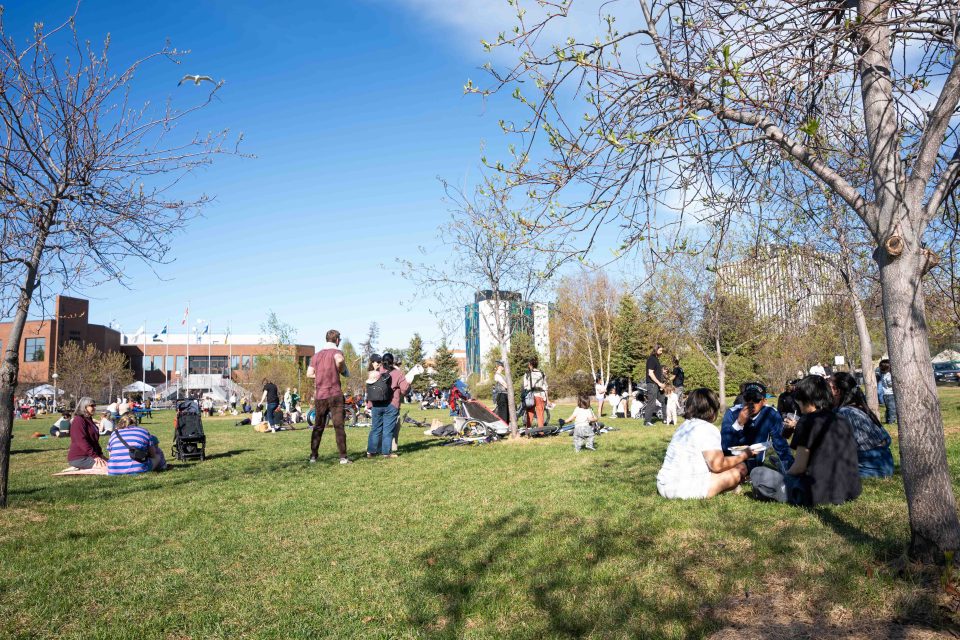
Lucas Warner and Kaylee Cornisa, who only arrived in Yellowknife three days prior, described the event as “a place anybody in Yellowknife can come to.” Having assumed Yellowknife would be a “quieter town,” they said the market was proving otherwise.
“It’s really amazing to see everyone come out and come together and have really good food,” Warner said.
Cultural melting pot
As lines formed down sidewalks, some customers waited more than 15 minutes for locally cooked ethnic food that isn’t always available elsewhere in the city.

Jairah and Janica Silverio, longtime Yellowknifers, say they specifically enjoy the Ice Baker stall for popcorn chicken, fries and black tea.

“They don’t really have popcorn chicken like this anywhere else in town,” the Silverios said, justifying the wait – though they added that if Ice Baker had a store, they would go every day.
For the Silverio siblings, who are Filipina, having the market means a lot.
“There are a few Filipino stands I’ve seen around, which is nice. For some of us it’s kind of hard to feel at home, especially when we’re away from it, so it feels like we’re home still,” Janica said.
For the vendors, it’s an opportunity to connect in a similar way.
“While I’m an immigrant and technically a minority, I have the opportunity to share my culture,” said first-time vendor Atsushi Ohashi, who started the Kyokkou ramen stall.
A space for entrepreneurs
The market also tries to serve as a form of entrepreneurial incubator, offering a low barrier to entry for people who want to get started selling something.
“So many people who would like to cook and have that experience of selling food can do it really easily at the market,” said Wohlgemuth.
“The input costs and the risk involved is really low. Just coming to the market has a pretty low cost and it’s pretty straightforward.”
Advertisement.
Advertisement.
Ohashi thinks it will allow him to build up his repertoire before scaling up.
“I don’t have enough money to build a whole restaurant and operate out of that, but I do have the capacity to do a farmers’ market stall,” he said.
Age doesn’t matter. Malaya Grant, the founder of MG Culture Beads, is 17.

Grant, who sells Indigenous beaded earrings, said: “You meet so many different people here, even your own friends and family come by, and I feel like it’s an amazing opportunity for small businesses.”
The market runs every Tuesday until September 15, with the exception of June 30.
