


Advertisement.
Łútsël K’é Dene First Nation Chief James Marlowe says he believes the establishment of Thaıdene Nëné National Park Reserve is “one of the best things that ever happened” to his community.
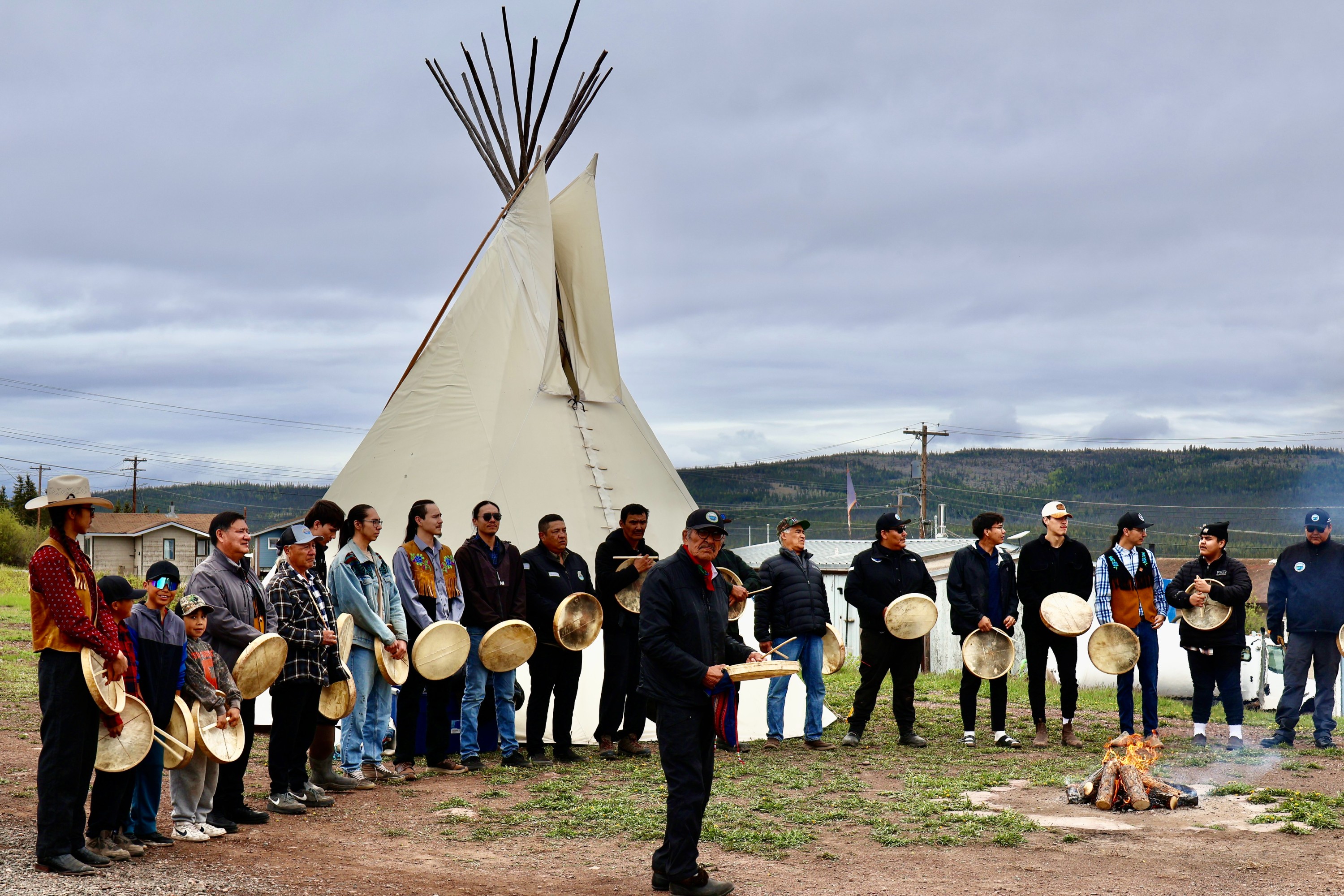
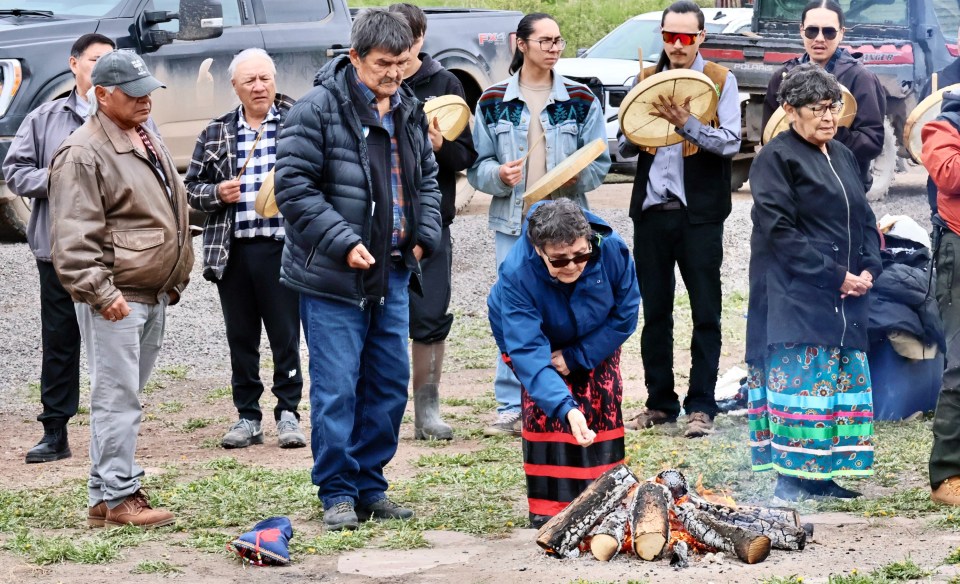
People from across the NWT and elsewhere in Canada gathered in Łútsël K’é on Wednesday to celebrate the first relationship plan for the Indigenous protected area.
The 10-year plan is called Thaıdene Nëné Badı Xá, meaning “watching over Thaıdene Nëné” in Dene Yatı. Grounded in nuwé ch’anıe – or Dene values and knowledge systems – it sets out a vision, goals and objectives for long-term stewardship of the protected area.
Advertisement.
Advertisement.
“It’s a path-breaking model for collaborative stewardship,” said Iris Catholique, manager of Thaıdene Nëné. “It is grounded in old ways, it’s grounded in relationships, in respect, in care, in collaboration and in ceremony.”
Andrew Campbell, interim president and chief executive officer of Parks Canada, described the plan as “truly inspirational.”
“It’s a document that I would like to say is about the best of relationship,” he said.
“It’s about the respect of the land, it’s about the respect of the people, it’s about the respect of culture, it’s about how all of that is going to come together in the management of this area.”
Advertisement.
Advertisement.

Thaıdene Nëné, meaning “Land of the Ancestors” in Dënesųłı̨né Yati, encompasses 26,376 square kilometres northeast of Łútsël K’é and includes a national park reserve, a territorial protected area and a territorial wildlife conservation area.
It is home to caribou, muskox, wolverines, bears, wolves, moose, lynx, birds and fish, and it spans waterfalls, lakes, rivers, cliffs, forest and tundra.
Thaıdene Nëné was established in 2019 and is co-managed by the Łútsël K’é Dene First Nation, Northwest Territory Métis Nation, Parks Canada and the NWT government. The Deninu Kųę́ First Nation and Yellowknives Dene First Nation also provide guidance on stewardship.
The partners and board for the protected area said they chose to call the new plan a relationship plan – rather than a management plan – as “management” implies control and ownership over the land and separation between the land and people, which is inconsistent with Indigenous worldviews.
The relationship plan sets five goals:
- promoting nuwé ch’anıe;
- sustaining the ecological integrity of Thaıdene Nëné;
- building and maintaining healthy relationships;
- creating good visitor knowledge and experiences; and
- supporting opportunities that strengthen Indigenous prosperity and wellbeing.
It details place names and cultural terms of the region in Dene Yati, and lays out zoning that governs visitor activities in the protected area. That zoning does not impact Indigenous or treaty rights.
Visitors are prohibited from accessing some areas in the first zone, 0.05 percent of the national park reserve, which covers areas that contain unique, threatened or endangered natural or cultural features.
Those include the spiritual gathering site Desnéthcheé as well as an island on Ɂedacho Tł’ázı̨ – or Timber Bay – where Gahdële, a powerful medicine man, is buried. In other areas designated under zone one, such as Tsąkuı Thedá or Parry Falls and the Taché/Kaché Village Site, visitors are allowed access with a licensed guide.
Advertisement.
Advertisement.
The second zone covers 78 percent of Thaıdene Nëné. In this zone, motorized access and use are allowed under “specific circumstances.” In some cases, permits are required.
In the remaining third zone, motorized access and use are allowed. This zone covers Tu Nedhé or Great Slave Lake, all water bodies in the territorial protected area, Tthe Kálı̨ka Tué or Stark Lake and several commercial leases.


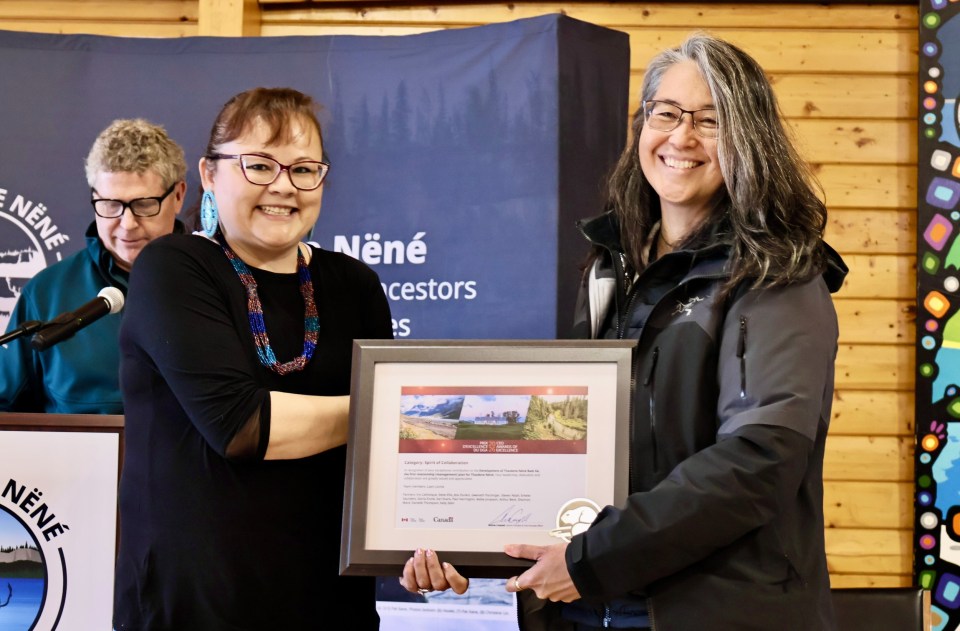
Campbell, from Parks Canada, announced on Wednesday that the team that developed the relationship plan had won the agency’s 2026 CEO Award of Excellence in the spirit of collaboration category.
The awards are Parks Canada’s highest honour.
“This is all across the country, at over 270 Parks Canada places. It is groups that come together and show the greatest spirit of collaboration,” he said.
Jay Macdonald, the NWT’s minister of environment and climate change, said the plan was “built on government-to-government relationships grounded in collaboration and shared decision-making.”
“It reflects what Thaıdene Nëné has shown us from the beginning, that we can achieve more when we work together,” he said.
‘Going to be forever’
The establishment of Thaıdene Nëné followed decades of negotiation and planning.
Advertisement.
Advertisement.
When the Canadian government first proposed a national park in the area in the 1970s, Łútsël K’é Dene leaders rejected the idea due to concerns that Indigenous people would lose their rights to hunt, trap and fish on their traditional lands.
Speaking on Wednesday, Northwest Territory Métis Nation President Garry Bailey highlighted distrust in the federal government following the mistreatment of Indigenous people in Wood Buffalo National Park.
When Thaıdene Nëné was eventually established as an Indigenous protected area in 2019, its co-management agreement was celebrated as a model of reconciliation for future conservation efforts.
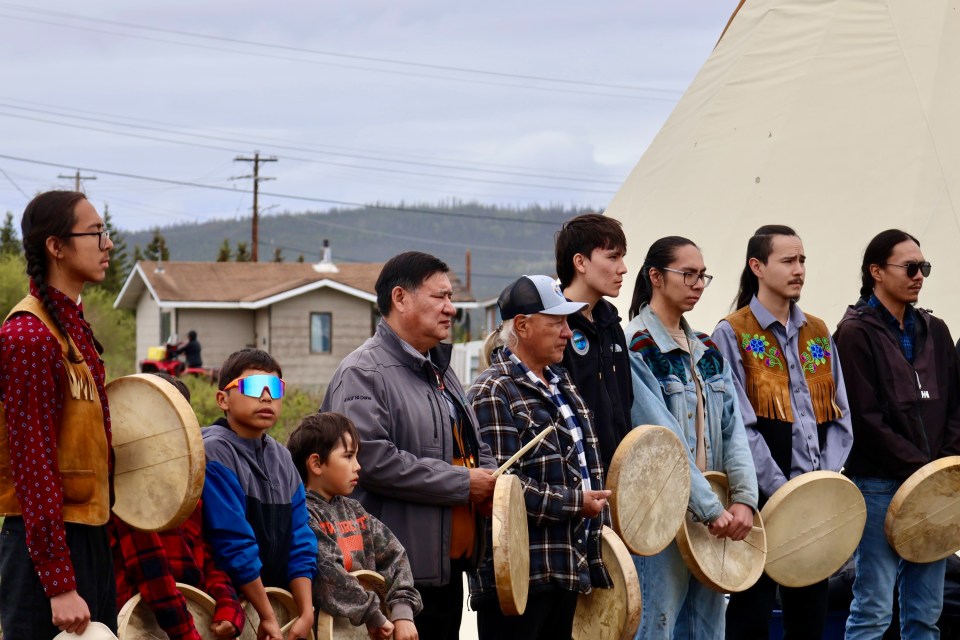
Adeline Jonasson, chair of Thaıdene Nëné Xá Dá Yáłtı, the operational management board for the protected area, said Łútsël K’é is a traditional community and a lot of people spend time out on the land.
She said she is proud of everyone who worked over the years to help establish Thaıdene Nëné and that it will be up to younger generations to continue that work.
“It is our responsibility to ensure the land continues to thrive to time immemorial. That is our job,” she said.
Catholique said she grew up with “one foot in two worlds” and, when she was not in school, she would travel on the land with her family. She has since passed down that knowledge to her sons, like how to tan hides and harvest medicine.
“It’s this close relationship and deep knowledge of the land and water and plants and animals that have sustained the Dënesųłı̨né for millennia,” she said.
Advertisement.
Advertisement.
“It is these relationships and ways of knowing that will also ensure the wellbeing and prosperity of future generations.”
Chief Marlowe said Thaıdene Nëné will protect the land, water and wildlife from industrial activity and highlighted benefits like employment.
“Sometimes when we sit there and talk about the protected area Thaıdene Nëné – and then you look at the wall and see all those Elders that were there sitting with us, talking about the future, the young people, the training, the opportunities – they were right that they were creating something for today and tomorrow, for the future,” he said.
Bailey, the Northwest Territory Métis Nation leader, said Thaıdene Nëné will remain protected long after mines close elsewhere in the territory and said it is bringing communities back together.
“This park is going to be forever,” he said.
