



A 20-year-old man in Yellowknife was sentenced in November to five years’ imprisonment for crimes involving child sexual abuse material. His parents say they struggled to get him the help he needed.
Chase Straker had pleaded guilty to charges of transmitting child pornography, possessing child pornography and extortion between September 2021 and April 2022. At the time of the offences, he was under court-imposed conditions to not possess an internet-connected device or communicate with girls under the age of 16.
At a bail hearing in September 2023, his adoptive parents expressed frustration at their apparent inability to secure him access to counselling related to his offences.
“The priority for him right now is he needs proactive counselling … We’ve pushed with the jails that he has access to that and have been disappointed,” his mother said.
“I just haven’t seen counselling being a priority in the system.”
Advertisement.
Advertisement.
Straker’s adoptive parents told the court their son, who is of Métis descent, has unresolved trauma from his childhood and has been affected by intergenerational trauma from the residential school system. They said he began dealing with anxiety and depression and using marijuana after Grade 9.
Straker also believed he may have fetal alcohol spectrum disorder, they said, but they were unable to have him assessed by a doctor.

“We sought out counsellors, doctors, which was not an easy road by any means,” his mother said.
Straker’s parents said they were able to get him into a treatment program in BC related to his drug use. While Straker attended the facility twice, he did not complete treatment either time. Straker’s lawyer said he did not know how to ask for help with sexual-related issues.
Advertisement.
Advertisement.
Straker’s parents and his lawyer declined to speak with Cabin Radio for this report.
“I’ve had a lot of issues, which I realized after the first time I went to rehab,” Straker told the court during sentencing.
“I’m not sure why I didn’t work on it there, but part of the reason is the embarrassment and shame that follows.
“I can’t imagine that even compares to the embarrassment and shame I’ve caused others.”
Straker told the court he hoped to get help now he was being sent to a southern federal correctional centre. There are no federal prisons in the North.
“I have a problem. I know for a fact that the best thing I can do, not only for myself but my parents, my family, and my community and for the world in general, is to get help,” Straker said.
“I hope that it’s not too late for me and I hope I can work on myself while I am still young, so I can have a relatively normal life for when I’m older. I want to show the community that I can change. I never want to hurt others the way I did. I want to get better.”
An ongoing issue
During Straker’s sentencing, Justice Shannon Smallwood said she regularly hears about offenders in the NWT facing challenges getting the help they need.
Advertisement.
Advertisement.
“Options for people who wish to seek help with their issues can be difficult to access, or alternatively not geared to their particular circumstances,” she said.
While NWT court dockets are often filled with cases of people facing charges for sexual offences, there are few related treatment and support options in the territory.
Another case that highlights the issue is that of Harvey Havioyak. In June, the 20-year-old from Hay River was sentenced to three and a half years in prison for making child pornography available and three years for possessing child pornography, to be served at the same time.
Havioyak’s lawyer had argued he should be sentenced to two years less a day so he could serve his sentence in an NWT jail. The lawyer expressed concerns about his young Inuk client’s prospects in a federal institution.
Sentences under two years are normally served in territorial or provincial jails, while longer sentences are served in federal prison.
In her ruling, Justice Smallwood said it was important for Havioyak’s rehabilitation that he get sexual offender treatment as soon as possible. That’s something she said would not be available to him in the territory’s corrections system.
“Sending a northern offender, particularly a youthful one, to a southern penitentiary is always a concern for any offender, but the availability of federal programming for Mr Havioyak is important for his rehabilitation,” she said.
“I am very concerned for Mr Havioyak and for his future, and I hope that he is able to get the help that he needs.”
Advertisement.
Advertisement.
Lance McClean is a defence lawyer based in Edmonton who also practises in the NWT. He said it’s “effectively impossible” for people to access sex offender treatment in the territory, where there is no residential treatment facility and limited programming elsewhere.
“Certainly, the conversations I’ve had with people who are facing sexual offences have suggested there is either a lack of treatment or a lack of ability or understanding how to get treatment, or lack of desire to speak to a counsellor about sexual offending,” he said.
Kate Oja, an NWT-based defence lawyer, said she has heard of programming for sexual offending being offered on an ad-hoc basis at the jail in Yellowknife. She said she was unaware of any programming related to sexual offending outside the correctional system but that in general, individual counselling and substance abuse programming can be helpful to address underlying risk factors.
“In the NWT, most, if not all, Indigenous offenders will have been impacted in at least some way by the residential school system and the legacy of colonialism. Many have been victims of sexual abuse themselves, and many struggle with addiction issues,” she wrote.
What’s available in the NWT?
According to the NWT’s Department of Justice, there is one program at the North Slave Correctional Complex in Yellowknife, led by a correctional psychologist and aimed at “low-risk” adult inmates convicted of sexual offences. Over the past year, the department said four people had successfully completed the program.
If an offender is deemed to need more intensive programming, the department said it looks for options through service agreements with southern institutions.
The department said corrections staff in the NWT are being trained to deliver a new sex offender program, designed by the Correctional Service of Canada, that it expects to be available in the “near future.”
“Treating individuals who have committed sexual offences is a complex process,” the department said in a statement. “The nature and intensity of the treatment is shaped by several factors. These include the individual’s identified needs, their cognitive abilities, their level of motivation, and their willingness to make positive changes.”
Advertisement.
Advertisement.
Outside the corrections system, NWT residents can access free counselling through a community counselling program, though there is no dedicated treatment program for sexual behaviours.
The territorial health authority said it “may have some pockets of specialty depending on staff available and their specific training and experience.”
“We do not have a dedicated referral pathway for sexual offenders; but if someone presented with unique needs we would work with the individual to determine the best service for them to access – either inside or outside the NWT – depending on their needs,” the authority said in a statement.
Treatment ‘hugely important’
While helping to rehabilitate sex offenders may be controversial, experts and advocates say it can prevent further abuse.
McClean said access to programming is “hugely important” in preventing sexual offences.
“One of the problems we see in sexual offending, generally, is people don’t feel they have resources they can go to, they can trust, to help address whatever underlying issues or concerns they have,” he said.
“Dealing with those in a proactive manner is good for everybody, really.”
“There’s great bang for our buck, as a society, in sex offender treatment programming,” said Austin Corbett, another Edmonton-based criminal defence lawyer who practises in the NWT.
Advertisement.
Advertisement.
“We don’t want people to commit sexual offences. They’re very serious and destroy the lives of victims and their community. So spending that money and spending that time to help rehabilitate people and make sure they don’t commit these crimes in the future, I think, is a no-brainer.”
Data from Statistics Canada indicates that between 2009 and 2014, the NWT had the second-highest average annual rate of police-reported sexual assaults in Canada, at more than six times the national average. During that period, a total of 1,057 sexual assault incidents were reported in the territory.
According to the RCMP, as of November 2023, there were 392 registered sex offenders in the NWT, 704 registered sex offenders in Nunavut and 216 registered sex offenders in the Yukon.
Across the country, online child sexual exploitation is drastically increasing. According to the Canadian Centre for Child Protection, the number of child luring reports made to Cybertip, Canada’s national tipline for reporting the online sexual exploitation of children, increased by 815 percent between 2018 and 2022.
Elsewhere in the North
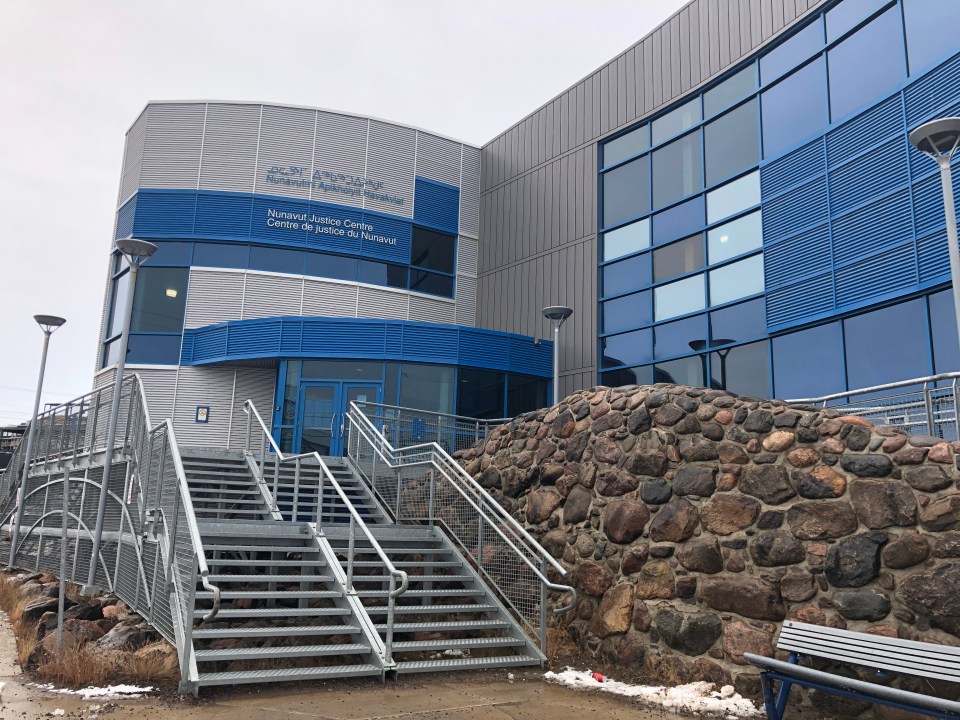
In Nunavut, no sex offender programming is offered in the corrections system.
Former Nunavut Chief Justice Robert Kilpatrick, who retired in 2016, had long been critical of the lack of treatment options, stating in 2012 that the territory would have to build bigger jails to “protect the public from the growing numbers of untreated sex offenders,” according to reporting by Nunatsiaq News.
Nunavut Corrections said it is working with partners including the Correctional Service of Canada to develop a sex offender program that will be implemented in the territory this year.
The Yukon launched a pilot program at the Whitehorse jail in 2017, offering nine convicted sex offenders cognitive behavioural therapy to address factors that could lead to reoffending. The territory said while the pilot has ended, there are treatment options for inmates and offenders on community orders with the goal of addressing problematic behaviours and supporting reintegration into communities.
Advertisement.
Advertisement.
“Each inmate is assessed for their individual needs and criminogenic programming is provided accordingly,” the Yukon’s justice department said in a statement. “The Whitehorse Correctional Centre works with the forensic complex care team to provide services tailored to individual inmates.”
That includes a 21-week, 42-session sex offender treatment program for low to moderate risk offenders. The territorial government said the program is community-based.
The Yukon also offers a transitional support program, in preparation for other groups like the sex offender treatment program, that runs twice per week at the Whitehorse Correctional Centre and once weekly at the forensic complex care team office. The group addresses risk factors related to reoffending.
Across Canada, Talking for Change offers free and anonymous help for people of all ages who are concerned about their sexual interest in children. The program also provides free assessment and therapy to adults in Ontario, Quebec, Yukon, Nunavut and Atlantic Canada, which is not anonymous.
Where Canada gets it right
More broadly, Canada is a leader in rehabilitative sex offender treatment models, according to Mark Olver, a registered doctoral psychologist and professor at the University of Saskatchewan.
“A lot of innovations with respect to sex offender treatment have come out of Canada,” he said.
“When it comes to research, we tend to lead the world.”
Olver said those innovations include the risk-need-responsivity model and the Good Lives model.
Advertisement.
Advertisement.
The first model has three main principles: that rehabilitative interventions should match a person’s risk of re-offending, treatment should target risk factors, and interventions should be tailored to an offender’s strengths.
The second is a strength-based model that aims to reduce an offender’s risk of re-offending while also improving their well-being.
“We’re trying to teach them or at least engage them in a process that gets them to be more balanced as a human being, while also being mindful of what their risk factors are,” Olver explained, saying the programming’s aim is to maximize public safety and help offenders “reclaim some semblance of a normal life.”
He said research has shown offenders participating in credible programming does result in significant decreases to rates of reoffending.
Another made-in-Canada support program for sexual offenders outside the corrections system has also been shown to reduce repeat offending.
Through Circles of Support and Accountability, or CoSA, trained volunteers provide support to high-risk sexual offenders who have been released from prison and hold them accountable for their actions. CoSA has more than a dozen local programs across the provinces.
“We’re often the only source of support for these individuals,” said Cliff Yumansky, executive director of CoSA Canada.
He said there can be a lot of anxiety and stigma in communities when high-risk sex offenders are released from prison, which can lead to them going underground. He said CoSA works closely with offenders to instead help them reintegrate into society and make communities feel safer.
Advertisement.
Advertisement.
“These individuals, with the proper care and support in the community, do very, very well,” he said.
“We’re confident that we’re on the right path.”
Initial research found participation in CoSA reduced sexual recidivism (repeat offending) by 70 percent or more. A second study published in 2009 found it reduced sexual recidivism by 83 percent and all types of violent recidivism by 73 percent.
Options available
Most provinces offer targeted programming to people convicted of a sexual offence, whether in jail or in communities.
At federal prisons, Correctional Service Canada said it offers sex offender and Indigenous sex offender streams of the Integrated Correctional Program Model (ICPM), as well as sex offender programs tailored toward Inuit inmates and women.
A 2020 evaluation of the correctional service’s reintegration programs found male offenders with a history of sexual offending who completed related programming were less likely to return to custody with a revocation of release. (The report noted analysis of sexual reoffending was limited because of how rarely it occurs.)
Men who completed the moderate intensity ICPM sex offender program were 61-percent less likely to reoffend within a five-year follow-up.
A 2018 study of women who sexually offend found those who completed programming demonstrated increased emotional regulation, goal-oriented behaviour, self-efficacy and problem-solving skills, and decreased issues with impulse control.
Advertisement.
Advertisement.
Outside the corrections system, there are treatment options for people who have committed a sexual offence or are concerned about sexual behaviours and interests.
While most programs focus on adults, the Phoenix program provides specialized treatment for youth at Wood’s Homes through a contract with Alberta’s child services ministry.
Cameron Kopeck, clinical supervisor of the residential program, said Wood’s Homes has 12 counsellors who support eight clients aged 11 to 17 with “sexually intrusive behaviour.” While the program is mainly for Alberta residents, he said it has previously taken clients from the NWT.
Kopeck said around 90 percent of youth who complete the program don’t reoffend in the three years after.
“The thing that makes the biggest difference is having counsellors who can look past the behaviours and form a relationship with the young person to create a sense of relational and environmental safety, to explore the things that are going on for them,” he said.
Kopeck said such programs are important to prevent future victimization and support young people to live better lives.
“They deserve a chance to choose a different path,” he said.
