



Advertisement.
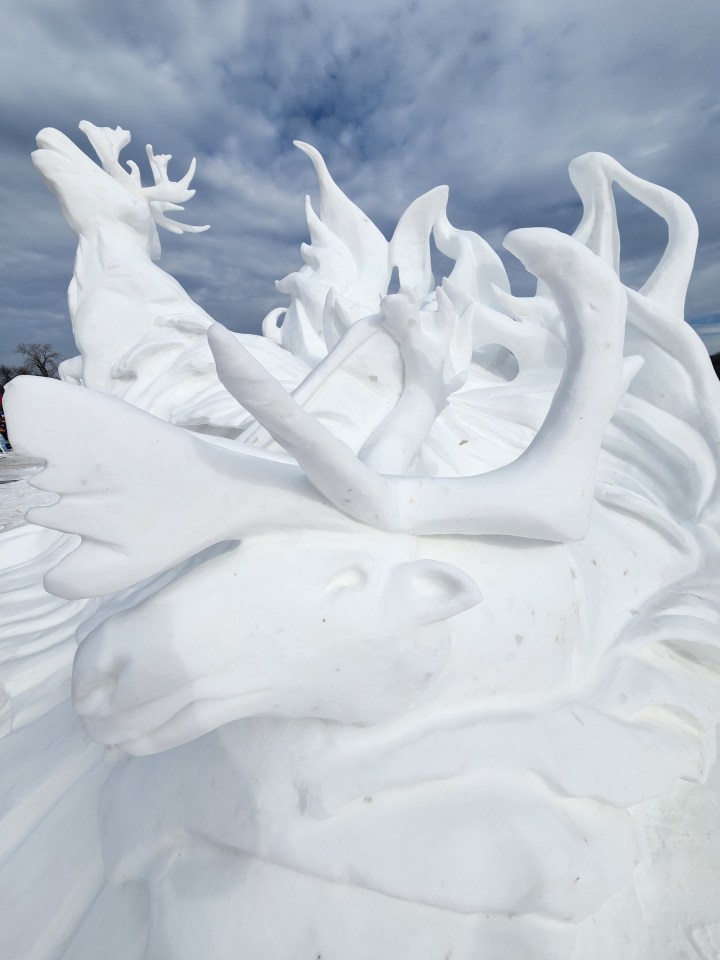
Three caribou leap through the waters of the mighty Deh Cho trying to escape the flames licking at their heels.
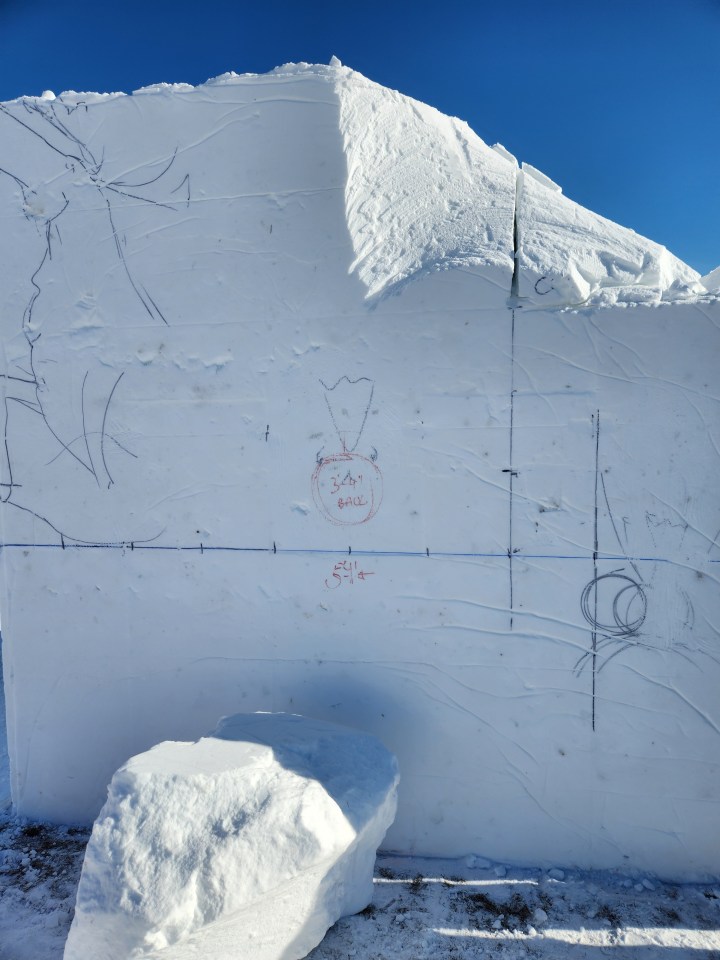
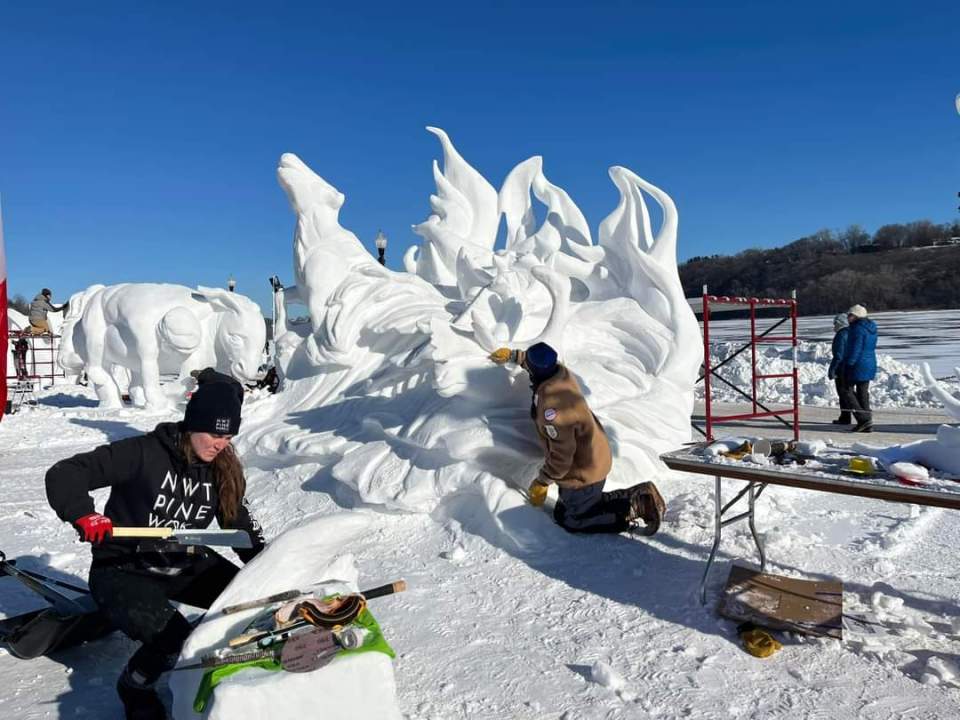
Titled Deh Cho Crossing, the intricate sculpture was carved from a block of snow by three northerners at the World Snow Sculpting Championships in Stillwater, Minnesota last month.
They said it was an emotional experience.
Cat McGurk, Niki Mckenzie and Maddy Tetreault laboured over the piece inspired by the experiences of Northwest Territories residents during the 2023 wildfire season – the worst on record.
Advertisement.
Advertisement.
Nearly 70 percent of the territory’s population was forced to evacuate as wildfires burned more than four million hectares of land and destroyed dozens of homes.
“We wanted to do something that had a personal message. We wanted to do something that was really meaningful,” Mckenzie said of their sculpture.
She said the team chose to carve caribou as they are a symbol of the North and they migrate, much like residents had to migrate due to wildfires.
“Putting them in the water was both very symbolic of when caribou are crossing the water, that’s when they’re at their most vulnerable, also the people that evacuated had to cross that same river.”
Advertisement.
Advertisement.
McGurk and Mckenzie stayed behind when Yellowknife was evacuated in August to help build the city’s wildfire defences and feed workers. They said they were processing the events of this past summer while carving Deh Cho Crossing.
“When we decided to do this piece, we didn’t really realize how much it would affect us,” McGurk said.
“It’s a very labour-intensive process, snow sculpting, and you become fairly physically exhausted, which leaves you sort-of vulnerable.
“Literally carving flames chasing caribou which are already at risk, it was kind-of surreal.”
Mckenzie described the experience as “brutal” and said she “hated almost every minute of it.” She said working on the flames was particularly painful.
“The physical action of making that representation really, really helps to sort-of unlock a lot more deeper feelings than I thought any of us had,” she said.
“Definitely cried a couple of times in the snow and was very grateful that it was not cold enough to freeze my eyes shut.”
McGurk said Tetreault, who has moved away from Yellowknife, was still affected by the evacuation.
Advertisement.
Advertisement.
“I think for her, part of the difficulty was watching her community, the community that she’d lived in for years, [and] not being able to support in any way, and that feeling of helplessness,” McGurk said.
While the NWT team did not place at the international competition, McGurk said some carvers and spectators were moved by their sculpture and the story behind it.
“Some of our fellow carvers cried when they saw the piece and we’ve just continued to receive a lot of support … from the carving community,” McGurk said.
“Everybody has a story of loss or fear of losing something, and so it really resonated.”
‘Four-eyed, three-titted swamp monster’
Following the competition in Stillwater, McGurk and Mckenzie joined Kelly Thune at the Minnesota State Snow Sculpting Competition in Saint Paul, the state capital.
The NWT pair befriended Thune, who is from Minnesota, at last year’s world championships, where her team placed first.
For the state competition, the team carved a piece titled The Evolution of Folklore that was inspired by images generated by artificial intelligence. Mckenzie described the result as a “four-eyed, three-titted swamp monster.”
“There was a desire to do something that was a little bit funny, a little bit quirky because our last piece was so emotionally draining that I didn’t have it in me to do that again,” she said.
Advertisement.
Advertisement.
“There’s a whole conversation happening about AI in the creative world and where we’re headed with that.”
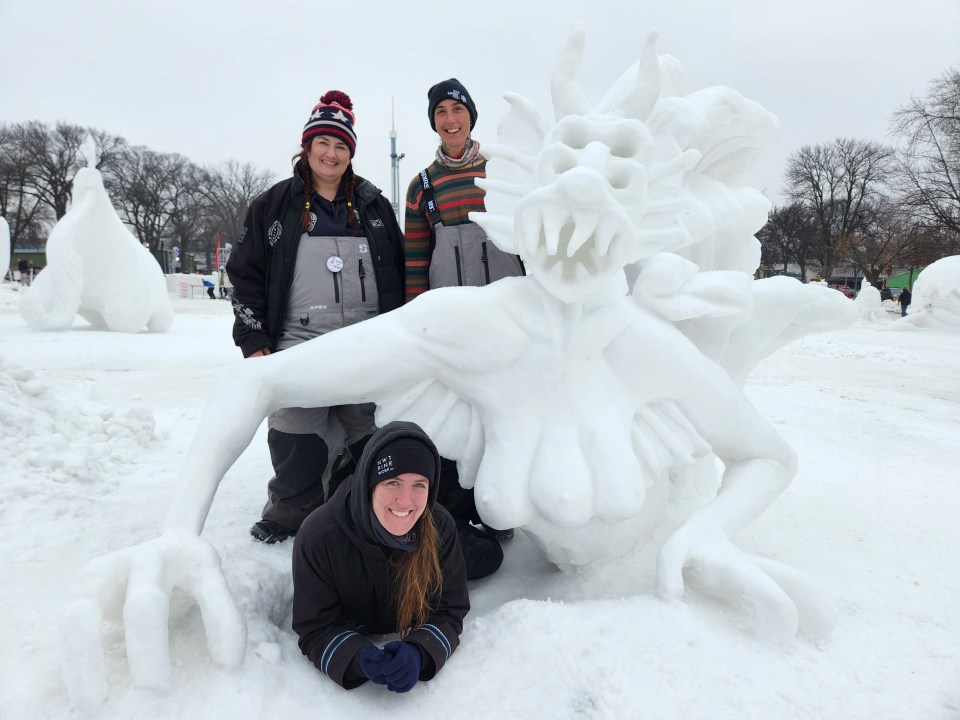
Unseasonably warm weather in Minnesota posed challenges.
McGurk said the soft snow was difficult to work with and Mckenzie said The Evolution of Folklore ended up lasting just 24 hours. Warmer temperatures were also part of the reason they chose to have caribou in water for Deh Cho Crossing, she said, as it “wasn’t going to be cold enough to put the caribou on skinny little legs.”
“Climate change is real and it’s all around us and it’s mildly terrifying,” she said.
“We’re seeing these weather patterns are changing all over the world.”
