


Planning to drive the Mackenzie Valley Winter Road? Keep an eye out for houses and a school being transported down the highway, along with hundreds of trucks carrying fuel and gravel.
This year, winter roads in the Sahtu will be busier than normal. The territorial government is reminding people driving on any winter road to stay safe.
Due to low water levels on the Mackenzie River last summer, the last barge supplying fuel and other cargo to Norman Wells and Tulita had to be cancelled. As a result, the GNWT is sending about 1.2 million litres of additional fuel via the winter road to the Sahtu’s communities, adding 200 to 300 trucks to the road.
That’s in addition to the usual three million litres of fuel sent each winter, plus trucks carrying food, construction materials and supplies for private industry.
Finally, several housing units and a modular school building are being delivered to Colville Lake, along with 300 truckloads of gravel being transported from Norman Wells to Tulita.
Advertisement.
Advertisement.
“Some of those larger loads put additional strain on the winter road as they require rolling closures,” said Dustin Dewar, manager of highway operations for the Dehcho, who is in charge of the Mackenzie Valley Winter Road.
“We’ll transmit information before those events to ensure that people are prepared for some delays while those housing units are being transported.”
Winter roads span 1,400 km
In total, the Mackenzie Valley Winter Road stretches for 700 km. Combined, the NWT’s winter roads and ice roads reach 1,400 km.
“It’s the same distance from Yellowknife to Edmonton that is built every year,” noted Tami Johnson, a communications manager at the NWT’s Department of Infrastructure.
Advertisement.
Advertisement.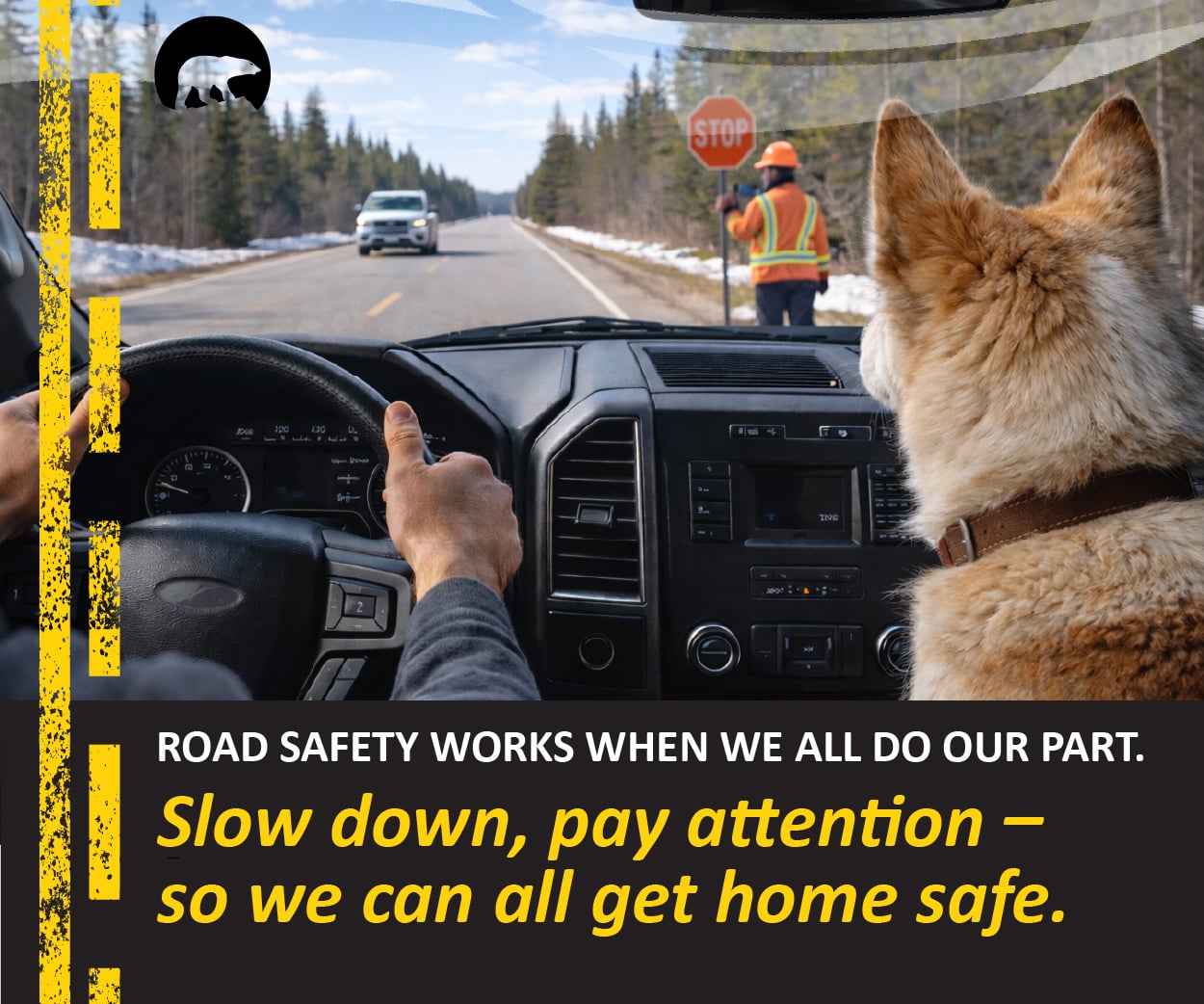
With all of the extra traffic on the roads this year, the GNWT is reminding people to stay safe out there by following posted speed limits and having a winter road safety kit.
“We also asked that the travelling public communicate on Ladd 1 (Logging ADministration Dispatch) radio, which allows them to communicate with truck traffic throughout and communicate call-out locations at kilometre posts, which are located every five kilometres. That really helps the awareness of other drivers while they’re using the road,” explained Dewar.
On the Mackenzie Valley Winter Road, vehicles are required to have tire chains due to some significant hills.
Dewar cautioned drivers to slow down when approaching and passing other vehicles on winter roads, explaining the roads can become rutted and unexpectedly shift your vehicle into the other lane.
“Let someone know where you’re travelling, what route you’ll be taking and when you plan on arriving,” he said. “That allows family members to anticipate your arrival and if necessary, communicate to the [Department of Infrastructure] if you’ve gone over your planned arrival and then we can commit resources finding out what happened.”
Dewar said people travelling on winter roads should “expect the unexpected” and plan for delays from weather, heavy truck traffic or vehicle breakdowns.
The department has published a list of items people should keep in a winter road safety kit, such as extra clothing, food, water and gas, and encourages people to check the online NWT highway conditions map for the most up-to-date highway information before leaving on a trip.
“We can have closures on the winter road unexpectedly that can last between three to five hours,” Dewar said.
Advertisement.
Advertisement.
“Typically, it would take us [that time] to either clear an obstructed area or create a detour for the public to continue travelling, but it’s best to be prepared for those situations.”
To help make the roads safer this year, the Department of Infrastructure has removed trees and deadfall caused by wildfires, widened the roads where possible, refreshed kilometre signage markers, increased the schedule of maintenance and patrols, and increased the amount of emergency fuel available.
Yes, keep your seatbelt on
Dewar said the NWT’s official ice roads are measured with state-of-the-art ground-penetrating radar equipment and inspected weekly.
Taking off your seatbelt and opening the windows? That might be a thing elsewhere, but Dewar said: “From our perspective, it’s not necessary, although it may be common practice in other jurisdictions.
“For all intents and purposes, the ice crossing is considered part of the highway system and it should not be treated any differently other than respecting the posted speed limits.”
He said speed limits are restricted to 20 km/h on ice roads and vehicles should adhere to a two-second following distance to minimize the chance of overloading the road – and reduce the wave occurring underneath the ice surface.
When vehicles drive on the ice, they create a wave beneath. Ice roads are built to turn before shore – it’s called a dog leg – so that the wave underneath continues travelling in a different direction than toward where the ice road connects to land.
“But if there’s two vehicles, for example, travelling too close together or within that two seconds spacing, then the amount of weight on that surface area would be increased,” explained Dewar, “and it would in turn increase the wave travelling underneath the surface and potentially affect the integrity of the ice surface.”
“The increased damage you’d see on the surface would not necessarily mean failure,” he said, “but it would increase the maintenance requirements to fill some of those issues and potentially cause delays.”
This article appears as part of a paid partnership between Cabin Radio and the Government of the Northwest Territories to promote safe driving on winter roads in the NWT. Learn more on the Government of the Northwest Territories’ website.
