


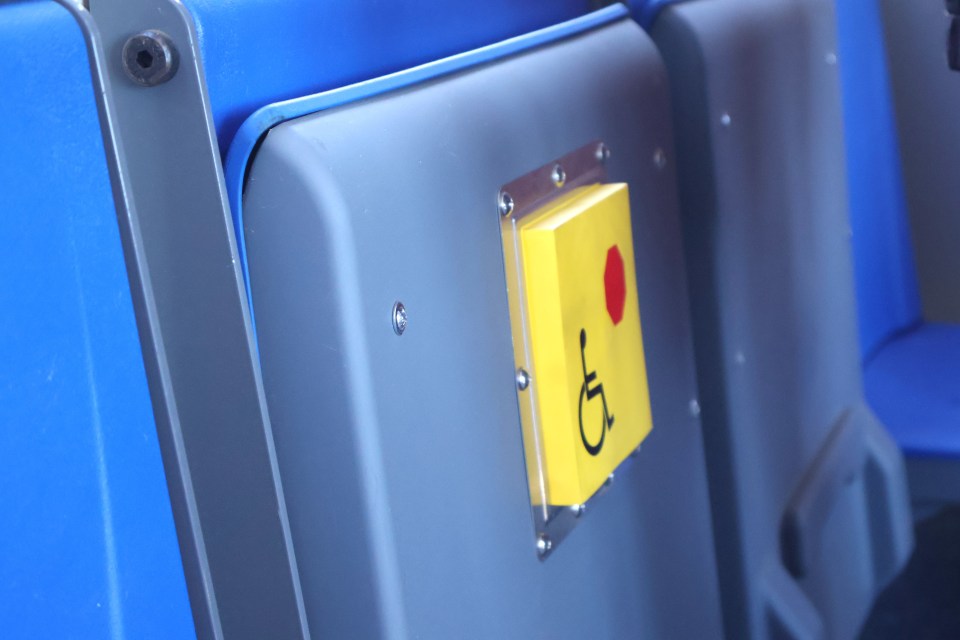
Stephen Petersen says one of the biggest challenges facing people with disabilities in Yellowknife is the lack of accessible transportation at all hours.
“If you have an early flight in the morning or a late-arriving flight in the evening, there’s no reliable wheelchair transportation in town to pick anybody up,” he said.
“There’s no spontaneity here for someone if they want to go somewhere, because there’s no vehicle to allow them to do that.”
The Yellowknife Accessible Transit Service runs Monday to Saturday from 6:40am to 7:10pm. While the city recently added eight accessible buses to its transit fleet, those buses run to approximately the same schedule – 7:10am to 7:25pm, Monday to Saturday.
Taxi companies in the city have few accessible options.
Advertisement.
Advertisement.
In March, the CBC reported the case of a woman in Ndılǫ who struggled to find accessible transportation for her daughter on a weekend.
Kerry Thistle, Yellowknife’s director of economic development and strategy, said the city plans to amend its livery licence bylaw, which regulates taxis, to better address the need for accessible transportation. She said the city is looking at interim measures such as hiring a private contractor until it is able to do so.
The municipality plans to update its own legislation later this year. On Monday, during his last day as city manager, John Collin said it was “an unacceptable situation” that taxi companies are not catering to people with significant mobility challenges.
“We believe it is now a priority,” he said of revamping the bylaw.
Advertisement.
Advertisement.
No building code, accessibility legislation
Petersen is on the city’s accessibility advisory committee, which is tasked with providing advice to the municipality on identifying, preventing and eliminating barriers to people with disabilities.
The committee met for the second time this month – the first time all members were present. One issue discussed was the lack of accessibility legislation in the Northwest Territories.
“We’re really in a difficult place, here, because we don’t have any accessibility legislation,” Thistle said.
“I’d like to see some sort of disability act up here in the North, because there isn’t anything here right now,” Petersen said. “There’s a Human Rights Act and it covers some stuff, but it’s not nearly as enforceable as what a disabled act would be.”
The NWT currently does not have its own building code, nor any legislation that addresses accessibility standards for buildings.
The territory instead relies on the national building code, but the NWT Human Rights Commission has warned northern businesses that meeting the national code may not protect them from human rights complaints.
“It’s important that everybody have equitable access,” said Charles Dent, chair of the commission.
“We need strong, inclusive communities for everyone, including persons with disabilities, and we can only get that if persons with disabilities are able to participate equally in society.”
Advertisement.
Advertisement.
The commission has called on the Legislative Assembly to adopt more progressive building standards.
Dent said a legislative committee responded that while those standards are used for territorial government buildings, it does not believe the assembly can impose a more accessible building code across the NWT.
Dent disagrees.
Canada, provinces have legislation
This is not the first time there have been calls for the NWT government to develop accessibility legislation.
The need for such an act was one of the topics the city raised at the NWT Association of Communities’ annual meeting in 2021. Other advocates have echoed that request.
Federally, the Accessible Canada Act came into force in July 2019. British Columbia, Saskatchewan, Manitoba, Ontario, Nova Scotia and Newfoundland and Labrador all have provincial accessibility legislation, while Quebec has a similar act and New Brunswick has tabled one.
“In general, what those acts tend to do is require that accessibility plans are developed so that people – builders, the public, persons with disabilities – have a clear understanding of what the expectations are, and the regulations will be set to ensure that the people meet those standards over time,” Dent said.
For example, he said, the Accessibility for Ontarians with Disabilities Act – passed in 2005 – aims to make the province fully accessible by 2025.
Advertisement.
Advertisement.
Beyond legislation, Petersen said he is concerned that no NWT minister has been assigned responsibility for people with disabilities.
“This is a huge proportion of the population I don’t think is getting fair representation,” he said.
Premier RJ Simpson told the legislature in February he had chosen not to assign any portfolios to ministers that did not include a budget, such as responsibility for persons with disabilities.
“That was a conscious decision on my part because I saw those portfolios and I heard from the ministers who oversaw those portfolios, and I didn’t think they were working based on everything that I saw and that I heard,” Simpson said at the time.
“I’d rather focus on actions than empty symbols.”
Cabin Radio has requested an interview with the premier about whether his government intends to develop accessibility legislation.
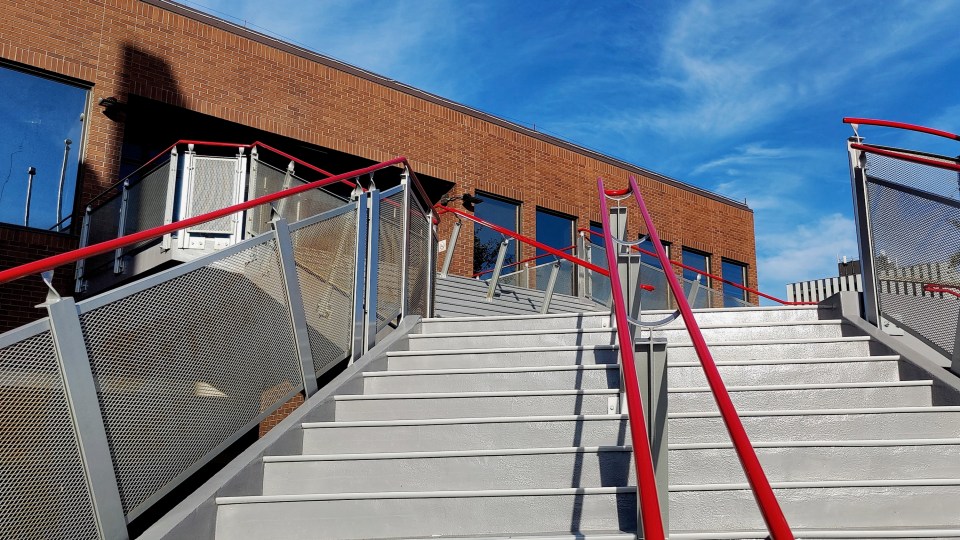
At the municipal level, the city announced plans to develop an accessibility policy and create an accessibility advisory committee in 2021. The committee met for the first time in November 2023 and is required to meet four times a year.
“Had there been a voice at the city prior, there may have been a bit more attention paid to that demographic during the evacuation,” Petersen said.
Advertisement.
Advertisement.
Lack of consideration for the unique needs of vulnerable people was one area for improvement identified by KPMG, the company reviewing the city’s response to last summer’s wildfires, in a presentation to councillors this week.
Thistle said it “took a while” to fill the accessibility advisory committee and factors like last year’s evacuation had delayed its first meeting.
“Super excited that we did get to have the first meeting and now are in the regular path of moving things forward,” she said.
“It’s really great to be able to hear from committee members what they think.”
Thistle said the committee will provide valuable input on the municipality’s efforts to improve accessibility.
As an example, she said the city plans to show committee members the new aquatic centre when it is near completion, to see if improvements need to be made before it opens.
