


Advertisement.
Tony, the scorpion who found his way to Yellowknife courtesy of a Walmart bath mat, is making a new home inside the Royal Alberta Museum’s Bug Gallery.
Roommates Véronique Keays-Dubé and Michele Balfour described their shock at finding the eight-legged invertebrate on their bathroom floor after opening a package containing the bath mat.
Instead of squashing or flushing the scorpion, they gave it the name Tony and a comfortable temporary home.
They then got in touch with federal wildlife enforcement officer Steve Allan, who secured Tony’s placement at the museum – known as the RAM – and ensured his safe passage to Edmonton.
Advertisement.
Advertisement.
Peter Heule, the RAM’s live animal supervisor, has taken in the stowaway.
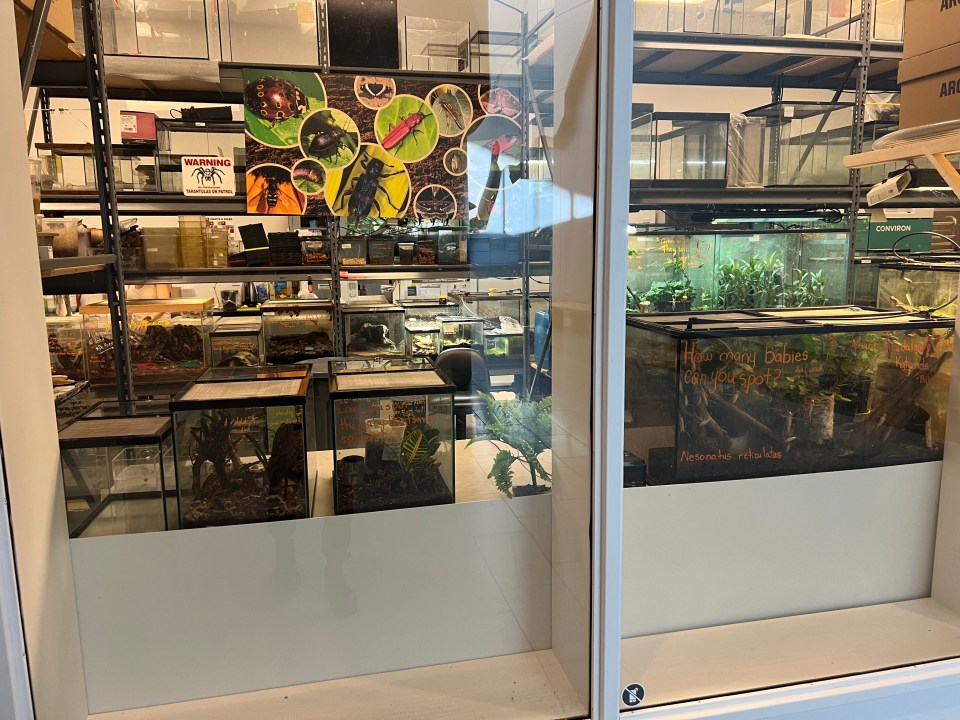
Heule oversees the care of 250 different species of corals, coral reef creatures, snakes, turtles and invertebrates.
“We’re kind-of in a rather unique position to be able to look after any potentially smuggled or stowaway wildlife here, because we’re already taking care of so many different types of animals,” said Heule.
By Heule’s best estimate, Tony is a Chinese armour-tail scorpion – a species most often found in northern China, Mongolia and Korea.
Advertisement.
Advertisement.
However, Heule says he’ll have to wait until Tony dies of old age to be able to determine his species and gender definitively because it requires close examination under a microscope.
“Generally, a live scorpion is not going to be cooperative and hold still enough for you to be able to see,” said Heule.
“We don’t want to harm or stress him out just to figure out exactly what he is.”
What we do know for sure is that Tony has an adventurous spirit and ambition for travel.
“I think it’s quite possible that Tony just crawled into the bath mat on his own at the site of manufacture or packaging, and then rode all the way here,” said Heule.
Keays-Dubé confirmed the bath mat Balfour purchased from Walmart was made in China.
Heule said some scorpions, especially those acclimatized to desert life, can go for long periods of time without food or water, which likely helped Tony survive the journey to Yellowknife.
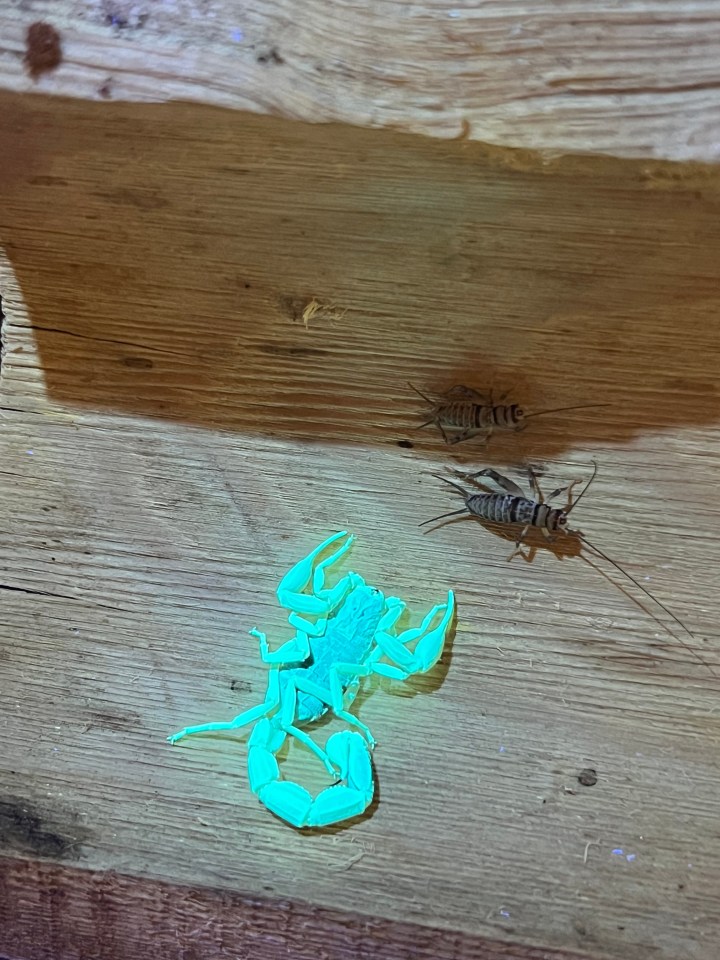
According to Heule, armour-tail scorpions are rarely kept as pets. However, their tails are sometimes given as gifts because of the hailed medicinal value of their venom.
Advertisement.
Advertisement.
“Components of their venom have been used for centuries to treat things like stroke, epilepsy, chronic nerve pain, a whole bunch of different things,” said Heule.
He added that there’s a relatively new trend of giving live scorpions as a kind of auspicious gift.
Heule said Tony is far from the only creature with a yearning for adventure. The RAM has seen other accidental imports, such as an Australian tree cricket that jumped into a backpack and a harlequin cockroach that came with a change purse purchased in Cambodia.
If an exotic creature is ever found where you wouldn’t expect it, Heule said it’s important to carefully capture it instead of attempting to kill it.
This can be dangerous for the humans involved if the creature’s self-defence mechanisms become activated.
“Part of the reason that there’s a happy ending to the story is that they were captured in a container,” said Heule of Tony’s escapade.
“Make sure you catch stuff really carefully so that you don’t harm it and it doesn’t harm you.”
While Tony isn’t currently on public display at the RAM, he will continue to live in the museum’s hatchery and will be brought out during Heule’s live animal encounters to teach children about the international wildlife trade.
