


Advertisement.
Sambaa K’e has taken a head-on approach to food security by supplying free, local, organic produce to residents. For some, this has brought connection, nutrition and joy.
For years, organizers at the Sambaa K’e garden have distributed produce to residents throughout the summer season to promote health, education and the environment, according to agricultural coordinator Kathryn Scott.
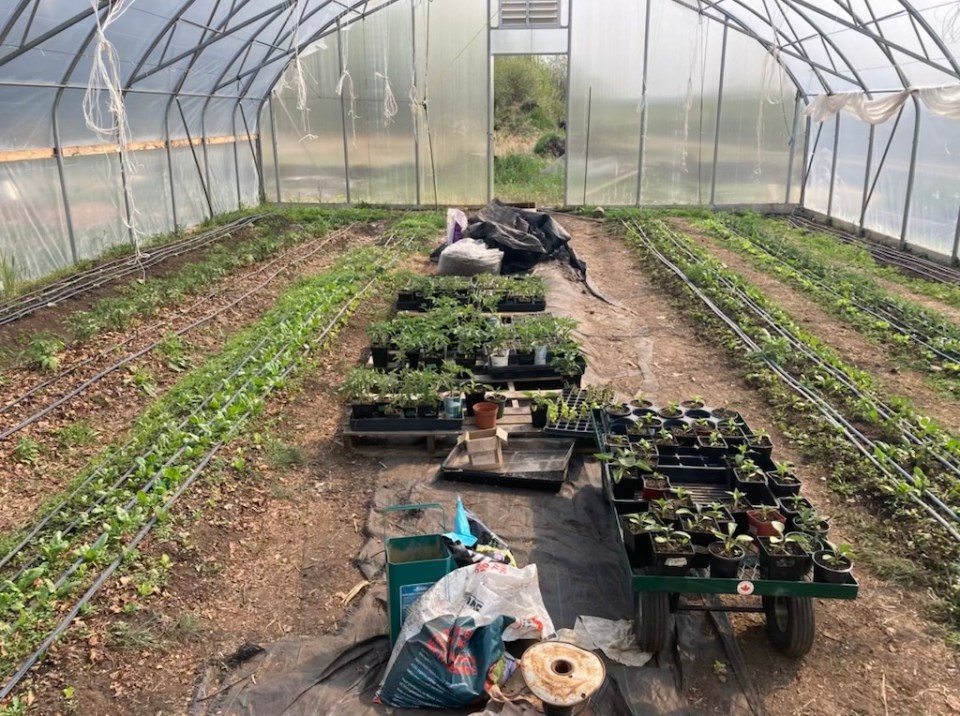
The garden recently expanded to feature multiple greenhouses and garden beds. This season it produced around 20 different crops, Scott said.
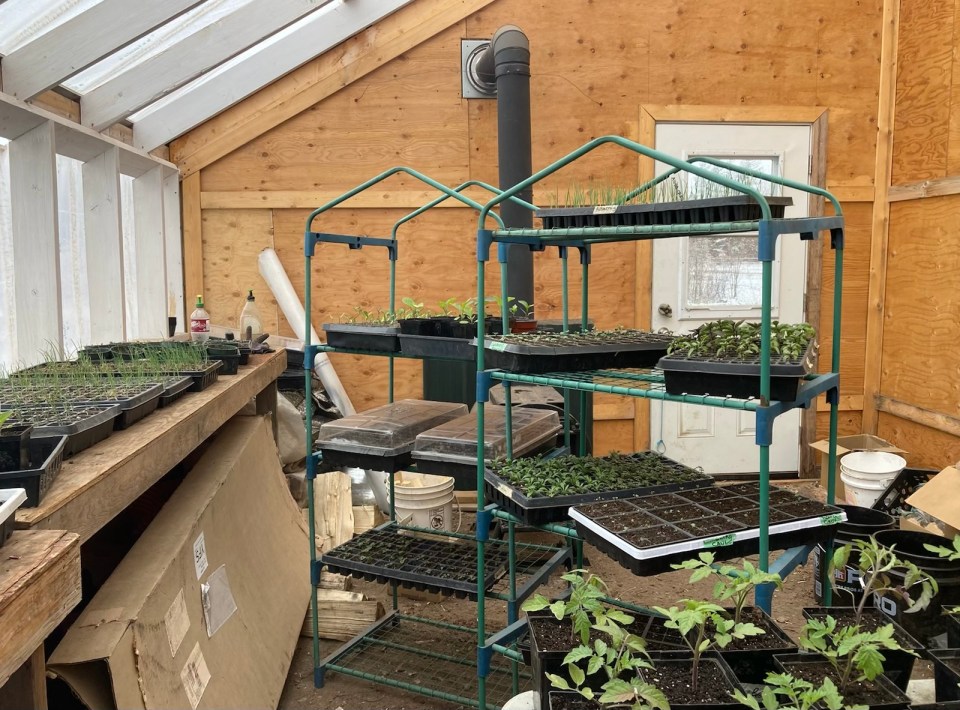
“We’re trying to learn and be responsive to the community and discover more about the soil and its needs, and how we can best be regenerative,” Scott told Cabin Radio. “It’s providing for the community.”
Advertisement.
Advertisement.
“The garden has blown up over the years in assisting the community members,” said Jessica Jumbo, an environmental researcher and Sambaa K’e First Nation member.
“As a single Indigenous mother myself, it absolutely helps me massively. It ensures that my children are receiving a wide variety of vegetables that sometimes we don’t even see being transported in grocery orders. It’s 100-percent fresh.”
The Sambaa K’e garden first received funding from the territorial government in 2014, though it existed prior to that.
Jumbo recalls gardening in her community as a teenager, where she engaged with traditional teachings around the values, morals, and laws in place when working with the land.
Advertisement.
Advertisement.
“The whole concept of care and love for one another doesn’t just mean from person to person,” she said.
“In the garden you’re going to do it with patience, make sure it’s done well, and it’s already bringing you joy.
“When I was young and working in the garden, I could see that connection.”
Sustainable agriculture
Scott, who began working at the garden in 2020, says how the community uses the land can be a factor in how it adapts to climate change.
She said the right land and soil, nurtured by people growing produce, can be “resilient against the extremes … because you have been doing practices to support the biological life, which supports healthy plants.”
The Department of Industry, Tourism and Investment said its funding helps to provide “access to healthy foods, sustaining local jobs, supporting businesses and bolstering food security.”
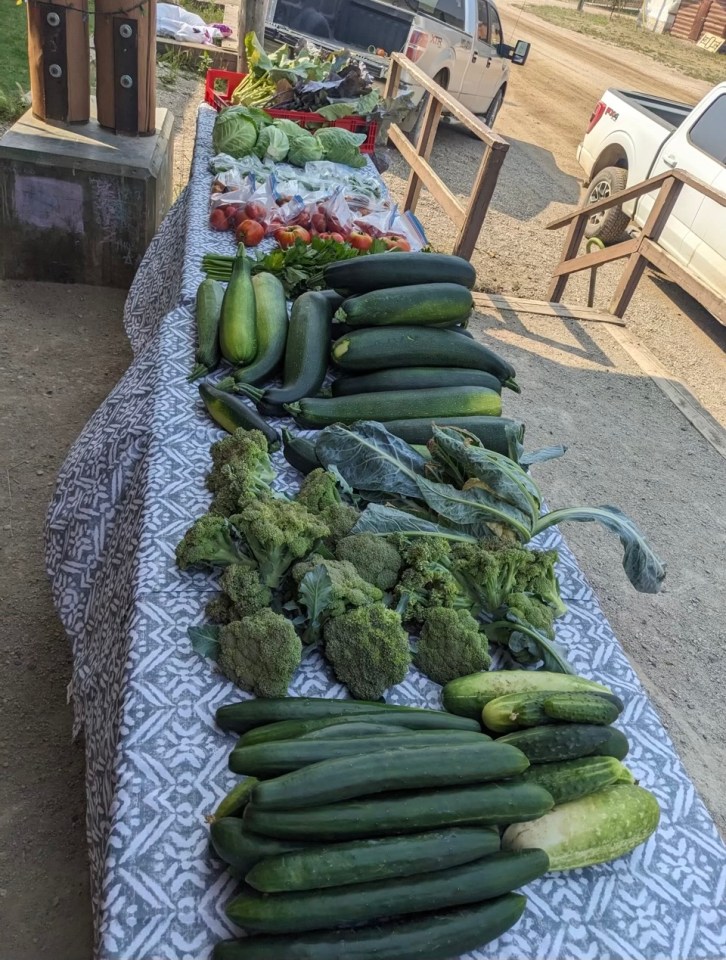
Some of the extra food is sold at Fort Simpson’s farmers’ market. Food waste is composted back into the soil, Scott added.
This year, the garden grew – deep breath – tomatoes, potatoes, onions, carrots, turnips, cucumbers, peppers, broccoli, cauliflower, cabbage, lettuce, peas, beans, squash, eggplant, beets, kale and zucchini, as well as herbs and flowers.
Advertisement.
Advertisement.
Alongside that lengthy list comes an educational component. Scott hosts cooking lessons to help inspire residents to cook with fresh produce.
“I love preserving food, I love cooking. It’s always been something that’s [about] a quality of life, not just a practicality,” said Scott.
“We’ll do cooking classes because that’s a big part of some of these new foods that aren’t the staple crops from the past, like kale, zucchini.”
Jumbo says the cooking classes are a “massive help.”
“A lot of these products are foreign to Indigenous communities,” Jumbo said. “Indigenize your menu. A lot of people here still live off of wild meat and fish and so, how they can mix with that.”
Rising cost of food
While inflation and the ever-rising cost of living has hit the North hard in recent years, smaller communities continue to take the worst of it, according to Jumbo, who says rising expenses ultimately prevent people from going out on the land.
“Inflation is already affecting hub places like Hay River, Yellowknife and Fort Simpson but, for a small community, it’s almost double that because our groceries are flown in,” Jumbo said.
“These head government departments need to start sitting together, because what they’re going to do is they’re going to starve out small communities. We’re going to end up having to move to the hubs.”
Advertisement.
Advertisement.
Spoiled food flown in from the south is a frequent sight for residents in small communities, who say that in the most drastic cases, even those items at risk when the supply chain is disrupted.
“Covid and wildfires also shows the dependency on food being trucked up north and flown into our communities,” said Scott. “We realized it’s more vulnerable.”
Local garden programs can empower communities to resist that vulnerability at a grassroots level, Jumbo said, adding that the cultural and health benefits play an important role in a community’s wellbeing.
“If communities were to start agricultural programs or start workshops to reach out, so individual households can start small gardens … that would help our people and alleviate so much stress,” Jumbo said.
“It’s such a benefit that could ripple so far with people in their lives. And gardening on your own, quiet, hands in the dirt, is already such a benefit for your mental health.
“It adds that independence as a small community to be able to control something of our own, that has everything to do with our health and our wellbeing.”
