



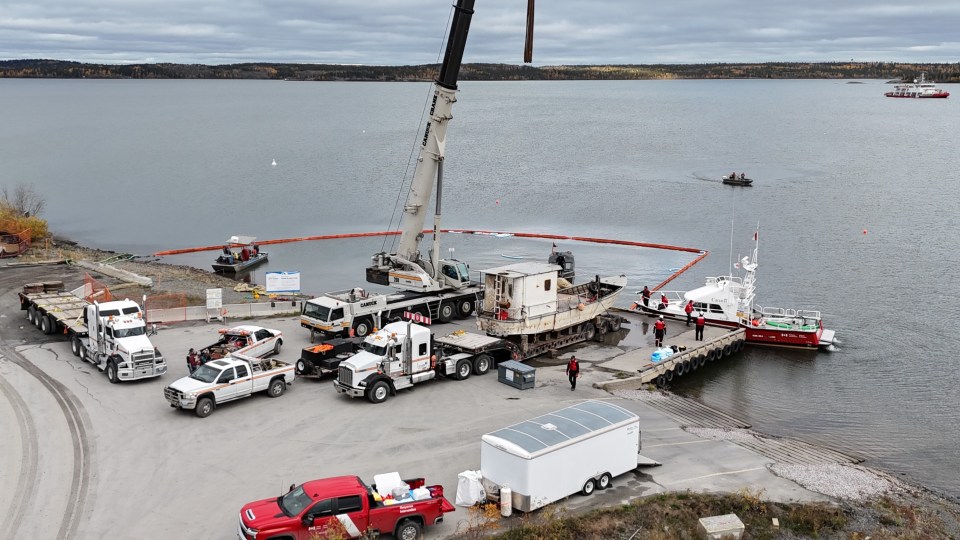
Canadian Coast Guard staff and contractors hauled a sunken fishing boat from the depths of Great Slave Lake outside Yellowknife on Thursday.
As they did so, a coast guard spokesperson suggested the federal agency was still considering how the costs or potential fines associated with the operation should be handled.
In August, the CBC – quoting a separate spokesperson – reported the coast guard had chosen not to fine the vessel’s owner, a Yellowknife senior, and would pay for the cleanup after deeming the owner “unable to address the problem vessel.”
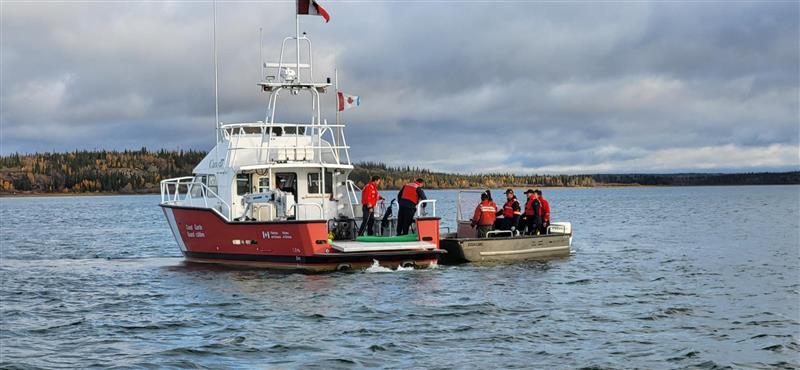
However, speaking to Cabin Radio on Thursday, Robert Brooks – the Canadian Coast Guard’s national director of marine environmental and hazards response – said that while the coast guard had stepped in to address the problem, some sort of enforcement action remained possible.
“Once we’re satisfied that an initial response is undertaken, we will work with our compliance and enforcement team, and that is a gradual approach to work to locate owners, to inform them of their responsibilities and support them in taking action,” Brooks said.
Advertisement.
Advertisement.
“In this particular case, our focus remains on stabilizing the incident. We are working through the process right now with understanding what the potential implications are for owners in this particular case.”
Brooks said he would not comment further on this case but added the coast guard’s “main concern is in holding owners accountable for responsible vessel ownership and in finding outcomes that really serve to support a fair and equitable outcome.”
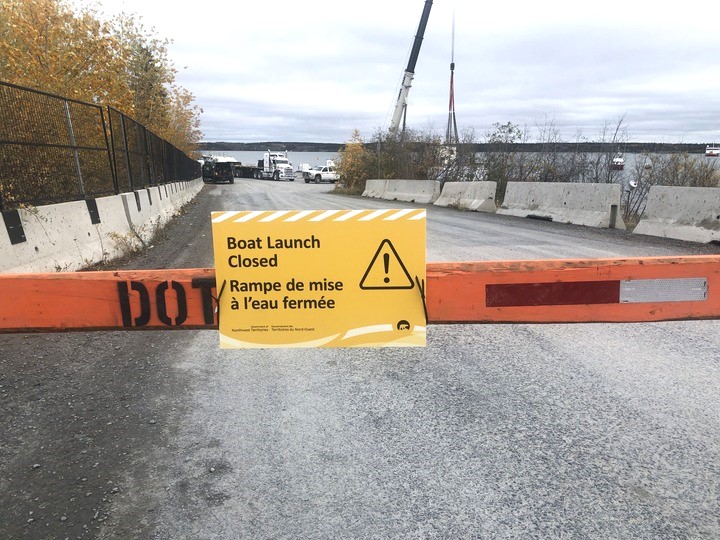
The coast guard has declined to estimate the cost of retrieving the 40-foot vessel, the sinking of which was documented by spill reports filed in the first half of May. It went down in the vicinity of the Giant Mine boat launch.
The boat’s owner told the CBC he had previously let the boat overwinter in the area without trouble, but water came through a seal during this year’s spring breakup.
Advertisement.
Advertisement.

Brooks said the vessel had come to rest in 30 to 40 feet of water. Divers, a crane and inflatable bags were used to bring it to the surface on Thursday.
“We’re working through the steps on where that vessel will go,” said Brooks.
“We’re working to take it away from the shoreline and the lake, and we’re looking to a secure facility where we can take a further assessment of the vessel and understand what steps need to be taken moving forward.
“For now, I think the key message is that the vessel will be removed from Great Slave Lake and will no longer be a threat to the marine environment.”
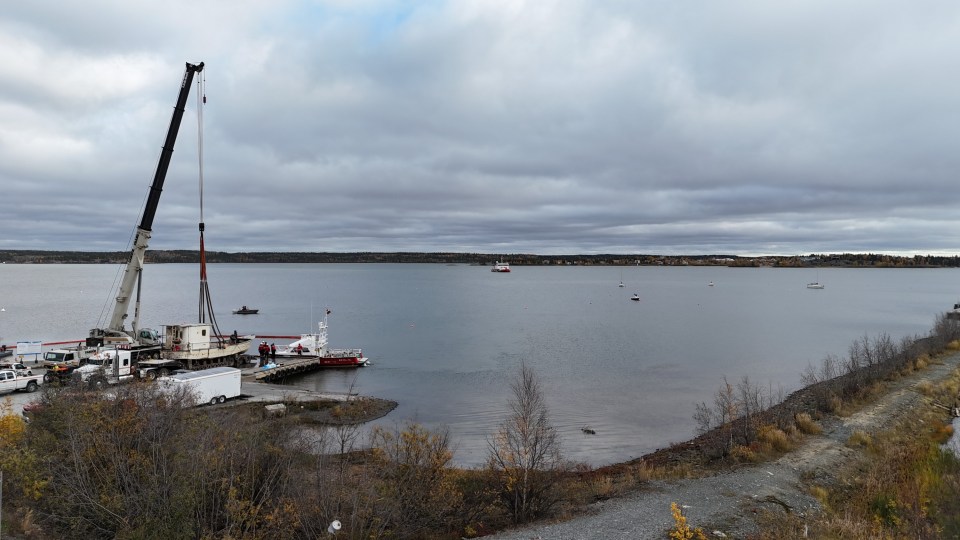
Brooks said pollution from the vessel had included “some amounts of fuel and trace amounts of oil,” requiring the deployment of a boom to contain it.
“We were regularly visiting the site every seven to 10 days to ensure that the boom and the countermeasures we had deployed remained effective,” he said.
