



Fort Smith residents spent the week trying to create a dialogue about drug awareness in the town and broader challenges the territory faces.
The event was a collaboration between the Salt River First Nation, Smith’s Landing First Nation, NWT Métis Nation, Town of Fort Smith staff, representatives from the territorial health department and RCMP.
Master of ceremonies Mallory Minerson said more than a hundred people attended three days of meetings, which she said formed a kind of event Fort Smith had not seen before.
“A lot of what we’re hearing is that people are really grateful we are all coming together,” she said.
“A lot of people have voiced that we need to get out of our silos. If we all collaborate and work together, that’s the only way things are going to change.”
Advertisement.
Advertisement.
Minerson is a former NWT health authority employee who now works as a counsellor. She said she stopped working for the health authority partly because of funding cuts and changes proposed by the NWT government.
She said the territory needs mental health and social programs that are properly funded and staffed “so we can spend time with our clients to make the connections that people need in order to feel safe.”
This week, Minerson said, attendees expressed a need to support healing from trauma, rapid access to detox and broader availability of treatment.
“Right now, waitlists fluctuate but they can be a couple of weeks to a month long to get into treatment. Often when people are in a crisis, getting that date and getting that process moving can feel very hopeful. If you have to wait, that can be very detrimental to the healing process,” she said.
Advertisement.
Advertisement.
Minerson said she was moved to see people place photographs of their loved ones, who lost their lives due to the drug crisis, on a memorial table as the week’s meetings took place.
“It shows the gravity of how many people we’ve lost in our community,” she said.
“I’m also moved that there’s been so many people coming out. Those are pretty high numbers for an event during the week. In Fort Smith, we don’t really see that many people out on a Wednesday night or a Thursday afternoon.
“I think it shows us that this is a very important topic, that people are energized and feel passionate about it, and feel committed to making a change.”
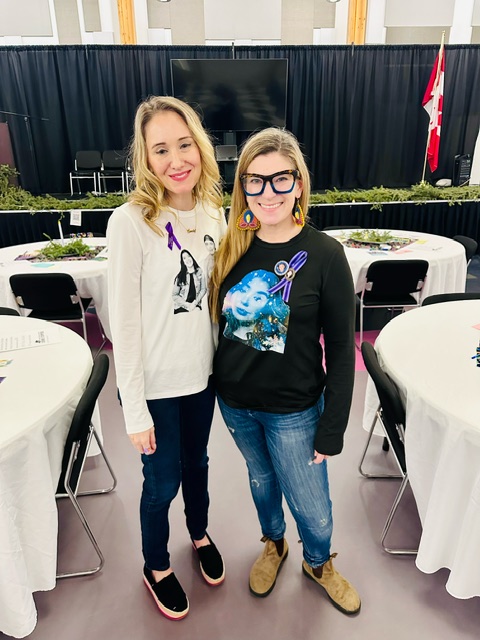
Minerson said the event was organized in acknowledgement of National Addictions Awareness Week, which falls on November 24–30 this year. Each year, she said, the community counselling program hosts events to honour the week.
People ‘need more support, not less’
Amy Ryan, one of the organizers of the three-day event, works as a mental health therapist in Fort Smith. She said the event had recorded full houses each day and evening.
Ryan feels it is important for the residents to have access to aftercare and more resources.
“I work for the government and I appreciate my position there, but it has been difficult,” she said.
Advertisement.
Advertisement.
“We just don’t have enough staff. Sometimes it’s hard to get counsellors, for example, because there’s been a lack of housing … there’s just been a lot to try to problem-solve and manage multiple crises and tragedies as well, which makes things very complex for trying to support the community.”
Ryan said patients returning from treatment often have issues beyond addiction that need to be looked into. She said to bring positive change, the town needs to “break barriers.”

“There’s housing issues, there’s financial issues, there’s family issues, they might be isolated. None of those things are really addressed or really changed too much after that,” she said.
“Of course, that becomes a challenge and increased stress once they get back from treatment. So, having something local – a sober living facility, homeless shelters – will be a very important part of building infrastructure in the community.”
A Fort Smith child and youth program – run through a partnership between the Department of Education, Culture and Employment and the health authority – went from three staff members to one due to a funding cut last year, Ryan said, which caused a “big hit” for local youth supports.
Disruption and prevention
Sergeant Cagri Yilmaz said RCMP has received reports of children in recent months either selling or giving each other cannabis edibles.
Over the past week, officers gave presentations “tailored more for the students and their reality” at Fort Smith’s Joseph Burr Tyrrell Elementary School and Paul William Kaeser High School.
While Yilmaz said RCMP are not “getting a ton” of similar reports, officers still want to be involved in prevention where possible by telling children what to know, what to look for and who to contact.
Advertisement.
Advertisement.
Like others, Yilmaz shared some of his personal experiences losing friends and acquaintances to addiction.
In terms of addressing drug-related challenges in Fort Smith and other communities, he said police can only be an instrument and not the solution.
“We can’t be arresting every single drug dealer. That’s not going to work. It’s also a social problem, right?” he said.
“How do we prevent this from happening? … We can disrupt the drug trade, but will we ever stop it? My personal opinion is that that’s not the case. You can’t stop this. You will disrupt but you won’t be stopping the drug trade anywhere, not just here.”
Yilmaz said there were six investigations into drug trafficking in Fort Smith between August and October. While there weren’t any recent complaints involving minors that he could remember, he has seen that be the case on occasion in the past.
“When we are talking about kids, one is too many, right? You don’t want to lose the kids so early into drugs,” he said.
Yilmaz added it would be “too bad” if nothing concrete happened after the three-day event in Fort Smith concluded.
“There has to be something done after,” he said. “From what I understand, that’s been recognized and acknowledged.”
Advertisement.
Advertisement.
‘The land has changed so much’
Julie Lys, in charge of the health and wellness centre for the NWT Métis Nation, worked as a nurse with the GNWT for 30 years. She said she started the wellness centre after retiring in 2017.
“Our focus is mostly on reviving culture as the foundation for healing and wellness,” she said. “We do full moon ceremonies, sweats and fasting camps, ceremonies that bring people back to looking after their own wellness.”
Lys said the past week’s events offered attendees space to share their own healing and sobriety stories, which can help.
“As family members, we can love them and support them, and help them along the way – help them to maybe not give up on themselves – but a lot of them are in a deep, dark hole when they’re in addictions,” she said.
Part of her wellness centre’s program, Lys said, is to bring people out on the land to recover after they have been unwell.
However, she feels the community is still in the process of healing from last year’s NWT wildfires and people “don’t feel safe in the community and on the land.”
“The land has changed so much,” she said. “I think the community overall has to come together as one, and we have to bring out the good parts of our ways of being, and look after those that are suffering and help in any way we can.”
At the same time, Lys said it is important for people to look after their own wellbeing.
Advertisement.
Advertisement.
“There’s been more deaths, more suicides, there has been overdoses … I think the communities are struggling. It’s more expensive to live. People who have been traumatized, they don’t know where to go for help,” she said.
“Where did this all begin? Because as Indigenous people, this wasn’t our ways. There were much healthier ways of living and being, and we need to promote those healthy ways.”
Answers ‘have to start coming’
At the event, Amy’s partner Brad Tuckey shared his experience coping with loss after their son, Brandan, passed away due to fentanyl in 2022. Their daughter, Emily, died by suicide this year.
Tuckey said he does not want other parents to go through similar grief.
“I see a community that is coming out, participating, attending … what they’re doing is saying that there’s a problem, asking for help, and they are looking for answers,” he said.
“Maybe we are not going to provide them today but, you know, those answers have to start coming tomorrow.”

Ryan said the town has Alcoholics and Narcotics Anonymous groups in place as well as Wellbriety offered by the Métis Nation. Before Emily’s passing, Ryan said she took training to lead a peer-led group for families who have a loved one or child struggling with addiction through Moms Stop The Harm.
Ryan said she would like to get that group going in the next six months as she works on her personal healing.
Advertisement.
Advertisement.
“As a parent who has lost two children, that parent listening to other parents’ experiences – as hard or as difficult as it is – makes me feel like I am not alone,” she said.
‘We would do anything for her’
Indigenous patient advocate Glenda Simon said she had begun calling for a three-day drug awareness workshop in April. She wanted an event to tackle issues that were “put on the table but never really addressed.”
“I wish that more communities will listen to Fort Smith, how we are trying to take a stance towards stopping the drugs,” she said. “I wish that this event will save someone’s life, will make them think about what they’re actually doing to their body.”
Simon’s daughter, who is nine months sober now, was dealing with addiction.
As a parent, Simon said she did everything to protect her daughter and help her lead a sober lifestyle. However, there were situations out of their control.
“With her life as an addict, she was hungry, she was homeless, she tried to couch-surf, she was walking the streets in minus-50 weather, and she had the spot in her head that no one cared about her – no one at all – so she didn’t want to get help,” she said.
“I love my daughter so much that I would do anything for her. My husband and I, we would do anything for her.”
Simon said people who deal with addictions tend to fall back to the people who offer them drugs and “the same people who pretend to be your friends.”
Advertisement.
Advertisement.
On one occasion, Simon reported her daughter to the police after she got drugs from out of town, because she was worried about her safety and wanted to see her recover.
“I prayed to God that my phone call to the RCMP is going to save your life, and it was like, I felt so bad as a parent, but I wanted to save my daughter’s life and her boyfriend’s life because they were drug addicts,” she said.
“That was the hardest thing that I had to do and my husband supported me with my decision … Being a mother you want the best for your child and, of course, I was her advocate – and her mother. And I sometimes could have a loud voice, and I needed to be heard. I needed to save our daughter’s life.
“I just want to say that we are such proud parents of her and if there is a time that, you know, if she regresses back, we always find help for her. She runs a little successful business and she’s doing really, really well.”
Simon strongly believes the community needs an aftercare program for people to heal and recover.
“We don’t have a place where our people can go for their alcoholism or drug addiction, so we really need a treatment set up for that … Being on the land is so significant for our Indigenous people, and I know that they feel supported when they’re taken out on the land,” she said.
“There should be like an aftercare program for our people. My daughter mentioned that there should be somewhere, a place for them to go in the community. There is nothing in our community.”
At the same time, Simon wishes healthcare professionals were more educated in terms of the language they use and showed kindness toward people dealing with addiction.
Advertisement.
Advertisement.
“The biggest thing is to be non-judgmental towards addicts and alcoholics, because one of the things that I feared as a parent was that I was going to be judged by the community,” she said.
“There’s drug addicts out on the street. They just need to be listened to. They need to be helped. They need a good advocate, or good family members, friends, someone to try to talk to them.”
