



Advertisement.
A committee of senators is calling for a detailed plan to address the transportation infrastructure needs of northern communities.
The recommendation comes from a new report by the Standing Senate Committee on Transport and Communications.
The report, titled Building Climate Resilience Across Canada’s Critical Transportation Infrastructure, highlights how climate change is posing a threat to the movement of people and goods, public health and safety, national security and Canada’s long-term economic prosperity.
The committee said “there is an urgent need for a federal response.”
Advertisement.
Advertisement.
“Some of these problems are not hypothetical. They are not worst-case scenarios for 50 years from now. They are things that we are going to be facing the consequences of in 18 months, and five years and 15 years from now, if we do not act,” committee member Senator Paula Simons told Cabin Radio.
“We need to act quickly or things are going to get far worse than I think most people anticipate.”
The report focused on four case studies across Canada including one on the three territories. It highlighted issues in the region including the “substantial infrastructure deficit,” permafrost degradation, low water on the Mackenzie River, forest fire damage to the CN Rail line, and complications evacuating communities with only one road out.
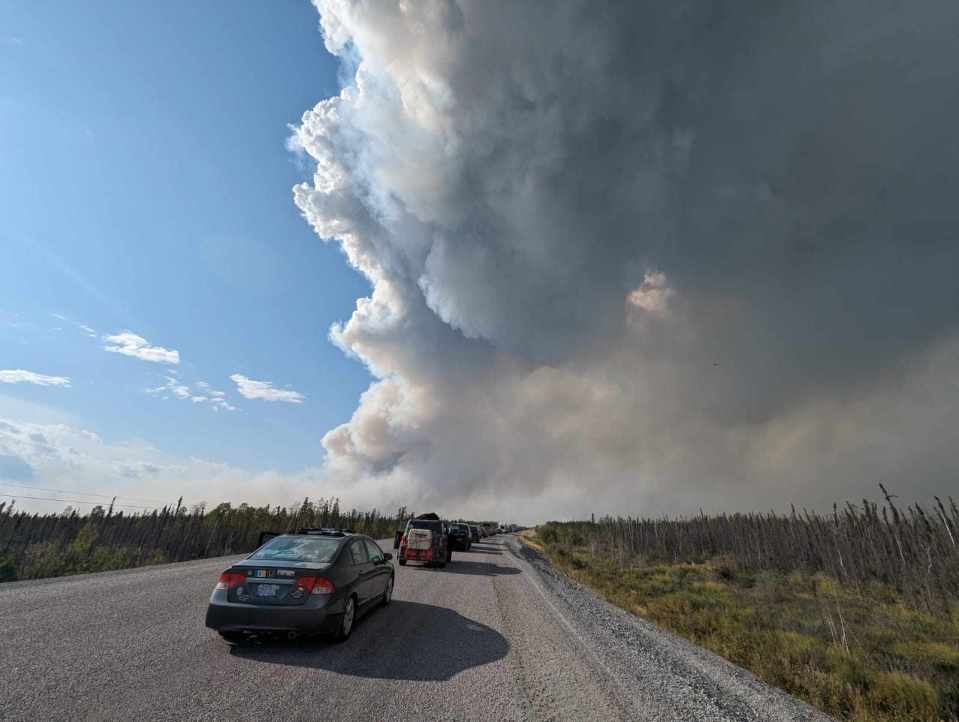
Simons said the senate committee was “shocked at the degree” of challenges the North is facing.
Advertisement.
Advertisement.
“It was a wake-up call for us,” she said.
“This was a report that really brought home to anybody who still had any questions about, ‘is climate change a thing?’ Oh yes, it’s a thing, and we are already feeling its consequences – and we need a plan going forward or the consequences of not planning and not acting are going to be catastrophic, and not just for the North.”
The report recommends that the federal government consult with northern communities on a detailed plan to address the needs of the region, including major investments in all-season roads, airports, ports, and research on local climate conditions in collaboration with Indigenous communities.
‘The territories live like third-world countries’
Simons acknowledged the findings likely won’t come as a surprise to northerners, but she hopes the report will focus attention and spur action.
“The problems that are unique to the North just aren’t as well known as they need to be,” she said. “It doesn’t help that there’s still, at some level amongst decision-makers in this country I think, a reluctance to face the consequences of climate change head-on.”
For people living in the North, the infrastructure gap is a daily reality. Communities have increasingly faced fires, floods, coastal erosion and other climate change-related impacts in recent years.
In August 2023, while many of the NWT’s communities were evacuated due to wildfires, then-premier Caroline Cochrane stated at a press conference that she was “angry” and “tired” of asking the federal government to invest in northern infrastructure.
“We’ve been asking for the same infrastructure, roads, communications that people in Canada take for granted for decades,” she said.
Advertisement.
Advertisement.
“I need every single Canadian to say it is not OK that the territories live like third world countries, that we do not have the same services that people in the south have.”
‘Bureaucratic dilly-dallying’
The senate report explored three other case studies: the Chignecto Isthmus (a band of land that connects New Brunswick and Nova Scotia), Vancouver’s airport and marine port, and the Great Lakes St Lawrence Seaway.
Simons said those are cases where “there is no more time for jurisdictional finger-pointing and bureaucratic dilly-dallying.”
“It’s like that Spider-Man meme where everybody points to the other Spider-Mans in a circle. That is unfortunately how we govern much of Canada,” she said, explaining that federal, provincial and municipal governments are often pointing their fingers at each other.
“So that’s part of the problem. There is no one who really has a big-picture view of this.”

Overall, the committee concluded that “Canada is not ready to confront and overcome the effects of climate change on its means of transportation and therefore on its supply chain.”
The report found current efforts to address the issue are scattered and lack national coordination, a concrete plan and predictable funding. It said addressing the challenge will require collaboration from municipal, Indigenous, provincial, territorial and federal governments alongside the private sector and academia.
“These are Canadian stories and we have to solve this problem as a country, or we’re all going to pay the consequences for the next 100 years,” Simons said.
Beyond creating a detailed plan to address northern infrastructure needs, the report’s recommendations to the federal government include preparing a list of the country’s most critical transportation infrastructure, developing a concrete plan to protect that infrastructure, and providing stable, long-term funding for climate change adaptation and mitigation efforts.
