

One night after Christmas in late 1961, Claire Molson lay awake reading Seven Rivers of Canada, a book by Hugh MacLennan.
She had largely ignored the sections on the St Lawrence, the Ottawa, the Red, the Saskatchewan, the Fraser and the St John. The chapter on the Mackenzie River had captivated her.
She turned to her husband – David Molson, of the Molson Brewery family that owned (and still owns) the Montreal Canadiens hockey team – and said: “You know, we should go down this river. It’s amazing.”
Within a year, the two had made the trip happen.
They flew to Hay River then hopped aboard a boat named the Liard River, arranged through Yellowknife Transportation’s Earl Harcourt. Over the ensuing weeks, they made their way north past Fort Providence, Fort Simpson, Fort Norman (now Tulita), Norman Wells, Fort Good Hope and Inuvik – then less than a decade old – before reaching Tuktoyaktuk.
Advertisement.
Advertisement.
David, then acting as the liaison between Molson Brewery and the Habs (and later to become the hockey club’s president), brought a video camera on the trip.
In the early 1960s, video cameras were not standard accessories on vacations. But the Molsons had more resources than the average vacationing family and David, on his return south, had professionals add his narration and a selection of music to the footage.
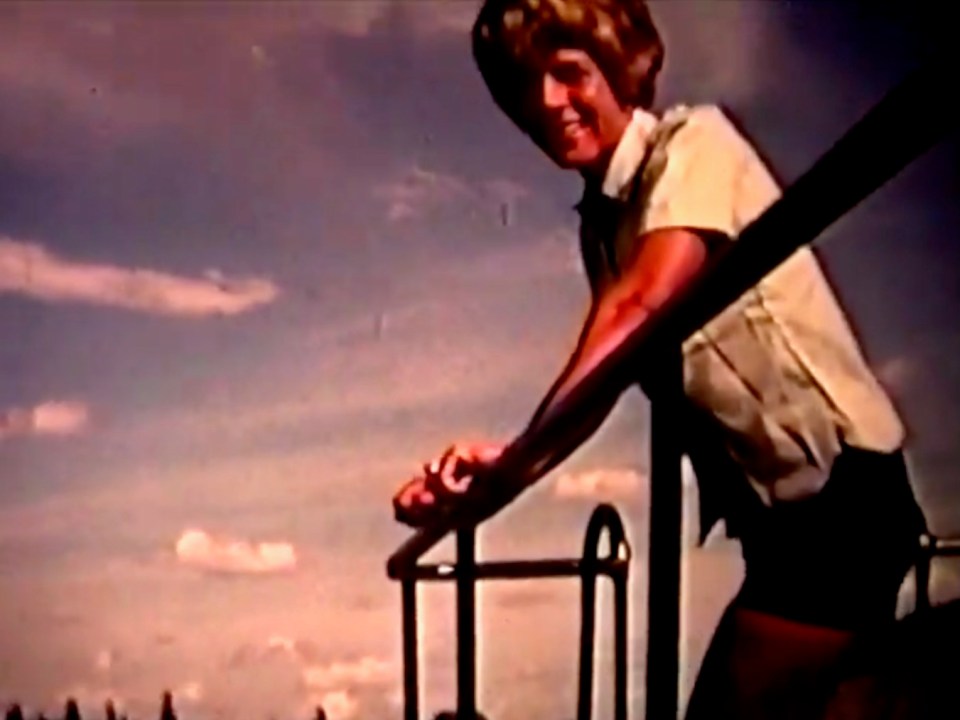
The result was a video that bears a resemblance to an extended newsreel of the time, blending the personal moments common to any home video with an early documentary approach to the river and each of the communities reached. (The video offers a southern family’s perspective and doesn’t include the voices of anyone met along the way. In places, the narration uses language that is outdated and now recognized as offensive.)
For most of the 60 years since it was produced, the Molsons’ video of the trip has existed on tape only.
Advertisement.
Advertisement.
While David passed away in 2017, Claire Molson – now in her nineties – contacted Cabin Radio about the voyage and has given us permission to publish the video.
More: Watch the full 36-minute video
“My husband had absolutely no training in filming and at times we were using the wrong film. We had night film and day film but he just put anything in,” she said.
“But he did all the narration, he wrote everything and he got the music put on. I thought it was really well done for someone who’d never done anything like that.”
The Molsons weren’t the only couple on the trip.
At a party hosted by the artist John Little – who died earlier in 2024 at the age of 96 – the Molsons met painter Lorne Bouchard and his wife, Lucille.
“I said to David, ‘Maybe we should take an artist with us.’ So we asked them that night. The whole thing came together,” Claire recalled.
Lorne spent day after day of the trip completing a series of artworks depicting stretches of the Mackenzie. Examples of his from the journey include a painting of the CCGS Eckaloo and one of the Ramparts.
Advertisement.
Advertisement.
Claire said one of the best moments was meeting John Tsetso, the Dehcho Dene author who was in his early forties at the time of the Molsons’ trip.
Only two years after the voyage, John passed away. After his passing, Claire had a hand in the hardcover publication of John’s book, Trapping is My Life, which has since been reprinted multiple times. The library in Fort Simpson is named for him and holds some of the correspondence between the two.
“When you’re in the presence of a genius, you really are humbled. It was humbling for me to be sitting on the ground by his fire,” Claire recalled of her time with John.
“They had a rabbit boiling in the pot and the family was all around. We had an immediate connection, and I asked him if he would be interested in communicating with each other, and we exchanged addresses.
“We wrote to each other, he sent me gifts and I sent him gifts, and it was wonderful until he passed away.”
Decades later, Claire reflected on her decision not to speak out about a residential school she saw in Inuvik during the trip.
“I didn’t say anything because I didn’t want to offend the people we were being shown around by, the sisters and the nuns,” she said.
“Sometimes I’m a little bit… I say the wrong things, even though they’re probably right, but they’re not at the right time. So I didn’t say anything, but I thought, ‘This can’t be right.’ I mean, how can they fill this school with children when the town here is so small?
Advertisement.
Advertisement.
“That was the only time I actually saw a residential school.”
Claire said more than a decade has passed since she last watched the video, not least because there are fewer and fewer working machines that can play a VHS tape.
“I’m just so proud that we did that,” she said of the trip as a whole.
“It just boggles the mind that people don’t know about this river, and not only that, but they don’t even care about it. They’d rather go to Europe than go into the North and see what’s up there.”
