



NWT MP Michael McLeod says his office will lobby for the territory’s federal immigration cap to be restored after Ottawa halved the number of applicants a key program can accept this year.
McLeod believes the territory’s nominee program – in which companies nominate foreign workers, who are given a path toward permanent residency – is trapped in an argument between the federal government and southern provinces over how asylum seekers should be accommodated.
Ottawa wants the provinces to do more to give asylum seekers somewhere to live. Recent remarks by the federal immigration minister, Marc Miller, have suggested a perceived lack of provincial cooperation is one reason for cuts to nominee programs across Canada.
“A lot of what’s going on is the dispute between the federal government and provinces over asylum seekers,” Liberal MP McLeod told Cabin Radio this week.
“The Northwest Territories is not a port of entry. We don’t have much people that are coming across the border seeking asylum. So we’re in a way caught in a crossfire between provinces and territories.
Advertisement.
Advertisement.
“A lot of people that were looking forward to taking advantage of this program are kind-of left in limbo.”
In the Northwest Territories Nominee Program, or NTNP, employers nominate applicants who have been employed full-time for at least six months immediately prior to applying. Successful candidates receive 600 points, boosting their overall score within Canada’s immigration system.
You can score a maximum of 1,200 points in that system, and a higher score makes permanent residency easier to achieve, which is what makes the nominee program’s 600 points so attractive to many applicants.
In 2024, NTNP closed early after hitting its 300-person cap in July. The NWT government subsequently asked Ottawa to increase the program’s cap to 500, but instead discovered – the day before the program was due to reopen, earlier this month – that the cap had been halved to 150.
Advertisement.
Advertisement.
McLeod, the GNWT and others have all said they were expecting the cap to increase after immigration minister Miller visited Yellowknife last year.
The MP said the new cap is “way below what we want or need” and his office is asking Immigration, Refugees and Citizenship Canada – IRCC, the federal agency responsible – to increase it again.
McLeod said the territory has “real valid arguments” for an exception to the current cuts.
IRCC wants ‘well-managed, sustainable growth’
In the meantime, McLeod said businesses have been lining up to voice their concerns about what a halved nominee program could mean for them.
Javaroma owner Rami Kassem said NTNP is “part of our success.” The program has helped him gradually expand his coffee shop to four Yellowknife locations since 2009.
The latest cuts threaten his ability to expand any further, he said, while he worries that three employees – for whom he had planned to submit NTNP applications – will find it harder to stay in the territory.
Kassem met Miller during the minister’s visit to the city last summer. He said their conversation made him hopeful of an increase to the cap, as Miller did not have “any objection.”
“He was fine with this. He said, ‘We are going to talk to the GNWT and see what we are going to do.’ We were excited,” said Kassem.

“When they cut it to 150, it was sad news because he was OK with the increase. Then suddenly they went down 50 percent everywhere.”
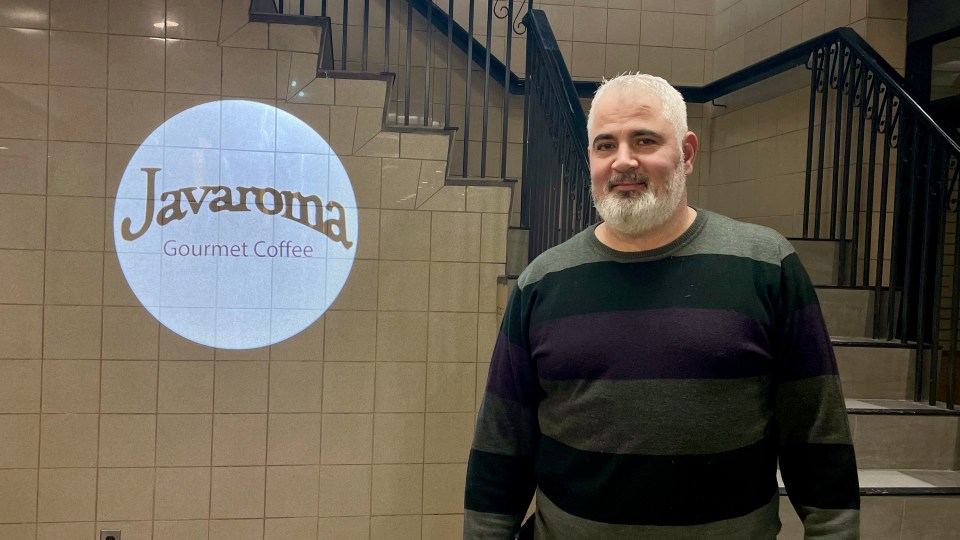
IRCC denied Cabin Radio’s request for an interview with Miller.
Instead, in a written response, the minister’s office said a range of factors contributed to the decision, such as processing times and territorial “immigration needs.”
“Recognizing the pressures that recent growth has added to housing, infrastructure and social services, the 2025-2027 Immigration Levels Plan focuses on well-managed, sustainable growth for the long term,” IRCC stated.
The agency reiterated its desire that provinces and territories agree to “take in more asylum seekers, who disproportionately land in Ontario and Quebec,” but did not specify if it had any concern regarding the Northwest Territories’ approach to this.
Fort Smith mayor criticizes IRCC
Inderjit Singh, who operates Yellowknife’s downtown Independent grocer, said his store helped roughly eight employees secure an NTNP nomination last year.
Of the 12 employees who had been waiting for nominee program applications to reopen this year, Singh said half are now considering leaving the territory.
“It’s a moving town. People who come in will stay two years, maybe three, and then eventually they will leave or move somewhere else,” he said. He worries that IRCC’s decision means there is less incentive for outsiders to work in the NWT.
Advertisement.
Advertisement.
“A lot of people leaving and no one coming in makes a huge economic gap,” he said.
“For the grocery store, it’s a huge labour gap. I won’t be able to serve at the same capacity that I am doing right now.”
Fort Smith’s mayor, Dana Fergusson, criticized IRCC’s decision in a letter to McLeod and the NWT government last week.
Fergusson said the new 150-applicant cap was creating “unnecessary instability in our small business labour market,” forcing some people into “scrambling to salvage their futures” while local businesses face a labour shortage.
“The reduction of our annual allocation from 300 to 150 applicants is not just a policy change – it is a betrayal of trust,” she said in her letter.
“Skilled workers and their families have uprooted their lives, invested their savings, and dedicated their efforts to our communities, only to have the door to opportunity slammed shut without warning.”
Fergusson said communities like Fort Smith rely heavily on immigration to sustain their population and fill critical employment gaps, since finding local candidates can be a struggle.
“A practical and impactful solution to this issue would be to open the NWT Nominee Program specifically for communities outside the regional capital of Yellowknife,” she suggested.
Advertisement.
Advertisement.
“Smaller communities, which have lower populations and fewer workers, would not exhaust the program’s allocation even if it were fully utilized.”

Fergusson said the lack of prior warning from IRCC was “especially troubling” when the federal government had previously indicated it was in support of increasing immigration within the territory.
“The message this sends is clear,” she wrote. “The contributions of northern communities and workers are undervalued, and the critical role of immigration in sustaining our economy is being disregarded.”
‘We will be looking for people’
Javaroma’s Kassem finds it “unfair” that Yukon, where the population is now slightly higher than that of the NWT, can still accept 215 applications after each territory’s allotment was halved.
“The GNWT spent so much money in marketing this program to increase the population of the Northwest Territories,” he said.
“People wanted to move [here]. Now they say, no, we’ll go somewhere else.
“In the future if they increase the cap again, [the GNWT] will have to work harder and spend more money on marketing the program.”
If the GNWT sticks with the first-come, first served approach it was planning to follow, Kassem said that will also place stress on employers as well as applicants. Regardless, he plans to drop everything when the portal opens again to fill out “one application after another” for his staff.
Advertisement.
Advertisement.
“Every single person worked hard, they studied hard, they paid so much money for university. At the end of the day, they wanted to work in their own domain – from computer science to business administration to anything. They did not actually study four years, graduate and pay so much money to stay working in a restaurant and coffee shop. I understand that,” he said.
“We might have people who will get their permanent residency in the next five or six months. They will stay for a while but they will be looking for jobs in their domain and that’s fair. At that time, we will be looking for people to work for us. If you don’t have people willing to move here and work, you cannot operate.
“We have four locations. For the time being we are fine, but then we will be struggling.”
