


Advertisement.
Tuktoyaktuk wants to continue a composting project the Arctic coastal community began in July last year.
The goal of the program was to keep food scraps and organics out of the municipal solid waste site, to bring the hamlet a step closer in meeting its sustainability goals.
Of roughly 250 households, seven registered for the program during its initial weeks. Vlad Galbin, the hamlet’s economic development officer, said participation has since doubled to include 15 households, businesses and organizations.
“The project’s main success so far has been raising awareness and education in the community surrounding food scraps and composting, and diverting organics from our municipal solid waste site,” he told Cabin Radio.
Advertisement.
Advertisement.
According to Galbin, the hamlet did not have a similar compost program before. Funding from the NWT government’s Waste Reduction and Recycling Initiative helped get it off the ground.
Some money was later repurposed to ensure compost collection continued through the winter season.
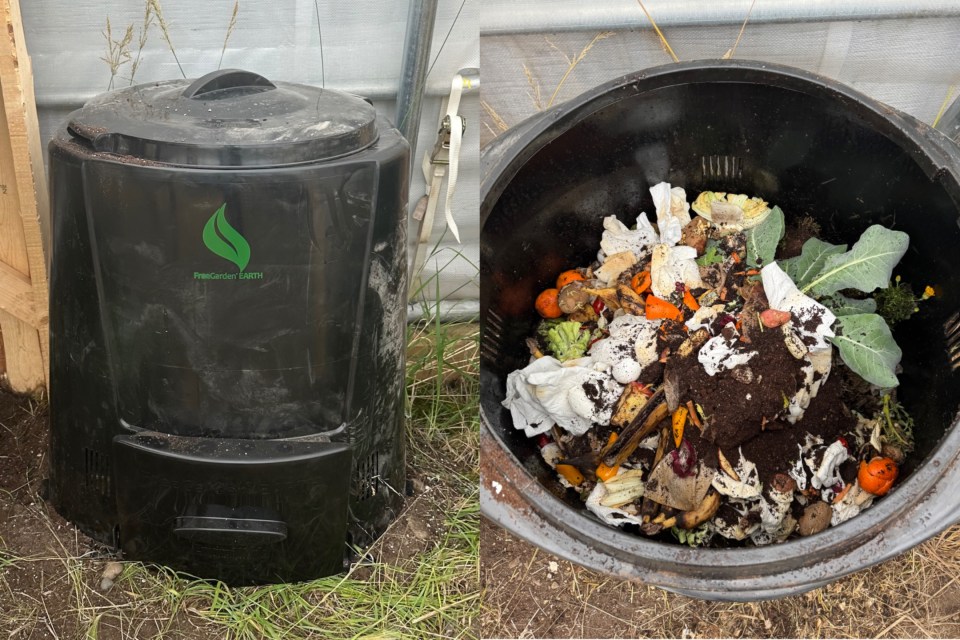
Galbin said the hamlet had collected roughly 400 to 500 kg of organics as of February – a figure based on the volume of the composters and bins – which is expected to be processed into compost and used in the community greenhouse this summer.
Once that process is complete, he said the hamlet will have a better idea of what’s required to plan a larger-scale program and effectively manage ongoing collection.
Advertisement.
Advertisement.
“To further expand our initiative, we would need to look at a larger food scraps and organics holding facility and a more streamlined approach to collection,” he said.
How much money is needed to establish a larger food waste facility or even continue the existing organics collection is unclear at the moment.
However, Galbin said Tuktoyaktuk’s latest funding application for the project, mirroring a compost program that Tulita already runs, totalled roughly $150,000 – including funds for infrastructure, training, staffing and support from industry experts.
Either way, he said the continuation of Tuktoyaktuk’s program is “fully reliant” on securing outside funding, something the hamlet continues to explore.
