



Advertisement.
Cabinet ministers answered questions at a gathering of chiefs and mayors about the state of housing, healthcare and emergency preparedness.
At last weekend’s annual NWT Association of Communities question-and-answer session, informally dubbed “the bear pit,” Mayor of Norman Wells Frank Pope said tariffs and the impending federal election left the North “more vulnerable than usual.”
“The world has changed drastically since we met in Hay River a year ago. The world is in turmoil right now, and we are in leadership positions,” Pope said.
“We must make our voices heard in the south. The south has its economic, social, political issues. We will be in competition with the south for limited political and economic clout. We are resilient but require support because the North is changing.”
Advertisement.
Advertisement.
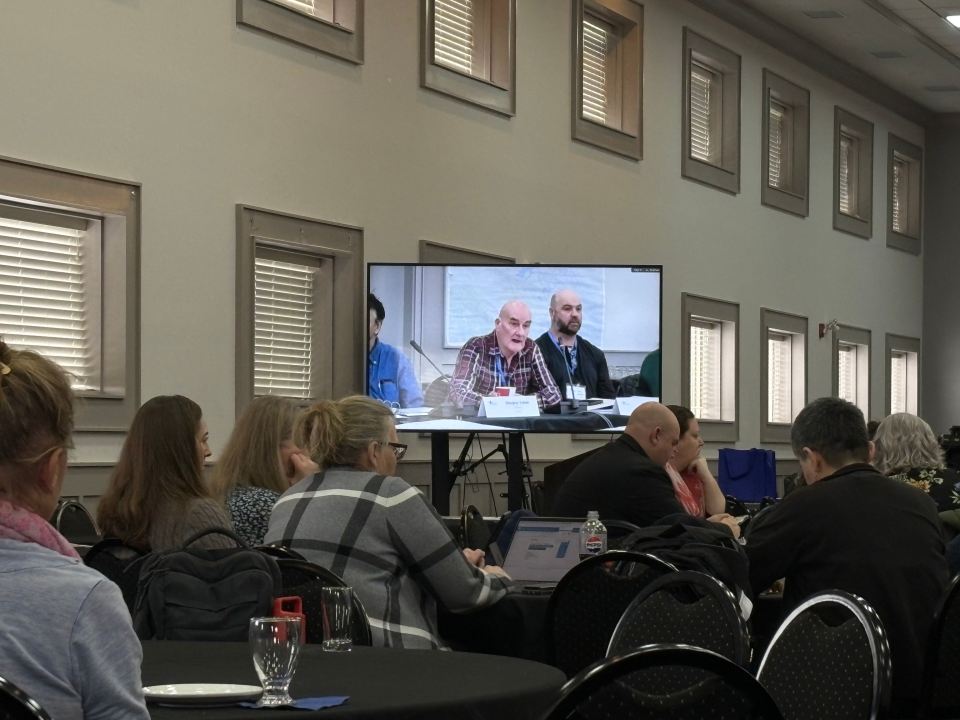
Pope urged cabinet to ensure the GNWT and federal decision-makers work together for the benefit of northerners.
For most of the question-and-answer session, Mayor of Yellowknife Rebecca Alty read out questions shared by community leaders in advance.
Premier RJ Simpson was asked to explain the territorial government’s commitment to providing services and infrastructure in regional centres. He responded that the GNWT’s mandate “focused heavily” on integrating services.
“Our programs – the way we do things – will be streamlined, will be more efficient, and will be more designed to be applicable to small communities,” he said.
Advertisement.
Advertisement.
“We are moving in that direction when we’re also looking at where we can decentralize jobs and positions and thereby strengthen communities, hopefully helping them grow and putting them in the position to receive more services.”
As the minister of justice, Simpson said courts are in the process of becoming modernized by switching from a paper-based approach to a database that can be accessed electronically. He said this move will allow work that is currently undertaken in Yellowknife to be done anywhere in NWT.
Transitional housing
Asked what the GNWT is doing to change the “status quo” around homelessness, Simpson said the territory is working to ensure non-governmental organizatons are funded appropriately “to do the work they need to do.”
“If we can provide adequate funding for an NGO to support a homeless shelter, that actually saves us money in the long run,” he said.
“If we spend $1 million so that an NGO can run a shelter, instead of spending $2 million so the GNWT can do it, that obviously makes a lot of sense.”
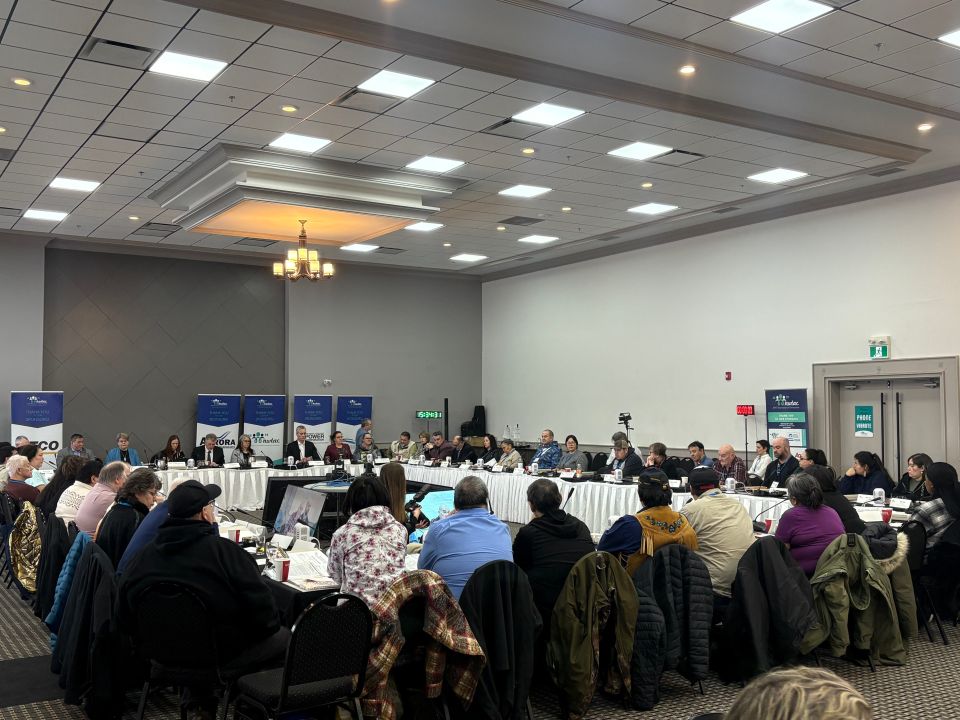
Simpson said the GNWT is also expanding its stock of transitional housing through federal funding.
Housing minister Lucy Kuptana said her government is refining its policies around evictions, adding that a majority of those occur as a result of illegal activity inside public housing units.
“Signing off on evictions is a really difficult decision,” she said.
Advertisement.
Advertisement.
“People are using public housing units to prop up the drug dealers. Drug dealers are using these houses, and over in Hay River … 10 evictions in January, February on illegal activities alone.
“It is really difficult decisions, but we have to refine policies. We have to offer supports.”
Preparing for emergencies
Communities minister Vince McKay was asked what actions the GNWT was taking to ensure communities were adequately prepared for future emergencies.
In response, he asked members of the audience to raise a hand if they had a 72-hour kit of important documents and items at home, ready to go in case of an emergency. Few hands were raised.
McKay said last fall, the Department of Municipal and Community Affairs sent out letters to the communities partly to get them prepared.
“The government can throw some money at you to be prepared but, honestly, the preparedness starts at home [by] getting your documents ready, and then it starts passing off down the chain to the community governments and your municipal governments and having everybody prepared,” he said.
Environment minister Jay Macdonald said many of the recommendations received in a review of the 2023 wildfire season had already been implemented by the department, while those that require a larger financial investment may take more time.
“There’s a tremendous amount of investment in our wildfire response, in equipment and staffing, in our FireSmart program and, through the NWTAC, $20 million to support communities in working in the mitigation side of things around their communities,” he said.
Advertisement.
Advertisement.
Simpson said the GNWT was doing things differently internally to ensure clear communication and coordination if an incident occurs.
“We weren’t coordinated enough to know who was supposed to be doing what and who was in charge of what,” he said.
“We’ve put in place ways to break down those silos and ensure that when there’s an incident, we have the right people who are going to be talking to each other at the right levels to ensure that everyone’s working together and things aren’t overlooked.”
Lastly, asked about the underfunding of communities, Simpson said the GNWT was doing what it could to “get by” amid rising costs.
While the territorial government did not have all the funding it needed, he said, advocacy at the federal level continued.
“When the federal government was busy investing in nation-building projects in southern Canada, like highways and railroads and energy systems, they were busy investing in cultural genocide in the Northwest Territories,” he said.
“That has lasting impacts. We see the lasting impacts in the south with a robust economy, and we see the lasting impacts in the North with a lot of the issues that we’re all trying to deal with here.”
