



Under Joe Biden, the US government pledged millions of dollars to mutually beneficial mineral projects in Canada. Donald Trump has also shown interest in critical minerals, but his approach has been less friendly.
Trump has imposed tariffs against a range of Canadian goods, including a 10-percent tariff on resources including critical minerals, and repeatedly threatened to annex the country, which he has referred to as the 51st state.
Former prime minister Justin Trudeau has said he believes the threat is real and motivated by Trump’s interest in Canada’s critical minerals.
Trump recently struck a more collegial tone, however, following a phone call with Mark Carney, where he correctly referred to him as the prime minister rather than the “governor of Canada.”
Carney said Trump “respected Canada’s sovereignty” in both public and private comments, describing the call as “cordial and focused on making progress.”
Advertisement.
Advertisement.
Trump has also threatened to annex Greenland. His national security advisor has stated US interest in the territory is at least partly driven by its critical minerals.
Meanwhile, the US president is pushing Ukraine to sign a deal that would give America access to Ukraine’s critical minerals, which Trump has said would incentivize his government to continue supporting Ukraine in its war with Russia. Russia has said it is in talks with the US on joint rare earths projects.
Braden Jebson is a partner at Torys LLP, a Canadian international corporate law firm that has weighed in on Trump’s foreign policy and its impact on critical minerals supply chains.
“What we’re seeing is a real America First approach in how they’re viewing critical minerals, as far as securing access to critical minerals and then the processing of those critical minerals within the United states,” Jebson said.
Advertisement.
Advertisement.
“That hasn’t historically been as much of a focus of the US government, and that is clearly a focus of the new administration.”
Andrew Grant is an associate professor at Queen’s University who studies governance issues in natural resource sectors.
Grant said Trump’s interest in critical minerals comes as a bit of a surprise, as they weren’t an area of focus during his first presidency.
However, he said, critical minerals are valuable as they are used in solar panels and batteries for electric vehicles as well as for military technologies such as fighter aircraft and radar systems.
‘Not particularly realistic’
Jebson said Trump’s policies could have a short-term impact on some of Canada’s supply chains. More broadly, he said, an America First approach to critical mineral sourcing and processing – as well as a full-scale annexation of Canada – “is not particularly realistic.”
“A sort-of North American approach to stable supply chains where the minerals are mined in Canada and the United States and processed in Canada and the United States still makes the most sense,” he said.
Grant agreed that annexing Canada “doesn’t make a lot of sense.” He said American mining firms are currently welcomed in Canada, while annexation could actually slow down access to minerals.
“Mining companies, like other companies, they don’t like instability. They don’t like uncertainty,” he said. “That would make things quite difficult to begin extracting or mining critical minerals on top of the existing challenges.”
Advertisement.
Advertisement.
Grant noted while there has been increased interest in critical minerals, it takes a great deal of time and investment – 10 to 15 years or more – to extract and process those minerals.
“That is a long time horizon,” he said. “Because that’s known in the mining sector, the direct impact hasn’t been all that significant thus far.”
Changing Canada’s approach
Grant said Canada could use its critical minerals as a bargaining chip in negotiations with the US, which is “mindful of wider competition with China,” the country that currently has a monopoly on all ends of the critical minerals supply chain.
“That’s the most maybe fruitful or likely avenue in this particular issue,” he said.
“Canada should think seriously about including access to its critical minerals when it negotiates with the US.”
Jebson said Trump is pursuing a more transactional foreign policy approach than previous US administrations. He said that is driving several allies to evaluate their approach to the global market and relationships with the US and other countries.
Earlier this month, for example, Carney travelled to the UK and France to discuss building stronger security and economic ties in areas like artificial intelligence, critical minerals and clean energy.
While Jebson said there are some opportunities for Canada to consider a self-contained approach to critical minerals, that would face the same challenges as an America First approach.
Advertisement.
Advertisement.
“We don’t have all of the critical minerals we need, the scale and scope of the processing that we would need to do,” he said.
“Each country having its own individual sort of self-contained supply chain is challenging and not necessarily realistic.”
Instead, Jebson said, a supply chain with both Canadian capacity and a broader range of friendly countries “is certainly possible and a real opportunity here, honestly, to rethink how we’ve approached it and build a bit more of a stronger and diverse supply chain than we have right now.”
Jebson added the issue has increased interest in interprovincial, territorial and federal cooperation on trade and large-scale project development. He said that could help Canada’s critical minerals industry to overcome some traditional barriers.
NWT’s response
So what does this mean for the NWT, where the territorial government is promoting critical minerals as the next big mining development?
The Canadian government has identified 34 critical minerals and metals. If they are on the list, they are considered important to national economic or national security, required for a transition to a green and digital economy, their supply chain is threatened, and they have a reasonable chance of being produced in Canada.
The NWT has 23 critical minerals of “significant occurrence.”
NWT industry minister Caitlin Cleveland said mining proponents in the territory are watching the Trump administration closely.
Advertisement.
Advertisement.
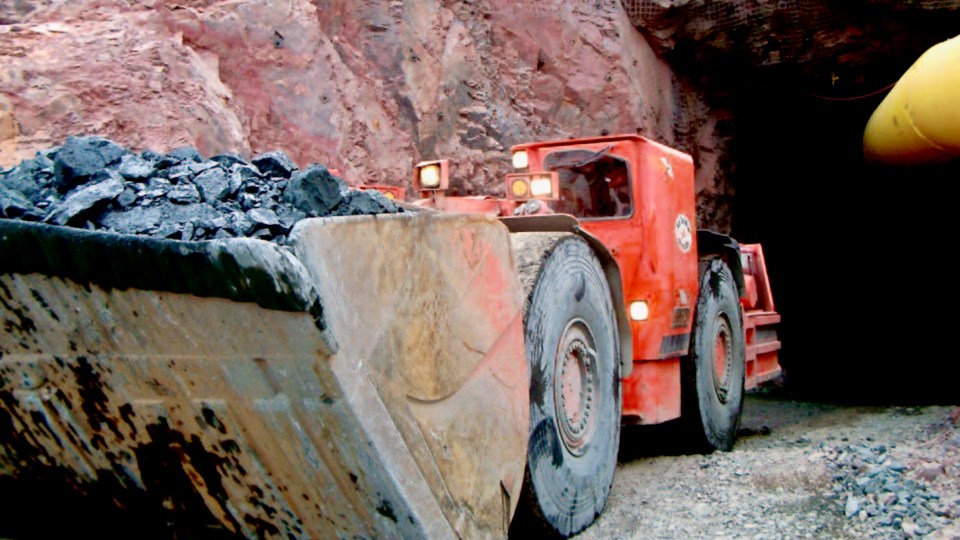
“What they’re looking at is potentially higher costs associated with a lot of the machinery that is used in mining,” she said, adding tariffs are increasing the cost of doing business.
Cleveland said mining companies are ensuring they “are prepared for whatever comes their way” and are “widening their net” when it comes to attracting investment.

Across cabinet, Cleveland said, ministers have been working to support mineral development in the territory.
“We want to continue to see these projects move forward but want to ensure that we’re prepared and that we’re not putting all of our eggs in one basket as Team NWT either.”
When it comes to eliminating trade barriers within Canada, Cleveland, who currently chairs Canada’s Committee on Internal Trade, said members have made “more movement at the trade table in the last three months than has been made in seven years.”
“Right across the country, Canadians can be very proud of their trade ministers,” she said.
“Everyone has come to the table ready to do good work, very enthusiastic and have shown up with measurable targets and then also put things on the table that haven’t been on the table in a number of years.
“There’s great work being done at the table and I think there’s a tremendous amount to be gained from the work that’s being done there when we compare it to critical minerals and critical mineral mining.”
Advertisement.
Advertisement.
Cleveland was among federal, provincial and territorial energy and mining ministers who signed a joint statement at the 2025 Prospectors and Developers Association of Canada convention in response to US-imposed tariffs.
The ministers pledged to accelerate resource development in Canada “through more efficient and timely permitting and regulatory processes” and continue advocating to the US that it is in their interest to partner with “a dependable democratic neighbour” for critical minerals.
Internationally, Cleveland said, the NWT is ensuring that other countries are aware of projects and opportunities in the North.
‘The territories are well positioned’
There are proposed critical minerals projects at various stages of development in the NWT.
In May 2024, the Canadian and US governments agreed to provide a total of $16.2 million to support Fortune Minerals’ Nico project with a focus on expanding the domestic production of cobalt.
The world’s current supply of cobalt, which is used in lithium-ion batteries, is largely reliant on production in the Democratic Republic of the Congo and refinement in China.
Fortune also proposes to mine gold, bismuth and copper at the Nico site, located outside Whatì.
Robin Goad, president and chief executive officer of the company, said the funding provided by the US and Canadian governments was “a leadership move” that indicated governments’ recognition of the importance of critical minerals.
Advertisement.
Advertisement.
He said current funding for the Nico project from several programs is supporting an updated feasibility study, feed engineering and permitting of a refinery site in Alberta among other work. He said the project could begin construction as soon as June 2026.
While it’s difficult to predict what Trump may do, Goad said, to the best of his knowledge, nothing has changed in his company’s relationship with the US government.
“We believe that critical minerals are very important to the US government and, quite frankly, I expect that this tit-for-tat tariffs and trade issue will be short term,” he said.
“I assume they’ll get worked out because they’re self-defeating for both economies. Tariffs only increase the cost of everything that is applied to them and those costs are typically borne by the party that’s imposing the tariffs.”
Like Grant, Goad said Canada could leverage its critical minerals in negotiations with the US.
He said governments need to invest in developing those resources to “decouple” from Chinese supply and create a sustainable supply chain.
“The territories are very well positioned but we’re not producing it,” he said.
Since China has imposed export controls on bismuth and four other metals in response to Trump’s tariffs, Goad said his company gets around two calls a day from companies “desperately looking for bismuth.”
Advertisement.
Advertisement.
Rare earths consortium
Vital Metals’ Nechalacho mine, located around 100 km east of Yellowknife, became Canada’s first rare earths mine when its demonstration project went into production in 2021.
Lisa Riley, Vital’s managing director and chief executive officer, said the company – which has had its own national security issues around Chinese investment – is now part of a Canadian strategic research consortium that aims to accelerate the establishment of a national rare earths industry.
“The idea is to create a Canadian-only rare earth supply chain from the mine all the way through to advanced manufacturing,” she said.
“There’s more incentive today for that to be done than there was before Donald Trump came in. So the incentive to create jobs in Canada is much clearer, and the incentive to collapse the timelines by working collaboratively also has been driven much more clearly into the front of mind, by what the Trump administration has been doing.”
Riley said rare earths are used in smartphones, motherboards and robots. She said their largest use is in wind turbines, and she hopes an advanced manufacturing supply chain would result in the production of wind turbines for use in Canada.
“There’s a lot of work that needs to be done and we’re trying to collapse those timelines,” Riley said.
“That’s the only challenge but I don’t see that as something that’s insurmountable. I think we’re in a position where working together, we will be able to come across that and come across the most efficient way to do that.”
Riley said Vital is currently in the process of completing a scoping study for the Nechalacho mine.
Advertisement.
Advertisement.
Before the project moves forward, Riley said, Vital is hoping to develop an Indigenous-owned barging service to support the transportation of rare earths metals alongside providing barging service for communities.
Nicole Tews, Vital’s director of human resources, community and government relations, added the company is in the early stages of creating a strategic Indigenous working group to help Indigenous workers fill positions at developing projects in the NWT.
Other critical minerals projects in the NWT include Pine Point Mining’s proposed zinc and lead mine at Pine Point, the site of a former mine between Hay River and Fort Resolution.
The company recently signed an agreement with the Town of Hay River to work together in support of the project.
Norzinc’s Prairie Creek project is a proposed zinc, silver and lead project on land surrounded by the Dehcho’s Nahanni National Park Reserve.
Last year, the Canadian government committed $25 million toward constructing an all-season road from Highway 7 to the site.
