



When writing her children’s book, Tamara Levine looked up what the warmest wool in the world is. That’s when she learned about qiviut, the downy underwool of the muskox, and the story of Tanis Simpson.
Levine, who lives in Ottawa, is the author of The Warmest Blanket in the World, illustrated by Ellie Arscott.
Simpson, who is originally from Sachs Harbour, runs Qiviut Inc – a qiviut fibre mill that produces yarn, spinning fibre and knitwear in Nisku, Alberta.
The book tells the story of Frida, a young girl who loves spending time with her great-grandmother Ama. There’s just one problem: Ama is always cold. So Frida searches for a way to help keep Ama warm and, with the help of Tanis, gives her a qiviut blanket.
“It’s a really nice bridge, I think, between the south and the north,” Levine said.
Advertisement.
Advertisement.
“There’s this really lovely exchange between south and north with something that is really, really useful and valuable in both places.”
True inspiration
Levine said the book was inspired by her mother, who passed away in 2018 at the age of 95. She said like Ama, her mother would sing songs, share stories about her activism – and was always cold.
“She was a gutsy feminist and activist who was a social worker and as she got older, a women’s studies instructor and a mother and a grandmother and a great-grandmother,” Levine said.
“She had a very strong connection with her daughters and her granddaughter and her great-granddaughters, so that inspired the relationship between Ama and little Frida.”
Advertisement.
Advertisement.
The character of Tanis was inspired by Simpson, who Levine connected with while writing her book.
“It’s amazing, it’s a wonderful opportunity and my name is quite unique so I don’t get to see it often in books or on anything,” Simpson said.
“It’s really cool to see it in print and to have part of our story told as well.”
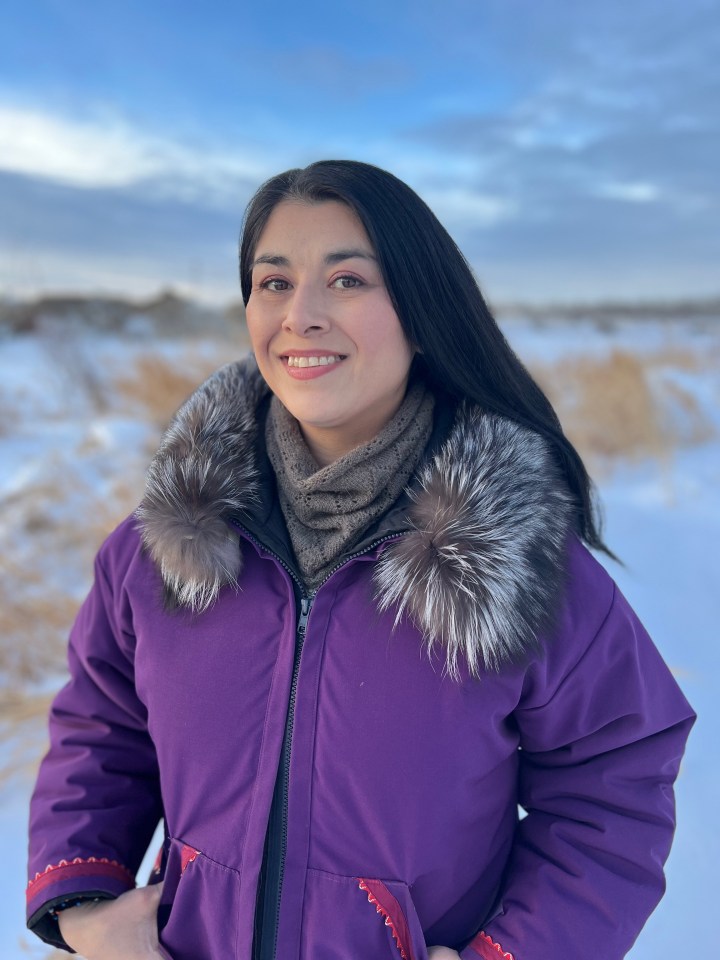

Simpson said Inuit have long harvested muskox for food and used qiviut to make parkas and line mitts or boots, while using muskox hides to keep warm.
She said her great-aunt Lena Wolki was one of the first women to introduce spinning qiviut into yarn and making it into knitwear.
Simpson said her brother, Bradley Carpenter, worked with the muskox hunt on Banks Island as a young man, where he learned that qiviut was considered a valuable luxury and people outside the Arctic were purchasing it to process and re-sell.
The siblings began Qiviut Inc in 2019 and were joined by mill manager Robby Inuktalik, an artist and fibre worker from Ulukhaktok.
“I’m very proud to be a 100-percent Inuit-owned company and to be processing something that comes from my home and from our culture,” Simpson said.
Advertisement.
Advertisement.
Family stories, activism and education
Levine hopes readers of her book will take away that “relationships between children and Elders can be really valuable and important and fun.”
“It’s important to share our family’s stories and what our ancestors have been up to,” she said, adding the story also teaches that kids can be problem-solvers and activists.
“I think that can be really inspiring for young kids, and especially for young girls to say, hey, I can be part of the solution here, I can help figure this out.”
Simpson said the book shares what qiviut is and that Inuit are still here and practising their culture.
“I just hope that this also provides some education or intrigues people to learn a little bit more about where we are from,” she said, “and how we actually live in a modern-day world and how we did live prior, as well.”
