


The four candidates running to be the Northwest Territories’ next MP appeared in a forum on CBC radio for 90 minutes on Tuesday.
Liberal candidate Rebecca Alty, NDP contender Kelvin Kotchilea and the Conservatives’ Kimberly Fairman appeared in the CBC’s Yellowknife studio. Green candidate Rainbow Eyes joined by video.
Election day is less than a week away and the candidates have already done a lot of talking, plenty of interviews and one prior debate.
The format
Topics were addressed in the following order:
- Housing
- Reconciliation
- Giant Mine and a federal apology
- Drugs and crime
- Climate change
- The economy after diamonds
- Gaza
Each candidate had two minutes to talk, then each had a one-minute rebuttal (though the rebuttals quickly gave way to allow room for more questions).
Advertisement.
Advertisement.
Here’s what caught our ears during the broadcast.
What do candidates want from reconciliation?
In an election where the party leaders have mostly avoided this area, the NWT candidates set out how they would advance reconciliation.
Kotchilea described himself as a third-generation residential school survivor who lost his grandmother to alcohol when she was 28.
“I’m a true believer that the federal government has to pick up on the Truth and Reconciliation report, rather than cherry-picking the easy action items,” he said.
Advertisement.
Advertisement.
“Indigenous communities need to be put back in control,” said Fairman. “They need to be in control of their land. They need to be in control of their decisions, and their future, and also in control of their money.”
She added: “Getting Ottawa out of the way of Indigenous communities is one of the key steps.”
Rainbow Eyes said: “A good first step would be to get all of the MLAs and government leaders to acknowledge that there was a genocide on Indigenous people.” She, like Kotchilea, urged that the federal government act on every call to action from the TRC.
“Fix the justice system that puts too many Indigenous people in prison,” she added, before deadpanning: “I can attest to this.” (Rainbow Eyes spent a night in jail during the campaign as she appealed her sentence for convictions related to a 2021 old-growth logging protest.)
Alty said the Liberals would increase the federal staff time available to work on land claims and self-government agreements, speeding up those processes.
From there, she said, Ottawa would be “working with the Indigenous governments to build capacity and devolve more and more authority.”
An apology for Giant Mine
When asked, Fairman did not expressly say the federal government should apologize for Yellowknife’s toxic Giant Mine and its legacy, which has been a request from the Yellowknives Dene First Nation.
“Conservatives have continued to do the hard work of sitting down and listening to our First Nations in the North and I think there are opportunities, for sure, for us to move forward,” she said, focusing her answer on the economic opportunities available through “legacy projects” and the resource sector.
Advertisement.
Advertisement.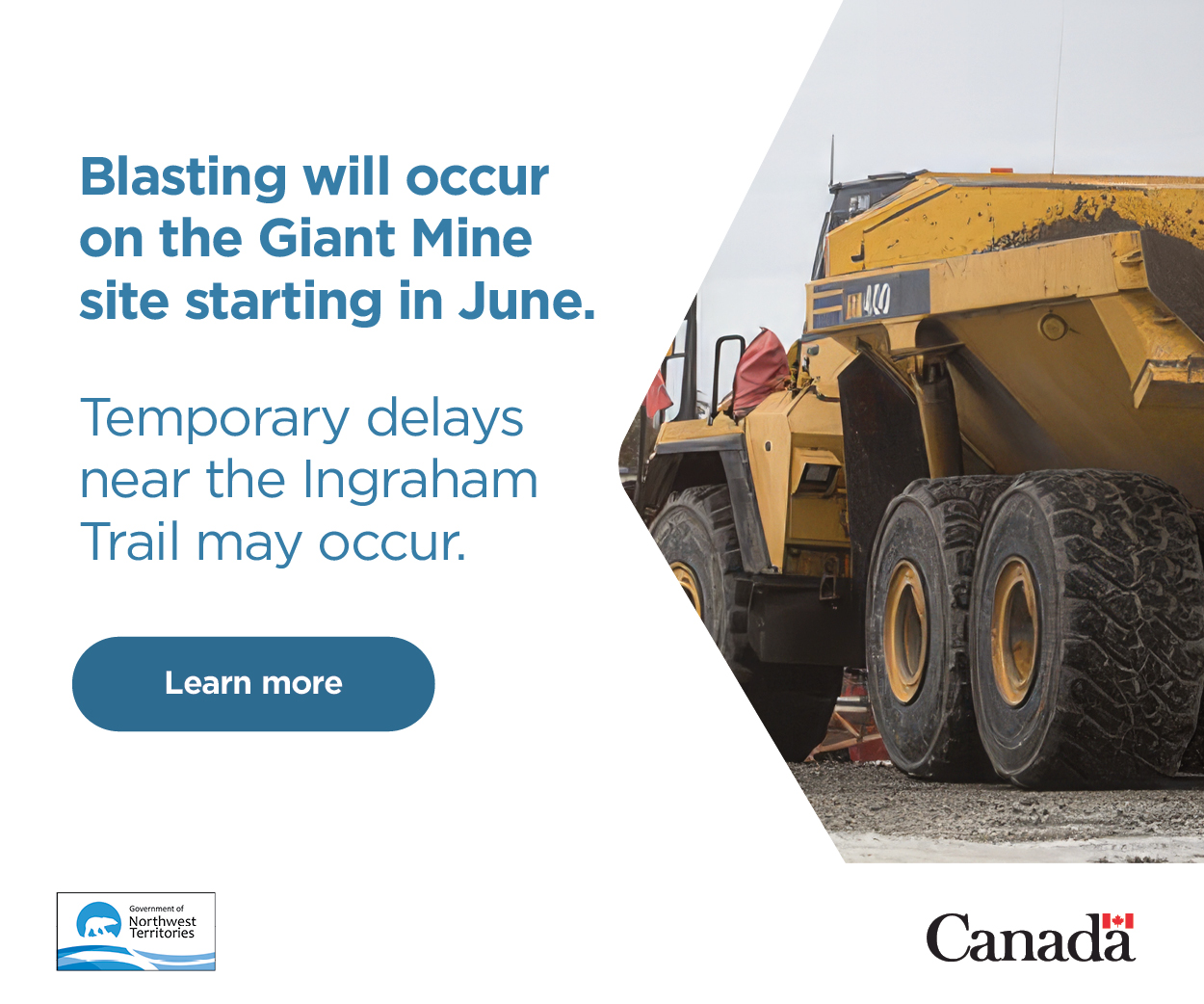
Rainbow Eyes, in a brief answer, did not touch on any specifics regarding Giant Mine. The extent to which the BC-based candidate was aware of Giant and its legacy was not clear.
“I feel like it’s very important to acknowledge what the people have gone through and what they what experienced,” she said. “If they’re calling for an apology, I think an apology is needed, but I think organizing community events with all the leaders and all the people is necessary.”
Alty said the Liberal government had “already agreed” an apology was warranted and had entered discussions related to that.
“I do want to continue this work and I believe it’s best the Yellowknives Dene First Nation outline what that should look like,” she said.
Kotchilea articulated support for an apology and compensation, while pointing to other toxic sites across the territory.
“It’ss a gross action of the federal government and all these businesses that came up here and basically went bankrupt and left a mess,” he said. “So I’d like to see an apology not only to YKDFN but to all Indigenous communities across the North that have impacted their land, their water and their animals.”
A forward-looking energy strategy
Asked to outline an approach to energy as part of a climate question, Alty said energy needs to be “stable, affordable and transitioning to green.”
She said Ottawa should support the Taltson hydro expansion “if it moves forward” and smaller hydro projects elsewhere, supporting community governments’ priorities.
Advertisement.
Advertisement.
Kotchilea began by noting the impact of climate change on the territory – and on increasing insurance premiums. He paired investments in energy with the idea of connecting communities.
“If you had more hydro dams, you can definitely link them along these all-season roads, which then connect all the way as far as Inuvik,” he said, describing the proposed Mackenzie Valley Highway as a form of energy corridor.
“We need to focus on mitigation and adaptation,” said Fairman.
She said Conservatives would “use programs like clean technology and clean manufacturing investment tax credits that would reward industries that lower their emissions,” adding that she wanted to see projects like “hydroelectric projects, carbon capture and storage, nuclear power.”
Rainbow Eyes connected climate and energy to reconciliation.
“We’re disconnected from the land as a society, and understanding and respecting the land and caring for it is what we have to do,” she said. Reading from a list of Green priorities, she said her party would “hold the big polluters responsible for the climate damage they cause, create strict science-based limits on Canada’s total pollution, [and] make companies prove they have real plans to deal with climate risk.”
Candidates’ positions on Gaza
CBC host Hilary Bird asked each candidate: “What is your position on Canada’s role in addressing the humanitarian crisis in Gaza, and how would your government support peace in the region?”
“We really want to make sure that this conflict doesn’t create division in our country, and I can see that happening here. It’s really worrisome for me,” said Fairman.
Advertisement.
Advertisement.
“In fact, the way that it has created division in communities? That has hurt businesses, that has hurt families and individuals, and I really feel we need to make sure we’re not taking that on and having an impact in our communities in the way that it has been.”
“The respect for life is important,” said Rainbow Eyes. “All governments must call for peace and a call for people to stand up for humanity and to stand up against division.”
She continued: “Peacemaking has to be a core teaching, a core value for all people, and we don’t see that in the Canadian government right now. That’s an Indigenous value – working together, unity – and we have to call for it.”
More: How the candidates envisage a post-diamonds economy
“Canada must continue to provide humanitarian aid to the Palestinians in Gaza who need international support to rebuild their homes and their lives,” said Alty.
“Canada must do our part to proactively work with all partners to build that credible path to a two-state solution with an Israeli state and a Palestinian state.”
“The federal government still has to continue to push for an immediate ceasefire in Gaza for the Palestinians,” said Kotchilea. “At the same time, we’ve got to look at anti-semitism where the Jewish are also getting attacked unfairly.”
He said he would “definitely be a partner in lobbying with local groups here in Yellowknife” that are calling for a ceasefire and more action at a federal level.
