


Fort Good Hope’s Aron Ellton says he hunts moose, caribou, bison, geese, elk, ducks and beavers “just to survive.”
In recent weeks, Ellton has been clearing debris left behind by last year’s wildfire. Over the summer he worked on the barges, and soon he’ll begin brushing road signs along the Mackenzie Valley Highway.
Even with a steady income and only himself to support, he finds it challenging to keep up with how expensive life is in the community.
“I think a food bank is a very big thing to have in the North, because there are a lot of people in the community that are not working and some of them don’t even have food in their fridge,” Ellton told Cabin Radio.
He said the local renewable resources council and non-profit K’ahsho Got’ine Foundation conduct community hunts to provide Elders with harvested meat during the spring and fall.
Advertisement.
Advertisement.
Ellton grew vegetables through the annual community gardening program, which he felt has been a success. He grew tomatoes, potatoes, carrots and onions – and handed them out to residents.
Ellton also had a garden of his own while living in Fort Liard for four years, but he said the food situation was not so dire there as the community was connected to the highway.
Norman Pierrot, who returned to Fort Good Hope last year after living in Yellowknife, Behchokǫ̀, and Inuvik, said prices in his home community are by far the highest he has experienced.
Pierrot said he tries to buy in bulk so he can cut back on some of the costs.
Advertisement.
Advertisement.
Like Ellton, his main diet is harvested meat. In the winter, he relies on rabbits, ptarmigan, caribou or moose, while in the spring he eats geese and ducks, followed by fish in the summer.
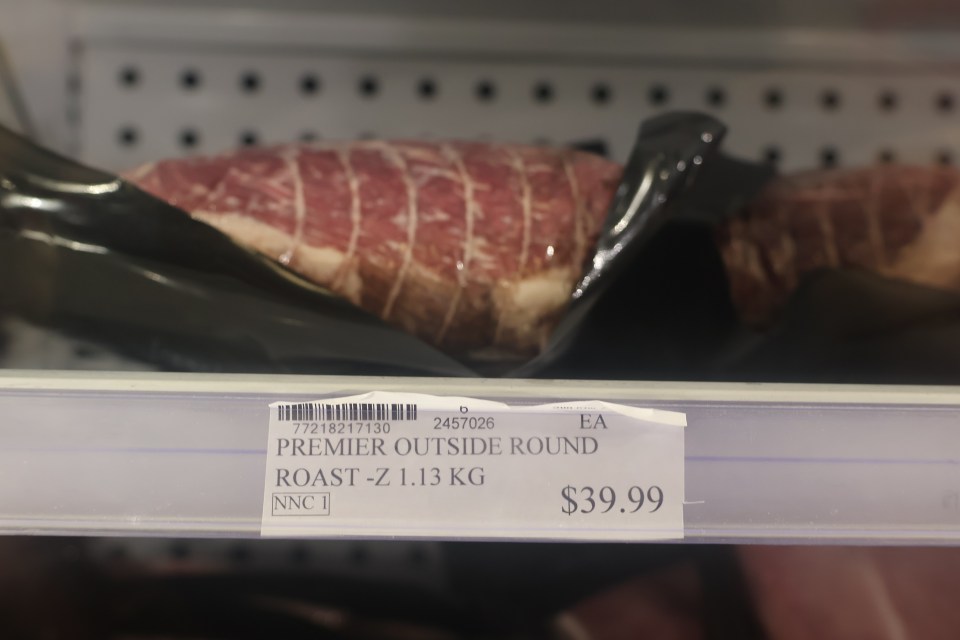
“Every time we get a chance to fly to either Yellowknife or Edmonton, we buy as much food as we can,” he said.
Pierrot recalls once purchasing a bag of groceries worth $700. He said he had to pay almost the same amount to ship it to the community.
“Even now, I got some stuff to fix up my house and to ship it from Yellowknife to here it cost me $70,” he said.
“I didn’t think it would be this bad. Now I have come back and I see lots of young, single girls and parents who lack the educational capacity to work. They are stuck at home with their kids and they depend on income support.”
Pierrot said his diet changed when he first joined the military. According to him, the processed foods he consumed while living in Nova Scotia failed to curb his hunger.
“When I go to Co-op and buy steak for supper, I will still be hungry. If I eat caribou or moose meat, I feel like I ate something. I felt like I finally ate,” he said.
In the absence of barges, a majority of the food found at the Arctic Co-op and Northern stores arrives on trucks when the winter road briefly opens or is flown in on charters at an inflated cost.
Advertisement.
Advertisement.
“There’s no more barges because of climate change. Food prices jack up because of the jet fuel that each plane uses to bring it in,” said Chief Collin Pierrot.
“Every community member actually feels the impact of the high cost of living with the food prices going up.”
While home heating fuel, gas and electricity bills have been directly impacted as a result, the chief said the cost of other supplies that residents regularly need – like shotgun shells for hunting – has also gone up. In one example he gave, that cost has risen from $37 to $109.
To support residents, he said hunting parties are organized so harvested meats can be distributed among people unable to afford to go out on the land and hunt.
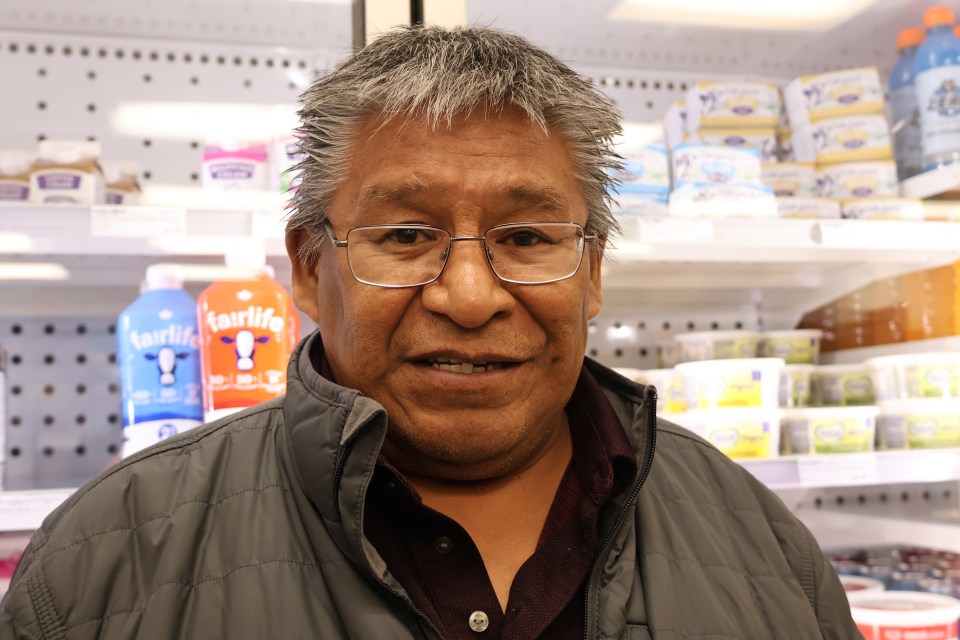
“It’s super crazy,” he said. “We have to try and accommodate other community members that can’t go out hunting, that can’t do this for themselves.”
Food Banks Canada and Nutrition North were invited by Sahtu MLA Danny McNeely to tour all five Sahtu communities last week to understand the region’s struggle with food insecurity.
Chief Pierrot pitched the idea of having a space to sell traditional meats at the local stores rather than importing expensive frozen meats.
“We have wild meats like moose, caribou, geese, ducks, rabbits – everything. It’s wild right off the land, nothing injected into it. Yet we still have to get our stuff [from down south],” he said.
Advertisement.
Advertisement.
Pierrot expressed gratitude for the national organizations’ visit to Fort Good Hope, saying it gave them a chance to “witness what the smaller communities have to go through and deal with every day.”
“It’s not only people that are struggling day-to-day for groceries. We have to make sure that everybody is accommodated and living a good life,” he said.
Despite challenges with affordability, some locals are finding ways to help others.
Roger Plouffe, a former lay minister for Fort Good Hope, set up a food pantry in the basement of the community chapel roughly eight years ago. Since his move to Edmonton, Heather Bourassa and Nadine Tatchinron have taken over the project and now volunteer their time to manage the pantry.
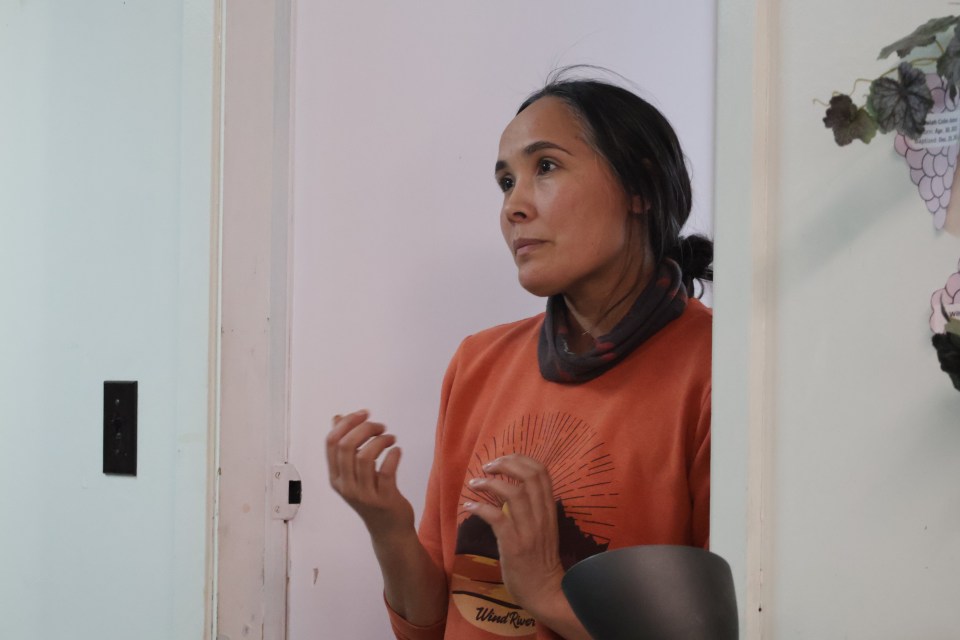
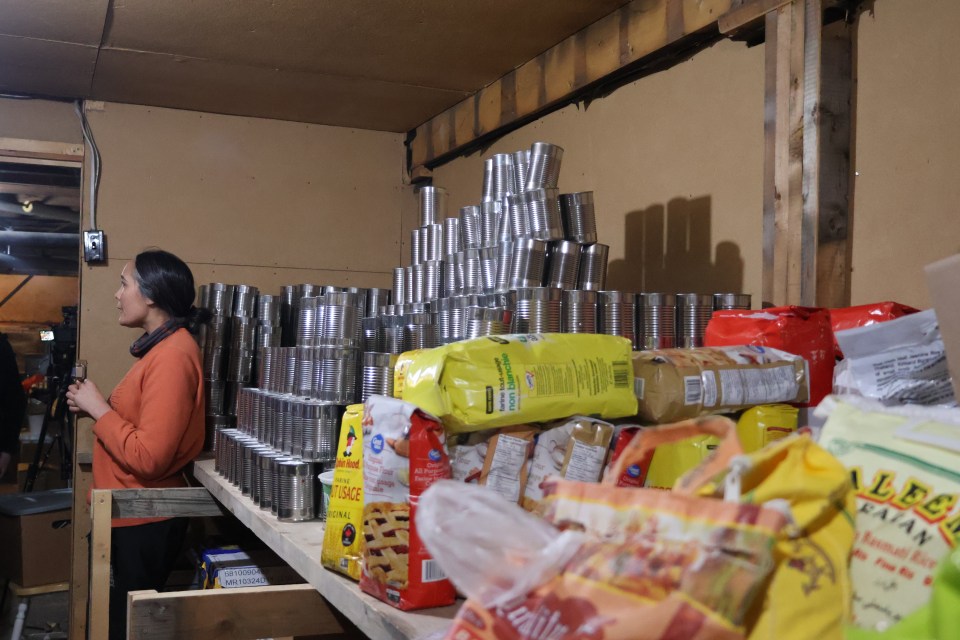
Donations come from Edmonton, then Bourassa and Tatchinron – who both already have full-time jobs – create hampers and deliver them to families in need through referrals or word of mouth. The two delivered six food hampers earlier this month.
Craft dinners, pasta, flour, rice, cereal, oatmeal, canned goods, bags of dehydrated vegetables and powdered milk form a majority of items seen in the pantry, but there’s more than just food available.
Jackets, boots, dishes, towels, blankets, mattresses, fire extinguishers, laundry detergent, toothpaste and sewing machines are all in stock, too.
The pantry is helped by funding from United Way for which the community applied last summer.
Advertisement.
Advertisement.
“We usually get the containers in the summer and when the barges didn’t happen, our shipment didn’t arrive until the winter, so there was a whole extra six or seven months we didn’t have resupply,” Bourassa said.
With shipments having to move to the winter, Bourassa said volunteers try to make sure the food they receive is able to freeze.
Bourassa hopes items in the pantry will last throughout the year, or at least until the next winter road season. She noted that having an additional person to help at the pantry would make it easier to operate more effectively.
