


Advertisement.
As 2025’s wildfire season begins in the Northwest Territories, officials at the territory’s wildfire agency say they feel ready.
“On the tactical level, things look pretty good. I’m hearing good morale, I’m hearing a lot of good things about the training,” fire operations manager Richard Olsen told reporters on Monday.
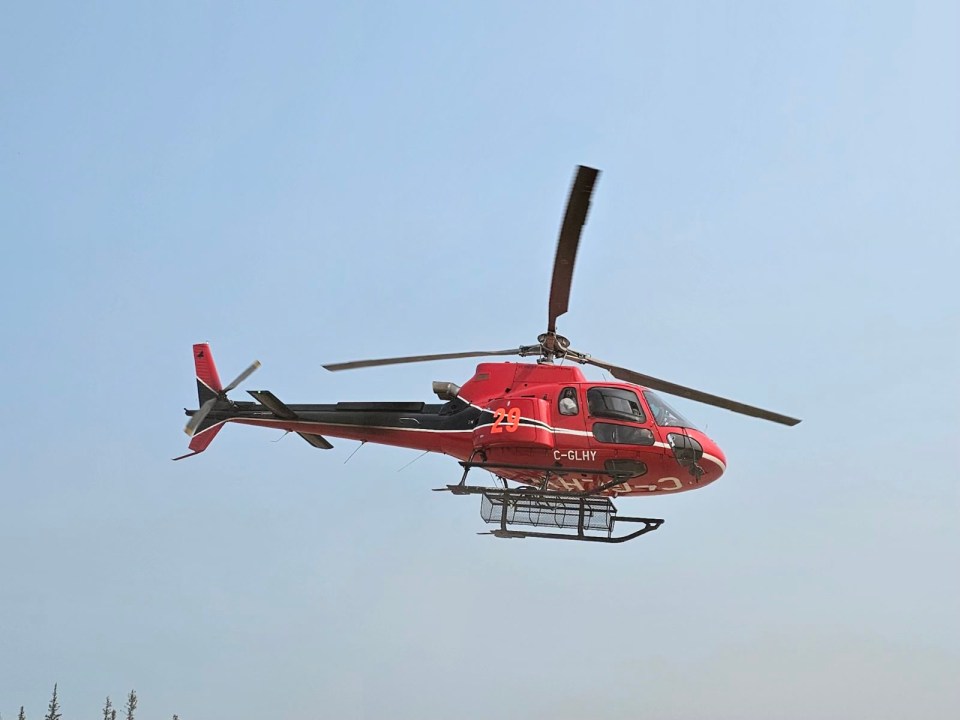
With the support of the federal government, Olsen said, the territory will have additional helicopters and air tankers this summer.
He said some NWT fire crews have started early with training and preparedness, as they did last year, and NWT Fire has tried a new initiative of pooling crews into training boot camps to support consistency in training and camaraderie among firefighters.
Advertisement.
Advertisement.
Olsen said that was one of the recommendations from a review of how the territory fought wildfires in 2023. The Department of Environment and Climate Change is now working to implement those recommendations.
Mike Westwick, the NWT’s manager of wildfire prevention and mitigation, highlighted additional capacity to support the physical and mental safety of firefighters as well as work to better prepare communities for wildfires.
He said fully implementing many of the review’s recommendations will be a long-term effort.
Westwick said NWT Fire’s three main priorities this summer will be building on progress from last year, advancing FireSmart projects through new federal funding, and laying the groundwork for stronger wildland-urban interface preparedness across the territory.
Advertisement.
Advertisement.
“Investing in FireSmart is an investment in climate adaptation,” he said. “By creating communities that are better prepared to live alongside wildfire, we are preparing for a future with a changing climate.”
Wildfire forecast
So far, Olsen said, May in the territory has been “kind-of quiet from a fire behaviour perspective.”
There have been two wildfires reported in the NWT this month thus far.
A suspected person-caused wildfire in Fort Smith resulted in an evacuation alert over the weekend, which was then downgraded to an evacuation notice. That fire is now considered under control and the evacuation notice was rescinded on Monday.

A second fire – a holdover from last year, burning near Cameron Hills by the NWT’s border with Alberta – was detected using infrared scanning from the air and is being fought.
Olsen said the NWT had a fairly active wildfire season in 2024, when drought conditions persisted and 174 fires burned nearly 1.7 million hectares. The community of Fort Good Hope was required to evacuate for three weeks that year as a wildfire reached the edge of the community but did not burn any structures.
This year, Olsen said, water levels are starting to get back to normal or slightly below normal but dry weather is still expected.
“For areas around [Great Slave] Lake into the Dehcho, southern portions of the Sahtu, we’re probably going to start out the season with higher-than-normal drought code type of conditions,” he said.
Advertisement.
Advertisement.
He said the territory is now beginning to see lightning, one of the main causes of wildfires in the NWT.
“We’re just at the point though when the frost and the kind-of wet duff starts to dry out,” he said. “We might see lightning-caused fires but we might still be a week or two before we see stuff like that popping out.”
Olsen said average wildfire conditions are expected in the NWT through June with potentially above-average conditions in July and August.
Regardless of the forecast, Olsen said wildfires are expected and people should exercise caution.
“We live in a fire environment so we should always be expecting that, no matter what, there’s going to be fires occurring on the landscape like lightning-caused fires,” he said, adding that some fires are unfortunately caused by people.
“If they do start [at] the wrong types of locations at the wrong time, they could have just as bad of an impact under the lower, moderate conditions as they could under the extreme types of conditions.”
