


Elders Dora Grandjambe and Cathy Pope have spent the past year developing a Dene language workbook.
The project – carried out by the Norman Wells Historical Centre to help people understand simple words – is inspired by Repeat After Me Cree, another workbook that allows readers to listen to narrated words in Cree.
“We started off in a different way, getting opinions from other people that it should be done like this,” said Grandjambe, a longtime K’áhsho Got’ı̨nę language specialist.
“It’s just like, no. If this is going to be ours, let’s do it the way we want. We want the language where you can hear it, and where you can see it, and where you can read it, where it’s meaningful. That’s the way you’ll learn this, hands-on.”
Grandjambe was an interpreter at Norman Wells’ Mackenzie Mountain School for 13 years before retiring in 2024 – a role she initially only intended to fill for a year.
Advertisement.
Advertisement.
For the workbook, Grandjambe worked alongside former students Tiana Spilchak and Willow Boyle, who can understand, read and write the language.
“They’re the ones that kept me going,” she said, “because they’re so enthusiastic. They’re so positive and just make you want to put it out there.”
Though details are still being finalized, Grandjambe said the ideal format for the video component would feature an interaction between a language-speaking Elder and a young person.
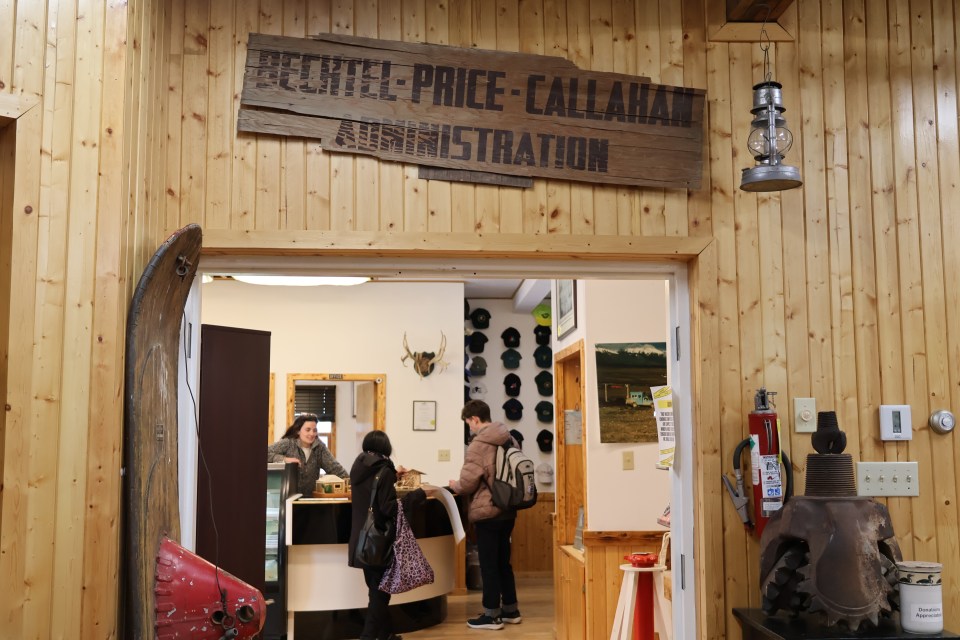
Kelsey Henderson, the museum’s manager, plans to contact Elders who are happy to be on camera.
Advertisement.
Advertisement.
“It’s a complicated language to read and to write so we wanted all three of the things together so you can see it, hear it and speak it all at once,” Henderson said.
“It’s a really cool project and we’re really glad to be working on it and it has turned out really well. I think we’ve got some good interest in it. A lot of people are excited about it.”
While there is no specific release date yet, the two hope to see the workbook out by early next year.
Grandjambe was eager to learn how to read and write in her language. A course she attended in the 1980s alongside five other women in Albuquerque, New Mexico made that possible.
Despite being forbidden to speak her language while attending Grollier Hall residential school, she continued to preserve and strengthen her knowledge of it.
“What got me interested in language is being a residential school survivor,” said Grandjambe.
“Just realizing from a young age that I had something that they’re trying to take from you. As it was against the rules, we just continued speaking our language whenever we got together. Later on in life, I wanted to be the best I could be in my language.
“If this is going to be ours, let’s do it the way we want.”
