



Premiers of Canada’s western provinces and territories say they’re united in advocating for major infrastructure projects and unlocking economic potential in the region.
Premiers from the Yukon, NWT, Nunavut, Alberta, British Columbia, Alberta and Saskatchewan gathered in Yellowknife this week for a two-day conference focused on shared priorities. Manitoba’s premier, whose province is facing catastrophic wildfires, attended virtually.
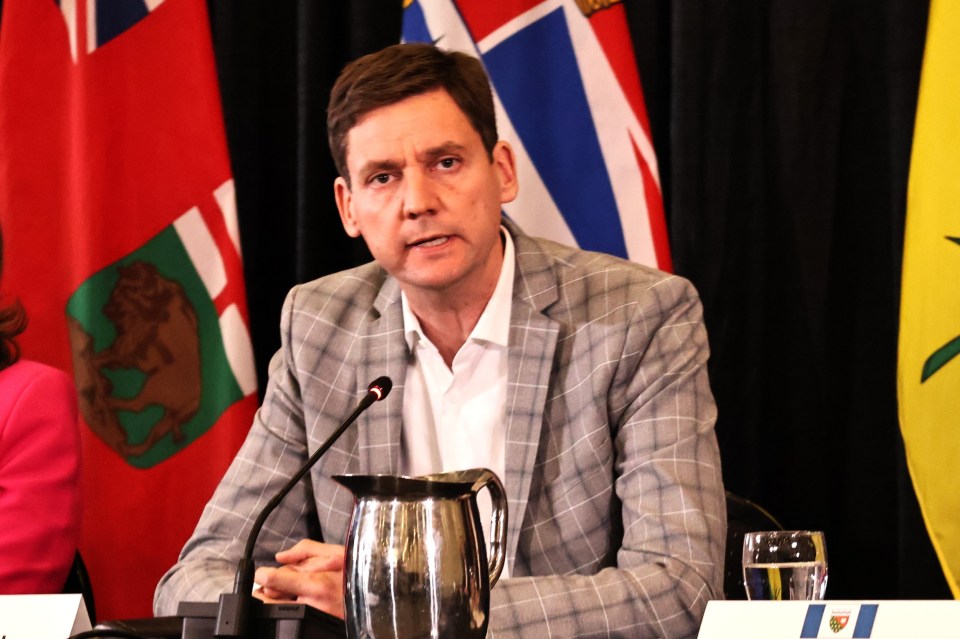
“This is the moment for western Canada,” BC Premier David Eby told reporters on Thursday.
“We are going to be the engine that drives the Canadian economy for the foreseeable future.”
NWT Premier RJ Simpson, who chaired the meeting, said the west has “unbelievable” natural resource wealth worth trillions of dollars.
Advertisement.
Advertisement.
“We’re at a moment where Canada, the federal government, recognizes that to access that wealth for the benefit of Canadians, they need to make investments in infrastructure,” he said.
“So at this table, we’re ready to meet that moment. We’re ready to do our parts and advance that infrastructure, and now we just need the federal government to step up and for the prime minister to really do what he said he’s going to do.”
‘Taking the wind out’ of separation
The western premiers’ conference took place amid growing sentiment of western alienation and talk of separating from Canada, particularly in Alberta and Saskatchewan.
Eby said to reach the west’s potential, premiers have to work together.
Advertisement.
Advertisement.
“There is no worse time for us to get dragged into conversations about splitting up the country or this kind of thing than right now, when in front of us is all this amazing opportunity,” he said, adding he is “profoundly proud” of the work western premiers accomplished at the meeting.
Alberta Premier Danielle Smith said she believes if Prime Minister Mark Carney works on the priorities put forward by the western premiers on Thursday, that “would take the wind right out of any” separation efforts.
Those priorities include responding to US and Chinese tariffs, enhancing economic corridors to the west and north, transforming Canada’s process for approving major projects, pursuing Arctic security and sovereignty projects, and advancing emergency preparedness and public safety.
‘Now is the time for Canada to invest’
“What is good – and is going to economically improve the situation – in western and northern provinces and territories ultimately is good for Canada as well, and is going to strengthen Canada,” Saskatchewan Premier Scott Moe said.
He expressed support for connecting ports on Canada’s west coast to Hudson Bay. That, he said, would help Canadian goods reach Asian and European markets as well as enhance Arctic security.
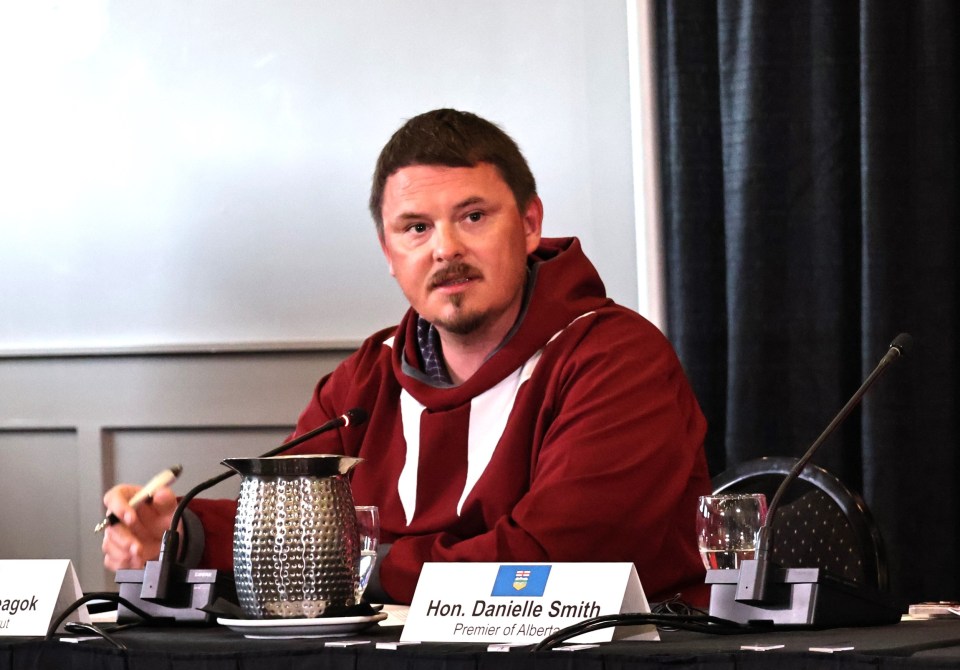
Nunavut Premier PJ Akeeagok highlighted the proposed Grays Bay road and port project, recently rebranded as the Arctic Security Corridor, which would see a permanent road built from Yellowknife to a deep-water port in the western Arctic. He said that would link western provinces and territories to international markets, unlock critical minerals in the region and assert Canada’s sovereignty.
“I think now is the time for Canada to invest and we very much look forward to seeing concrete references come through the throne speech that talk about the actual movement of these big projects that we’ve been talking about. Many have been on the books for decades,” he said.
“I feel that we are very close [to] really unlocking the true economic potential that we have within our jurisdictions.”
During his election campaign, Carney promised to accelerate nation-building projects and connect critical minerals projects to supply chains.
All of Canada’s premiers are set to meet with the prime minister in Saskatoon at the start of next month.
