


Chief of Behchokǫ̀ Bertha Rabesca Zoe is calling for a state of emergency in her community to address the drug crisis.
“We need to be angry. Why? Because drug addiction is an epidemic,” Rabesca Zoe said in her closing remarks at the Tłı̨chǫ Assembly in Behchokǫ̀ on Thursday.
She called on community members to work together to address the issue, adding that families need to heal together.
“I want people to know I’m not afraid. I will not back down from addressing the drug epidemic in our community,” she said.
“We need to take back our community and I want to know all of the Behchokǫ̀ residents who are with me.”
Advertisement.
Advertisement.
Rabesca Zoe said security cameras and street lights will be installed in Behchokǫ̀ to address public safety concerns. She said the community needs its own security force.
Earlier at the assembly, Tłı̨chǫ Government staff said efforts are ongoing to address addictions and support healing in the region. The government is planning a feasibility study on a regional addictions treatment centre.
Homelessness and lateral violence
Behchokǫ̀ has “the worst housing crisis in all of the Northwest Territories,” Rabesca Zoe said on Thursday.
The chief – who was elected to the role in June – voiced concerns about lateral violence, which she described as “people gossiping about each other, writing about each other, lying about each other, intimidating each other.”
Advertisement.
Advertisement.
She called on leaders to set an example and not make negative posts on social media.
Rabesca Zoe said she accepts constructive criticism and encouraged people who disagree with her to talk to her.
“We are resilient. Our Elders were strong people, our ancestors, that’s why we’re here today,” she said.
“But as Behchokǫ̀ people, and probably the communities too, where do we see ourselves in the next 10, 20, 50 years? Do we still want to be strong, resilient people?
“If we do, we need to address the issues today together.”
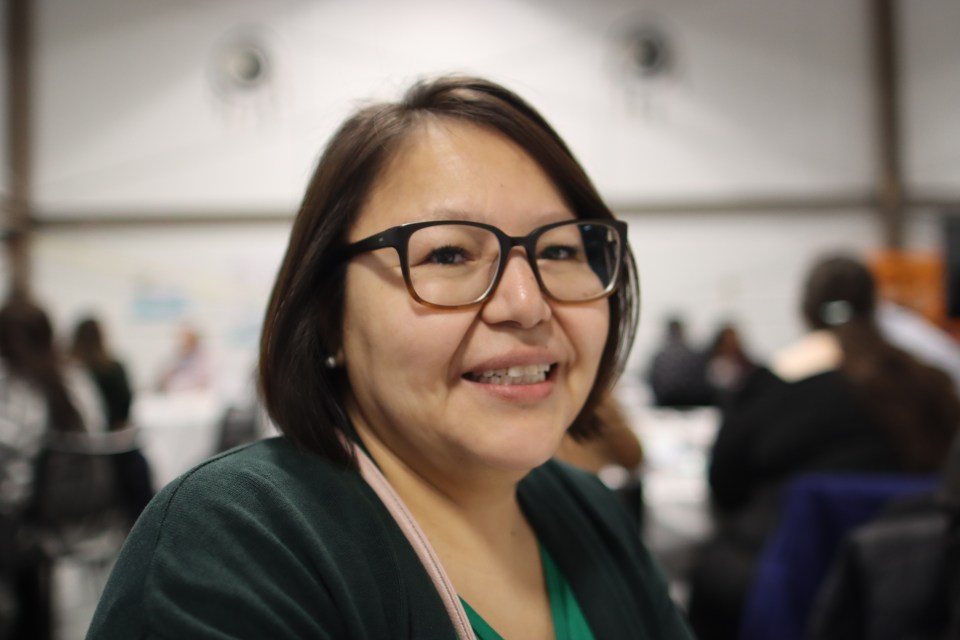
In her closing remarks at the assembly, Gamètì Chief Doreen Arrowmaker praised Alfonz Nitsiza, the former chief of Whatì, and Clifford Daniels, the former chief of Behchokǫ̀, for their years of leadership.
“These two individuals operated with heart and soul,” she said.
“If anything, they taught me not to react or to respond to negativity, to think long and hard before I respond to anything. And they truly advocated so hard for our communities.”
Advertisement.
Advertisement.
Arrowmaker spoke out against negative criticism of the former chiefs, highlighting how challenging it can be to lead.
“The hugs that I once received, I no longer receive from people,” she said.
As the next Tłı̨chǫ grand chief election nears, Arrowmaker said she hopes whoever is elected will ensure unity for the Tłı̨chǫ nation.
Nominations for grand chief are set to take place on Friday. Election day is scheduled for September 29.
