



Advertisement.
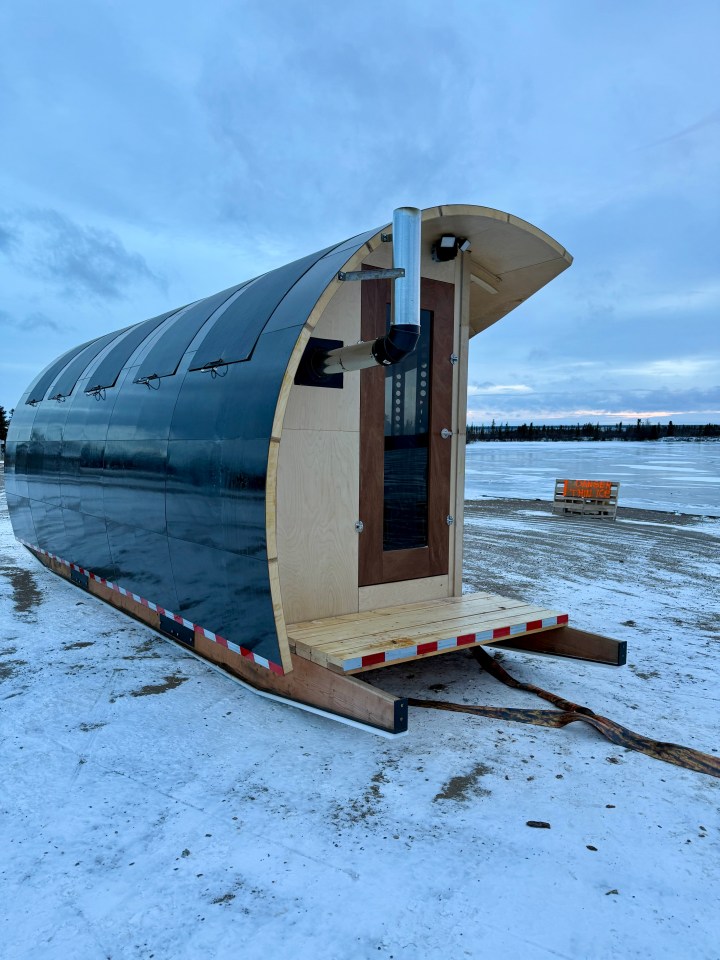
Délı̨nę has a new mobile research lab that was built in the community. Team members behind it say this kind of project is rare in northern Canada.
Homa Kheyrollah Pour is the Canada Research Chair in remote sensing of environmental change and executive director of the Cold Regions Centre at Wilfrid Laurier University.
Pour’s work focuses on changes in ice thickness, snow depth, water quality and land cover in a warming climate. She says the mobile lab will help that work.
“We all know that global temperature is warming. The North is warming much faster,” she said, adding that this leads to later freeze-up, earlier melt and thinner, weaker ice for the ice roads on which about a dozen fly-in communities rely.
Advertisement.
Advertisement.
Moreover, rapid shifts – for example, moving from -30C to -5C overnight – create cracks and unstable conditions as ice expands in warmer temperatures.
Pour said this kind of research is vital but monitoring large lakes like Great Bear Lake and Great Slave Lake is difficult and often unsafe, requiring researchers to travel long distances over ice and operate instruments that are challenging to use in remote areas.
Underwater drones and aerial systems also become hard to use when energy supplies like batteries are limited, she said.
The mobile lab will help Délı̨nę to better monitor Great Bear Lake, said Pour. “It’s cheaper and it’s definitely better for the science monitoring as well.”
Advertisement.
Advertisement.
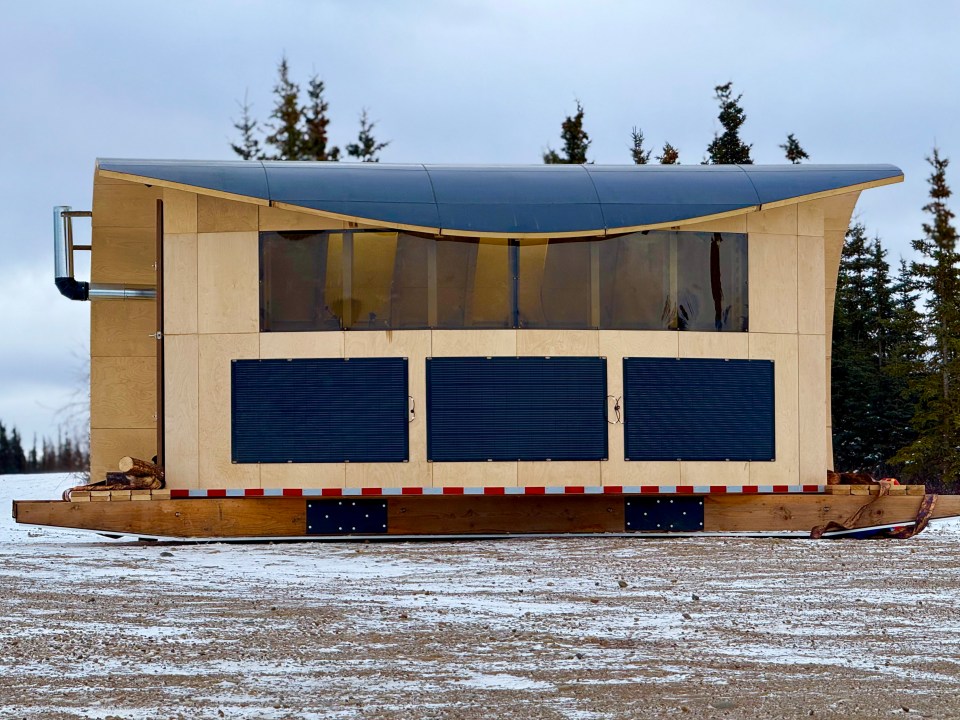
The lab is funded by the Canada Foundation for Innovation, a non-profit that “invests in research infrastructure at Canadian universities, colleges, research hospitals and non-profit research institutions.”
Adrian Schimnowski, a design builder with extensive experience running Arctic expeditions, helped bring the lab from concept to reality.
Schimnowski said he focused on creating a lab that could operate safely and efficiently in extreme conditions. He said its design also draws inspiration from traditional knowledge.
The lab is powered by a hybrid system that combines solar, wind and battery storage, with backup generators to ensure continuous operation in remote areas.
It is heavily insulated and designed to withstand harsh winter conditions while remaining functional, he said. This allows researchers to stay on the ice for weeks without relying on costly helicopters or limiting the number of instruments and personnel they bring.
“You’ll see elements of boat design, aircraft design, but also traditional wood materials combined in a creative, innovative way,” he said.
Schimnowski said the most interesting part of the project was involving the community in the construction.
He said one resident hired to help construct the lab – and who was involved in learning all aspects of its systems, from the structure to the power supply – can now serve as a technician to train and support others in the community.
Advertisement.
Advertisement.
“That is why it’s so valuable to build in the community, because it is part of the community and it’s invested in the community,” he explained.
“It would be different if we just built it in the south and then brought it up and said, ‘Here you go.’ It doesn’t work that way with infrastructure like this.”
A few volunteers contributed their time because they were excited about the project. The team relied on local infrastructure, such as trucks and machinery, with community members assisting in moving the lab.
Pour said in the past, infrastructure brought from the south to northern communities often felt distant, with little connection. By involving residents in the design and construction of the Sahtu lab, she said, they were able to build something that truly belongs to the community.
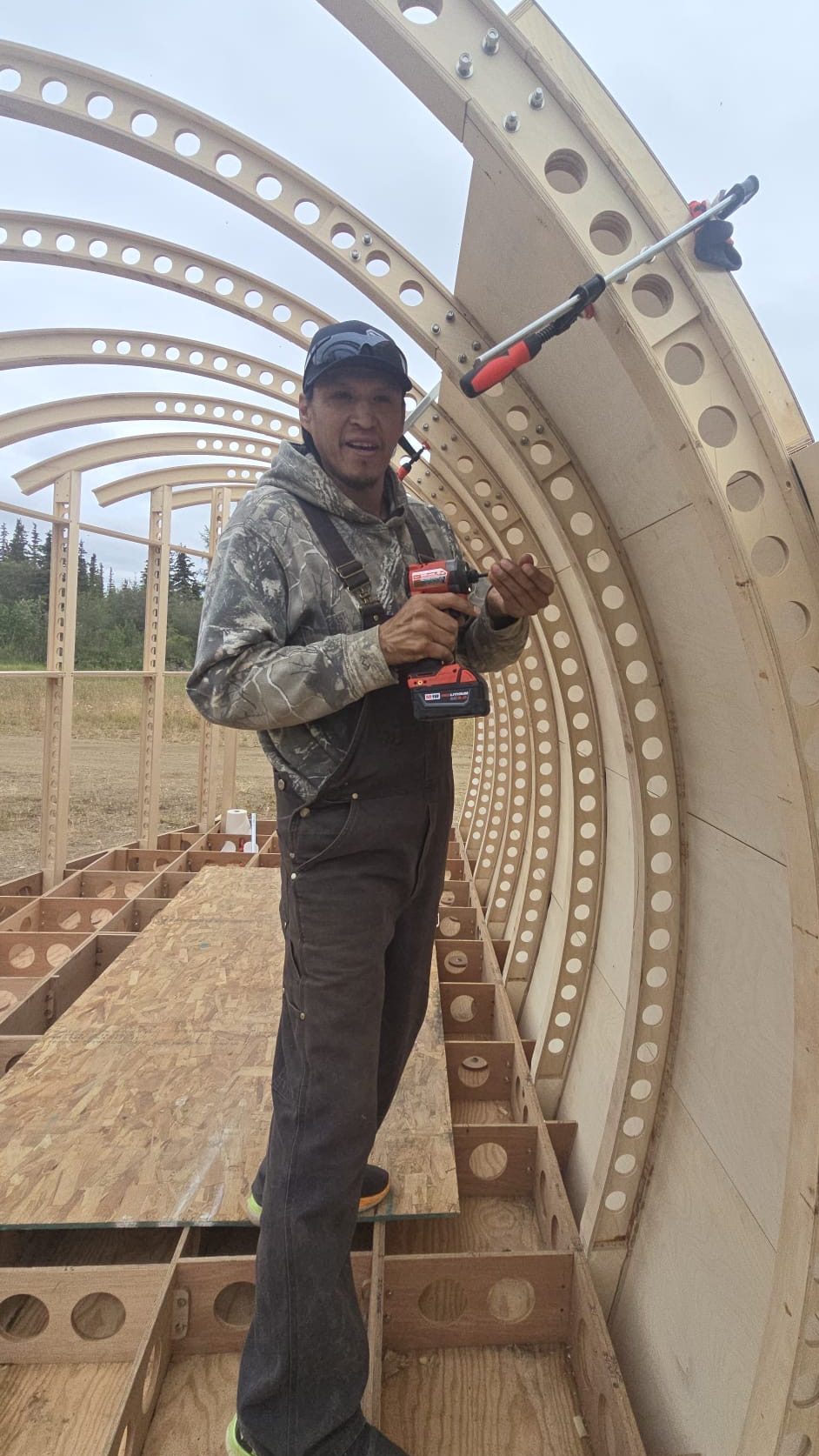
“It takes more time, energy and money to do this way, but I think as part of reconciliation, we should do this way,” she said.
Pour said students will soon have the opportunity to gain hands-on experience using instruments, collecting data, and learning about environmental monitoring, climate resilience, and stewardship through summer and winter programs. She said the team’s long-term vision is to set up similar projects in other NWT locations.
Schimnowski said one of the biggest challenges in building northern infrastructure is avoiding overbuilding. Many projects go too big, becoming difficult to manage and move. The team tried to make the Sahtu lab light enough to be moved by a truck or two snow machines.
“Sometimes it really just takes a piece of infrastructure that brings people together, that starts a conversation,” he said, “and then that can lead to something much bigger than we imagined – and that’s really what it’s about.”
Advertisement.
Advertisement.
Danny Gaudet, the Ɂekw’ahtı̨dǝ́ or chief of the Délı̨nę Got’ı̨nę Government, said for years, Elders in the community have warned that water will become the world’s most valuable resource.
He said their stories often point to Sahtu’s Great Bear Lake as “the last resource,” and that those teachings have shaped a new effort to understand and protect the lake.
Gaudet said the community has been thinking more seriously about what those warnings mean.
“If water is going to be that valuable … it’s probably really important that we try to understand the water and then understand also the fish in the water,” he said.
“It’s really important that we keep passing the stories on, but we also should start learning what’s going to happen to the water if that’s the case.”
Concerns around possible health issues in the community added urgency. Gaudet said there have been cases of Helicobacter pylori infection as well as rising concerns around colon cancer. He said the community does not know whether any of that is connected to the water.
Délı̨nę approached the territorial government about testing the community’s water, but those efforts didn’t move forward, Gaudet said, and that pushed the Délı̨nę Got’ı̨nę Government to look at doing the work themselves.
Gaudet said residents wanted testing that went beyond what the GNWT typically monitors, including checking for impacts from the long-closed uranium mine on Great Bear Lake and tailings that were once dumped into the water.
Advertisement.
Advertisement.
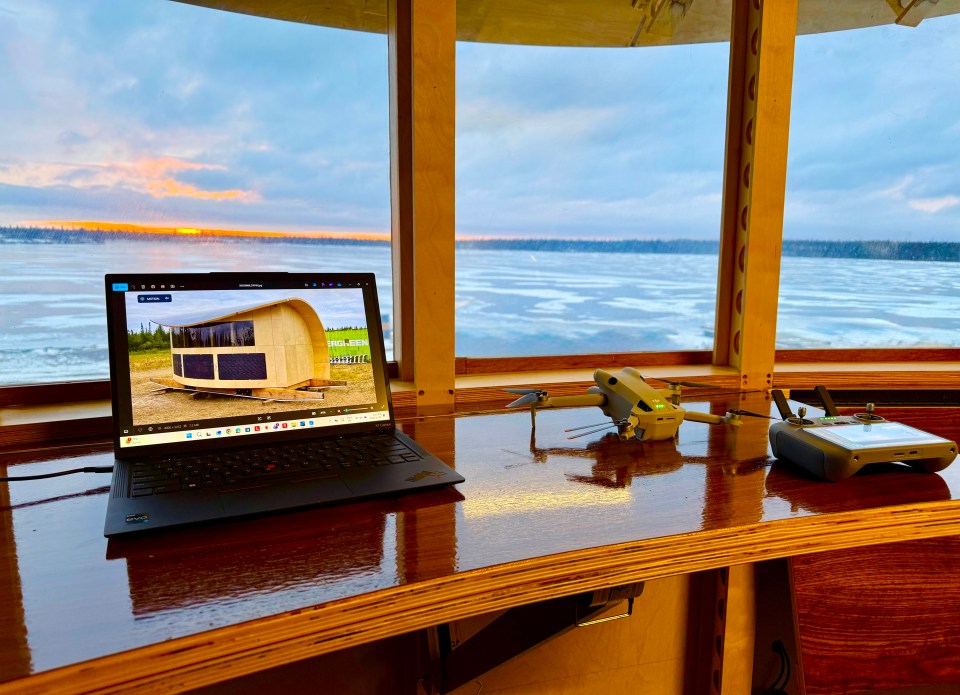
The community had already been working with the Wilfrid Laurier University on ice research, documenting how thickness and conditions on the lake have changed. Gaudet, who has built ice roads for more than two decades, said the partnership began as a way to connect modern technology with traditional knowledge.
“Why don’t we create a business out of it, an opportunity to get good at not only testing the water, but let’s become experts,” he said of the community’s decision to give the project the green light.
According to him, a mobile lab will help continue the research not only in the summertime but also throughout the winter, even on the ice.
Gaudet said the lab is meant to be a permanent fixture in Délı̨nę and the next step is to involve students by making water testing and analysis part of the regular science curriculum.
“We’re just at the beginning,” he said.
“If that’s part of the school and part of the everyday learning … then we’ve got not too much to worry about, because they’ll monitor, measure and understand what’s going on with the water.”
Correction: December 2, 2025 – 6:58 MT. An initial version of this report stated that the community had been working with University of Waterloo on ice research. In fact, the partner was Wilfrid Laurier University. The story has since been updated.
