


Small aircraft keep people in the NWT connected to each other and the rest of Canada, but some planes in the territory have been running for 40 years – and others for much longer.
Though many of those planes have been well maintained, having had so many parts replaced, they might as well be considered new.
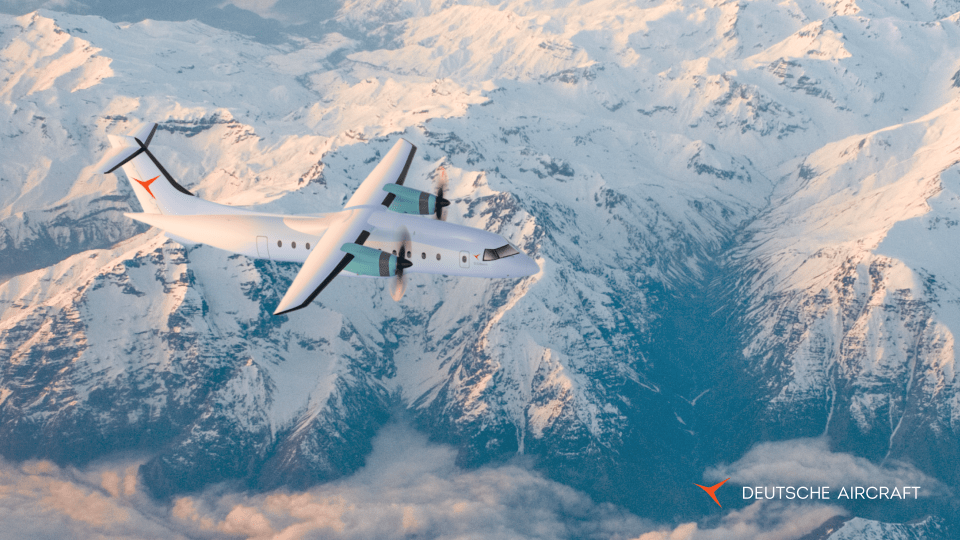
A German company, Deutsche Aircraft, is zeroing in on a market with relatively few competitors, launching what it calls a next-generation turboprop that can take off and land on short, unpaved runways, designed specifically for the unique and harsh conditions of Canada’s North and the NWT.
Nils Heuer, director of sales at Deutsche Aircraft, said he saw many manufacturers of small aircraft in Canada and Europe go out of business since the early 2000s.
“Many airlines don’t have access to aircraft that can replace their ageing fleets, and therefore we, as Deutsche Aircraft, said it’s time,” said Heuer.
Advertisement.
Advertisement.
“The market urgently needs a new aircraft … that comes with 21st-century technology to replace the ageing fleets that are getting less and less reliable.”
Heuer and his team presented their new aircraft, the D328eco, at the Canadian Aviation Conference and Tradeshow in Montreal last month.
The plane includes features like a gravel kit that prevents small stones from getting kicked up into the propeller, advanced weather radar, and engines built in Canada by Pratt & Whitney, Heuer said.
It can be configured to carry passengers and cargo or used as a medevac.
Advertisement.
Advertisement.
Heuer said conversations with members of organizations like the Air Transport Association of Canada and the Northern Air Transport Association helped inform the design.
“It’s really one-on-one conversations about their requirements, their daily challenges, what works well with their current fleets. What would they like to improve?” he said.
The plane is being marketed as a more sustainable and more efficient option for regional airlines, since it is compatible with sustainable aviation fuel.
Heuer said the company is aiming to make the D328eco compatible with all types of sustainable aviation fuel, including ones made from products like used cooking oils, as well as power-to-liquid fuels that use renewable energy (like solar or wind) to create synthetic aviation fuel.
He said while interest in those forms of fuels is building more slowly in Canada than Europe, he saw enthusiasm at the conference in Montreal.
“I expect it will become more and more [of a] topic over the next years here in Canada and also in other parts of the world,” said Heuer.
Flight testing for the D328eco will begin in 2026, Heuer said, and the manufacturer will have to meet requirements outlined by Transport Canada such withstanding the extreme cold of the Arctic and subarctic.
Feasible to upgrade?
While Heuer said Deutsche Aircraft doesn’t publicly discuss pricing, Chris Reynolds – president of Yellowknife-based Air Tindi – said new aircraft in general can cost a pretty penny.
Advertisement.
Advertisement.
“If you look at the most optimum way to run an airline and a fleet of aircraft, it’s to modernize your fleet. Have as most efficient as possible and fly as much as possible,” said Reynolds.
However, in a place like the NWT, airlines are tasked with covering a large geographic area with a relatively small population, he explained.
“[It’s] a massive challenge to try and fly as many hours as possible to pay off an aircraft that costs tens of millions of dollars,” said Reynolds.
He said aircraft used by bigger national airlines might fly 3,000 to 4,000 hours every year.
“Our aircraft probably only have 1,000 to 1,500 hours a year of utilization, which makes it almost uneconomical to constantly be able to modernize your fleet. The economics just don’t make sense,” said Reynolds.
He said northern-based companies tend to have a more rugged, older fleet, though that doesn’t mean they are any less maintained.
“It’s an incredible amount of maintenance that goes into them,” he said. “But it does cost you, because they’re not as efficient as possible.”
He said this largely applies to scheduled flights, though sometimes longer-term contracts present companies with the opportunity to invest in more efficient aircraft.
Advertisement.
Advertisement.
Representatives from multiple other northern airlines could not be reached for this article or declined an interview request.
Air Tindi’s fleet is mainly made up of planes made by De Havilland, a Canadian manufacturer that makes the Twin Otters, Dash 7s and Dash 8s that Air Tindi flies.
The Dash 7s, Reynolds said, aren’t replaceable with what’s available on the market currently.
“They land on the shortest, the most ugly runways,” said Reynolds.
“If there were new aircraft out there that were as capable, we would replace them, but there’s none. So we’ve invested in a multitude of parts and different things like that, to just keep them going as long as we can.
“And we’re proud to do that. They’re very exceptionally well-made, tough airplanes.”
