



Avery Groenewegen finished last week’s Arctic Winter Games with a sixth-place finish in ski biathlon and all 10 digits on her hands. She was happy with that outcome.
Groenewegen, a 15-year-old from Hay River, had only been cleared to take part a week earlier after nearly losing multiple fingers to frostbite when a family camping trip went extraordinarily off the rails.
“We were absolutely close to dying,” said her mom, Kandace Groenewegen.
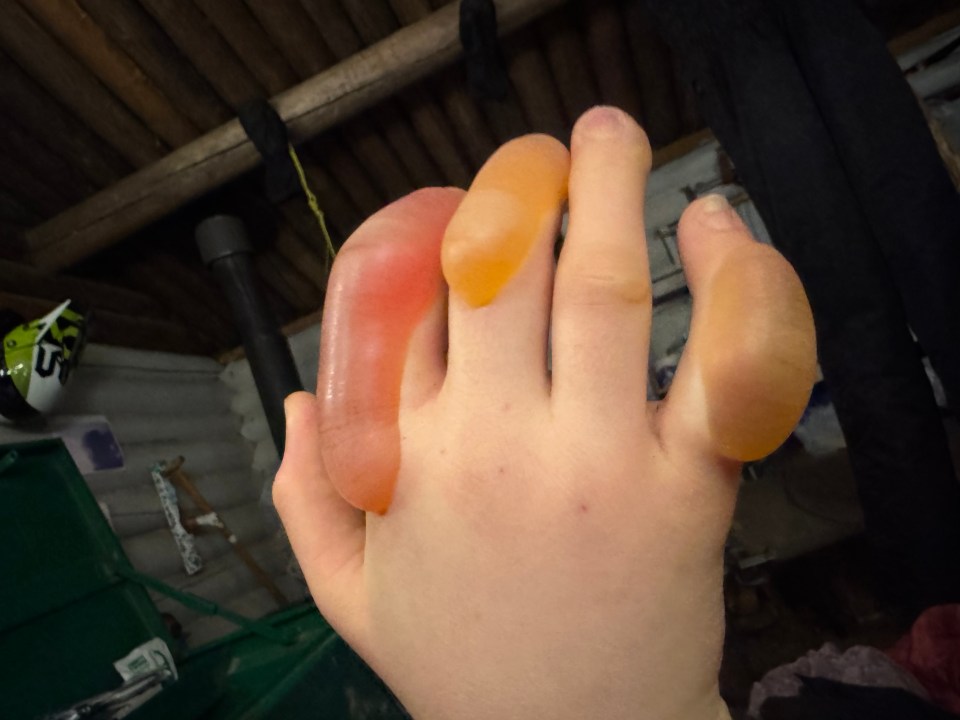
Photos of Avery’s hands after the trip appear a little lower down in this article. (Consider yourself warned.)
Here’s what happened.
Advertisement.
Advertisement.
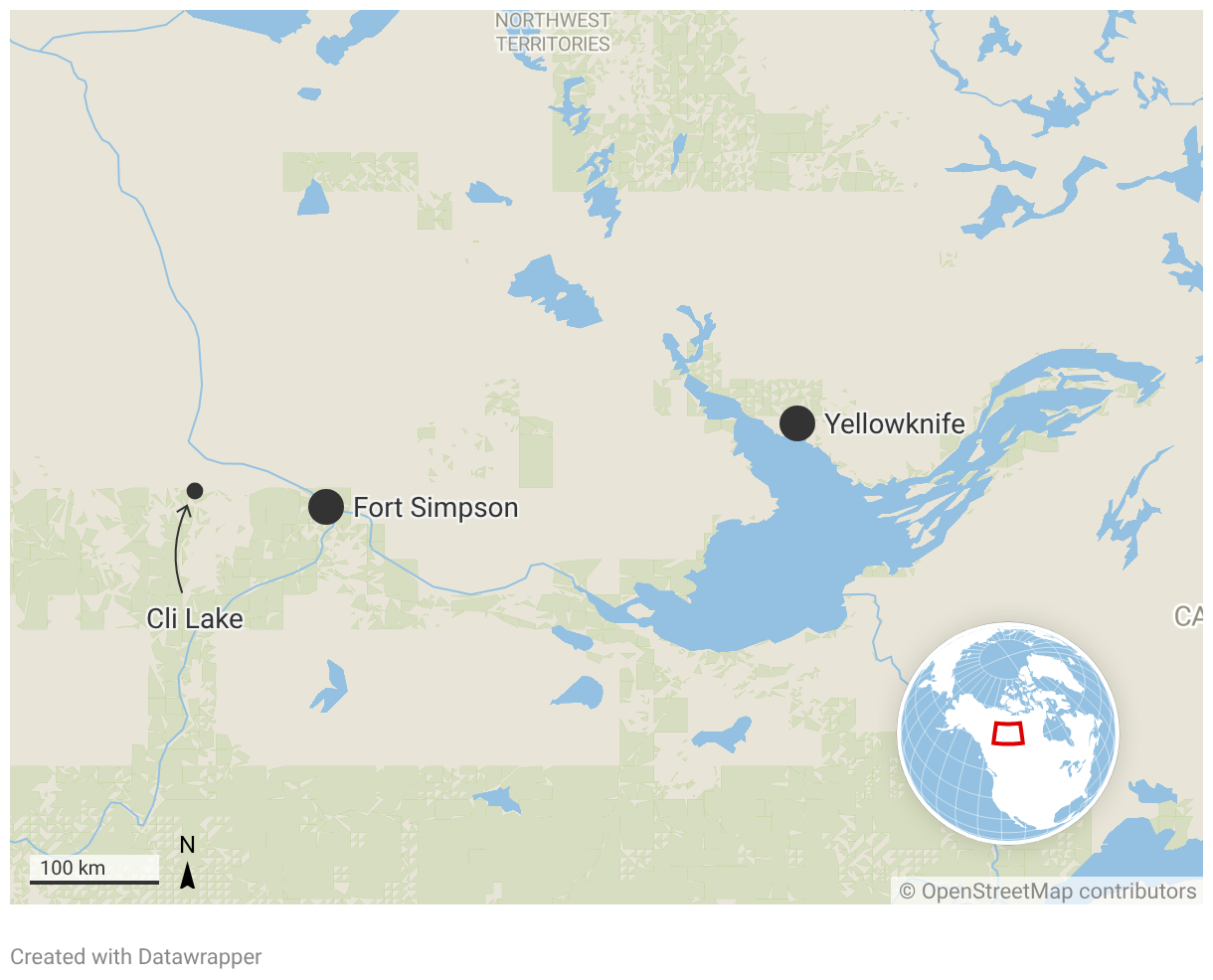
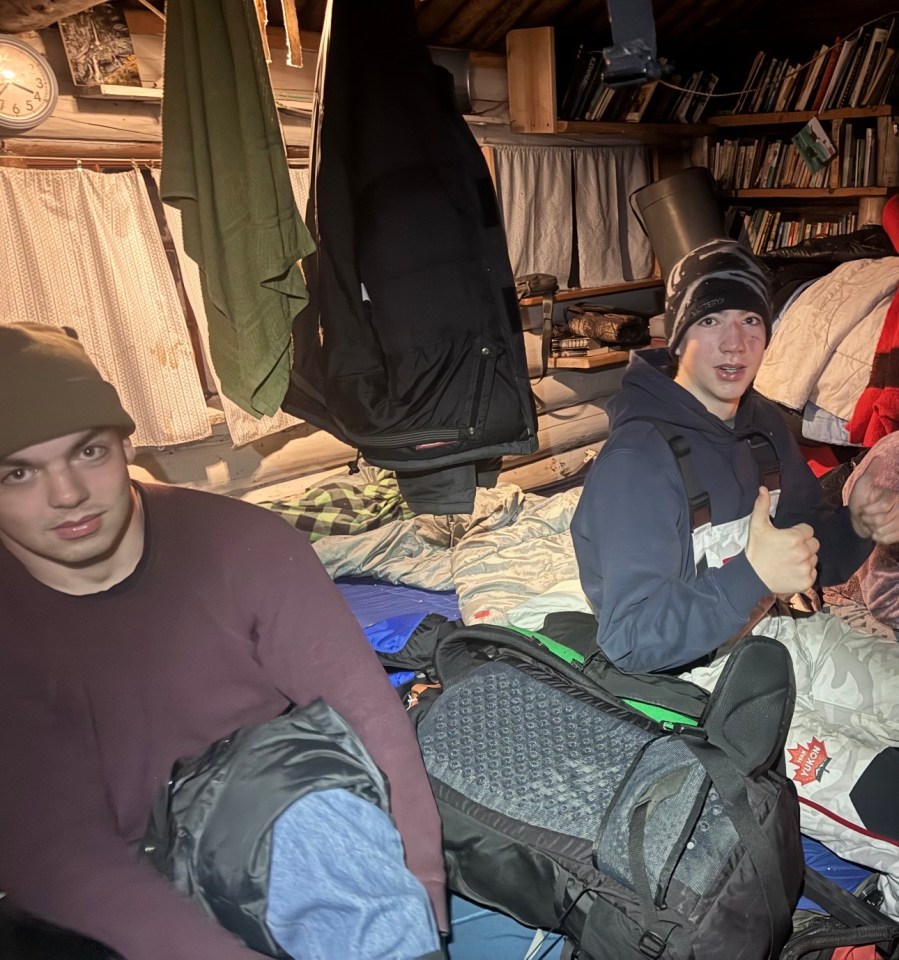
The Groenewegens have a cabin on Cli Lake, west of Fort Simpson. On New Year’s Eve, Avery and her mother, father Jeff, and brothers Hunter and Grayson packed some fireworks and headed out to the cabin, a journey by snowmobile that usually takes up to four hours. It’s a trip they’ve performed many times.
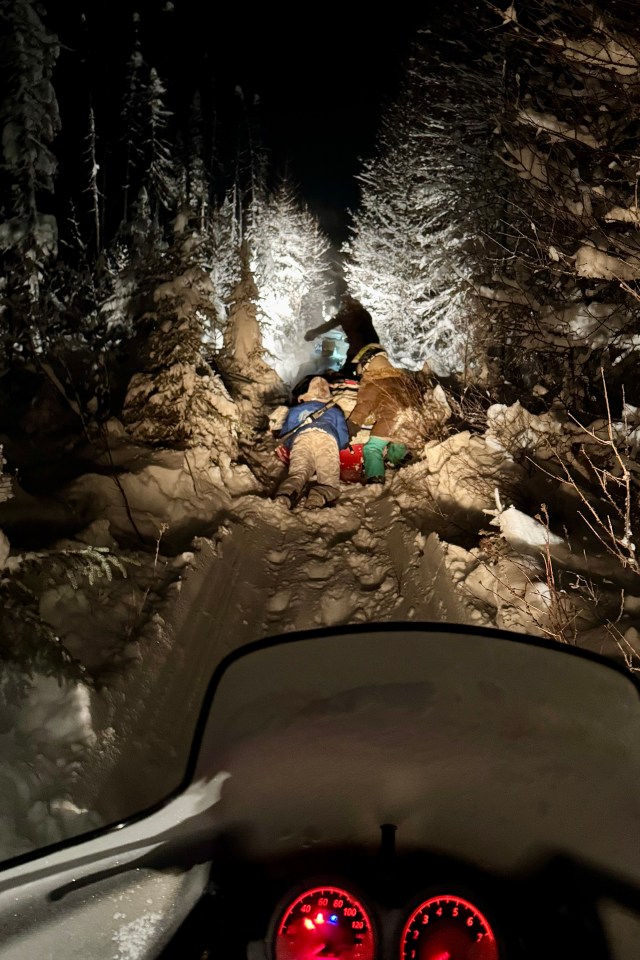
A few hours in, there were signs that this outing wouldn’t be easy. Fallen trees were everywhere. A huge snow dump made the going difficult. The group lost its way at times.
“My husband is a Canadian Ranger. We’re talking treks for tens of hundreds of kilometres all over the bush. He’s ready for anything. He prepares,” said Kandace, setting out the family’s credentials for this kind of multi-day wilderness trip in the dead of winter.
“He boils water in metal thermoses. We have all this food. And I always make fun of him,” she laughed.
Advertisement.
Advertisement.
“We just had a terrible trail. It was super narrow and thick and our toboggan kept getting stuck. What could have gone wrong went wrong. Everything went wrong.”
The Groenewegens had expected the temperature to drop no lower than about -24C during their trip. As the journey started to become more difficult than expected, the temperature began slipping down to -30C and below.
The family stopped and discussed whether or not to press on. “We decided we can do this,” Kandace recalled. “We’re only a few hours away from the cabin. We can make it.”
The calamities grew. The family toboggan was abandoned because it became so frequently stuck. The emergency communications bag that ordinarily lives in the toboggan had fallen out, its location now unknown.
According to Kandace, it took the family about 24 hours to reach a friend’s cabin near Cli Lake. By that point, she described herself as “in such a hypothermic state that it was an emergency” but, unable to enter the cabin without breaking in and fearing there would be no dry wood to burn, the family gave up on it and decided to try to reach their own, across Cli Lake.
At Cli Lake, in foggy and dark conditions, Jeff opted to “gun it” for the family cabin so he could get a fire started. The rest of the family would follow behind on their snow machines.
But conditions on the lake were not great.
“There was so much snowfall, it insulated the snow below and it had melted. So instead of just floating along the snow, our Ski-Doos sank straight down to the ice and we couldn’t get any traction,” said Kandace.
Advertisement.
Advertisement.
Family members began dropping out of sight at different points of the lake. Kandace and one of her sons ended up in one area, Avery and brother Grayson in another. By this point, according to Kandace, nobody in the party had eaten any food or drunk any water in at least 12 hours.
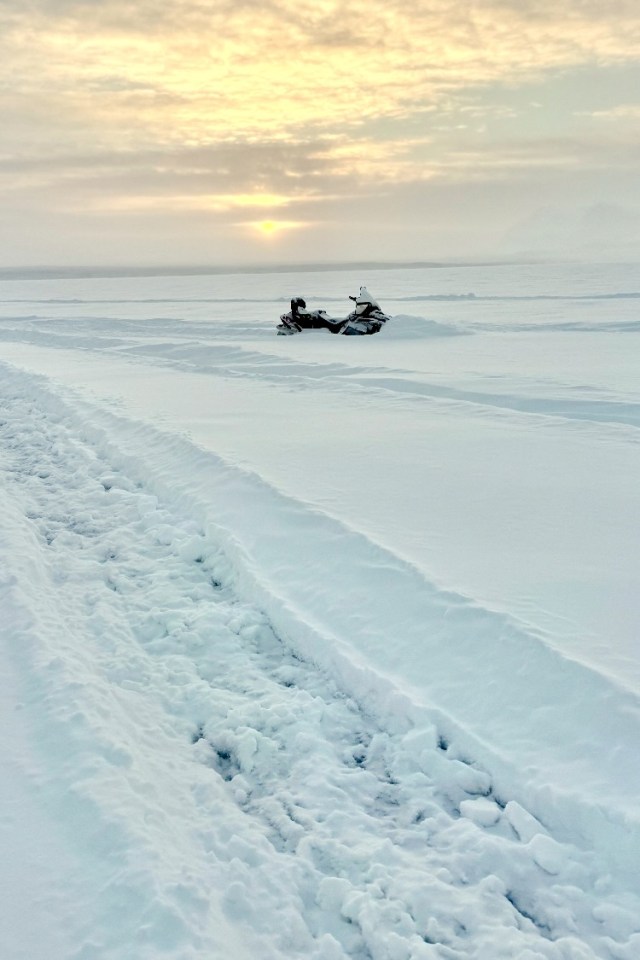
Grayson passed out. Avery began walking the nine kilometres across the lake, through the snowpack, in what she believed was the direction of the cabin. Kandace started hallucinating.
Jeff, at the cabin and working hard to get the fire going, could not hear the snowmobiles he had expected and so set off back out to see what was happening.
Only through the pinprick light of each person’s headlamp was he able to individually find them and bring them to the comparative warmth and safety of the cabin.
“But we’d already been out on the lake walking, lost, for long enough that Avery basically got third-degree frostbite on her hands,” said her mother.
The family estimates the trip from the trailhead to their cabin ultimately took 29 hours.
Finger ‘the size of a brick’
“It was definitely a rough patch of days,” is how Avery describes this.
She, too, had begun hallucinating in the moments before she was found and brought to the cabin, still attempting to walk across the lake.
Advertisement.
Advertisement.
“I saw people in front of me and I was yelling at them, like, ‘Help me! What are you doing?’ And when I woke up, I was all by myself in the middle of nowhere. It was absolutely wild,” she told Cabin Radio last week.
“When I got to my cabin, I took my glove off and my whole finger was just crushed, black, solid. I was bonking it against the wood. Nothing was moving. It was completely dead.”
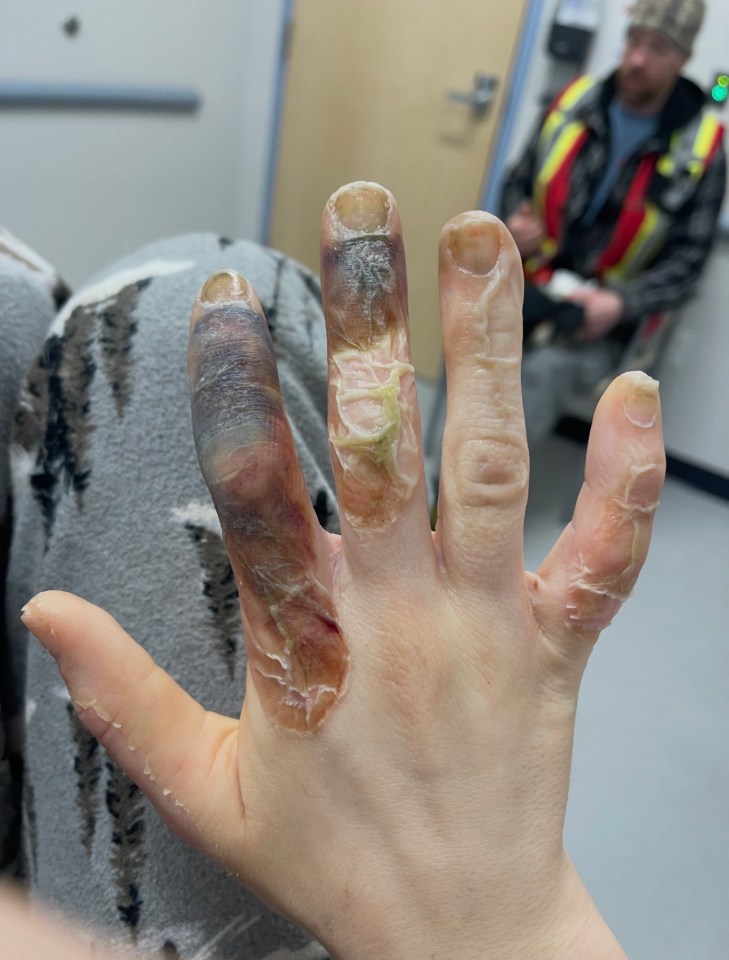
By that point, Kandace was also in the cabin and hallucinating writing on its walls. The cabin does, at least, have a healthy supply of dried food, so the family ate what they could, drank some water and fell asleep. One of the brothers, realizing they had just enough battery power in their cell phone, triggered an SOS.
A rescue party arrived the next day. While other family members had symptoms of hypothermia and frostbite, Avery was in the worst condition. She was ferried by helicopter to Fort Simpson and then moved on to Yellowknife.
Her most frostbitten finger had become “the size of a good brick,” she said. “I spent the whole month of January in the hospital trying to keep my fingers.”
At Stanton Territorial Hospital, she described not being able to sleep for a week because of the agony. Walking, too, was intensely painful.
The family said doctors used Iloprost, a drug to treat severe frostbite first deployed in Europe in the 1990s and more recently popularized in North America, particularly in Whitehorse.
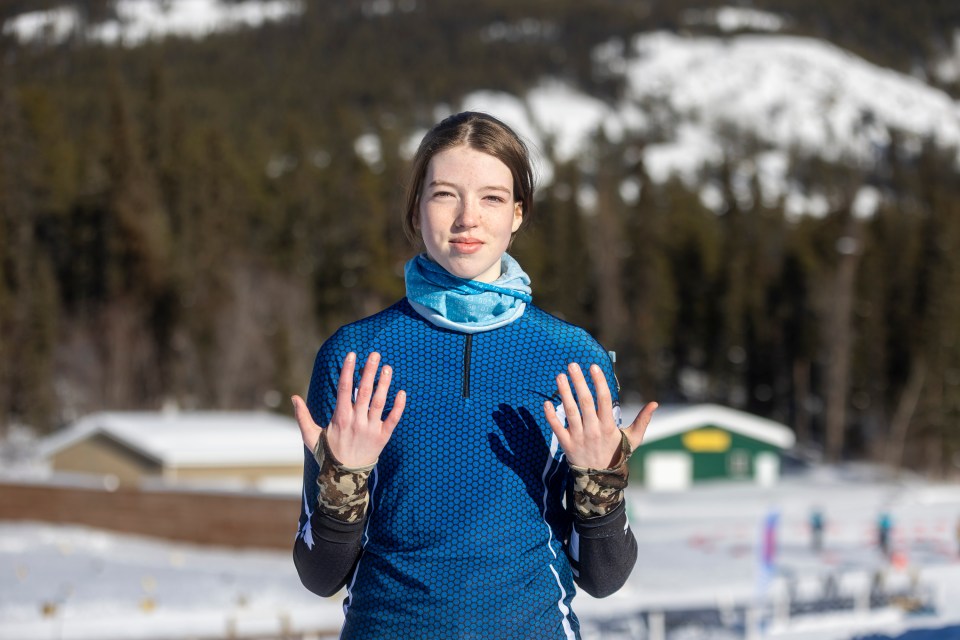
A month later, with some intervention from a plastic surgeon, Kandace described her daughter’s hands as appearing “completely healed.” (She added the family had been told doctors now want to study Avery’s case in more detail regarding the efficacy of Iloprost to treat frostbite cases affecting youths.)
Advertisement.
Advertisement.
“It was pink and looked sad,” Kandace said of the worst-affected finger, “but it was brand new skin, and they said: ‘You’re good to go. She can do all the sports.'”
Frostbite lessons
That was what Avery wanted to hear.
“I was just sobbing,” she said of her weeks in hospital, “because I had spent the whole year practising for this,” meaning the Arctic Winter Games. “It was a dream and I felt like giving up but I’m here now, so that’s really great.”
She spoke from the clubhouse at the Whitehorse ski biathlon course having just finished sixth in the mass start event. While she has reached the podium in previous years, simply being able to ski and shoot was an achievement this time around.
“During this week, my hand did get cold and for some of the shooting I couldn’t feel it any more. I kind-of just had to guess. It didn’t go so well,” she said.
“But I think that just being here is really awesome because, a week ago, I thought I wouldn’t even have 10 fingers on my hands.”
Asked what lessons she had learned from the experience, Avery replied: “I think I learned that if you really want something, don’t put troubles in the way of it. Just get through it anyway.
“I was willing to shoot with my toes. I didn’t care. I just wanted to be here. Never give up, no matter what happens to you.”
Advertisement.
Advertisement.
Her mother now acknowledges that the rarity with which the family is all in one place and able to take a vacation together may have “skewed our judgment” regarding the safety of the New Year’s trip.
“I just really learned that my kids have a lot of skills to survive,” Kandace added.
“We were all quite close to dying. I was passing out. As soon as I closed my eyes, I could just see the craziest things. It was the weirdest experience.”
While seeing Avery compete at the Arctic Winter Games after the ordeal was “the best feeling ever” for her mom, it also brought home to Kandace how ill-equipped she was to deal with such severe frostbite, despite so much experience outdoors in the NWT.
“I’ve lived in the North for most of my life. I’ve been on all kinds of crazy trips. But I did not have the education to deal with frostbite,” she said.
“I had no idea what to do and I could have really damaged her hand, because you’re not supposed to rub it. When I was sitting there, I was thinking we should have education in schools on how to deal with basic northern emergencies.
“For her to be out there and competing – and just back to normal, per se – is almost surreal for me, because of the range of emotions you go through. Being told your child might lose appendages to being back to a regular routine, back to school, back to her sports, is absolutely fantastic, and she’s loving every minute of this.”
