


Advertisement.
Geela Qaqqasiq is back in Yellowknife after completing an expedition to Antarctica alongside 22 women, a journey she describes as both remarkable and at times frightening.
As part of Sea Women Expeditions’ 2026 team, Qaqqasiq represented the Northwest Territories as she travelled to the Falklands, South Georgia and Antarctica.
Qaqqasiq said one of the most intense moments was when the weather changed during a Zodiac excursion, which involves passengers leaving the main ship in small, inflatable boats to travel closer to ice, wildlife and shorelines.
“The weather could turn from beautiful to stormy. So, in this case, we were doing a Zodiac riding and all of a sudden the ice was forming and it was closing where we were,” she told Cabin Radio.
Advertisement.
Advertisement.
“Some of us were stuck and then all of a sudden the waves were getting bigger and bigger, and one of the Zodiacs was full of water and they were so scared. We got into the ship on time, eight of us. That was the most scary thing that I encountered.”
Before boarding the expedition ship for 23 days in the Southern Ocean, Qaqqasiq took part in a two-day women’s leadership program that helped her build confidence and prepare ahead of the journey.
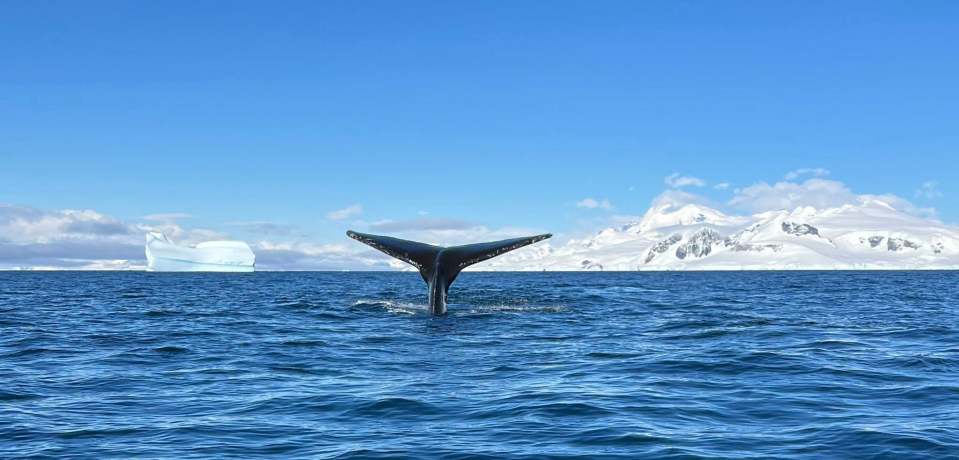
Qaqqasiq said watching whales from the ship and seeing large groups of penguins for the first time were among the most memorable parts of the trip. For the first time, she also tried snorkelling in the ocean, an experience she called unforgettable.
Sharing her northern background with others on the expedition, Qaqqasiq lit a qulliq – a traditional oil lamp – which she said amazed some participants, who had never seen one before.
Advertisement.
Advertisement.
Qaqqasiq, a Yellowknife resident originally from the hamlet of Arctic Bay, believes she is the first Inuk woman to embark on an expedition to Antarctica, something she hopes to do again if the opportunity arises.
“I was so scared. I thought one of the orcas will eat me. In my head, I was saying to myself that I’m going to die happy,” she said.
“I really wanted to have this experience, and looking at the ocean for the first time it was like… wow. The king penguins were just playing around, they’re so fast underneath. Oh, it’s so beautiful.
“The mountains were just so covered with ice and snow. There was no rock. It was so white and so pure. I was in awe and even crying just looking at the scenery. The glaciers having different colours – the blues, the turquoise, the greens – you know, it was so amazing.”
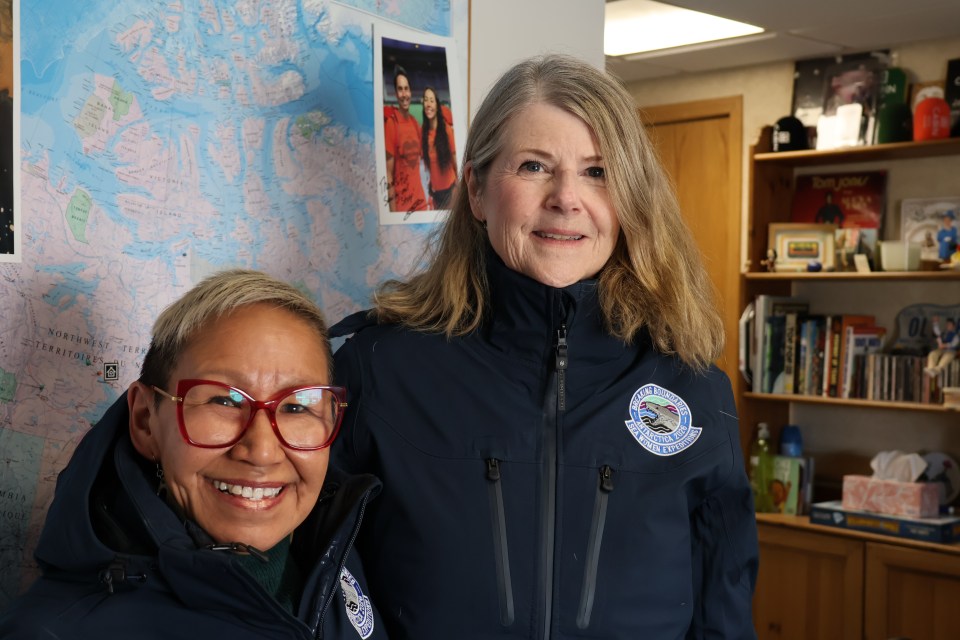
Founded in 2014 by Susan R Eaton, Sea Women Expeditions creates opportunities for women and gender-diverse individuals to lead polar science expeditions.
While in the region, one focus for the team was water sampling. Samples were collected to analyze environmental DNA and RNA, providing insight into plankton, microbes, and even viruses present in the ocean.
Eaton said more than 50 samples were successfully collected for analysis back in Alaska.
Another highlight, she said, was a study of leopard seals, referred to as the apex predators of the Antarctic. Scientists observed and recorded behavioural responses of the seals to human snorkelers, gathering video footage for an ongoing study.
Advertisement.
Advertisement.
The expedition also deployed infrared cameras to study ice formations, glaciers and sea ice temperatures, contributing to a citizen science program. An underwater robot team documented seafloor ecosystems.
Eaton said partners such as Marine Environmental Observation, Prediction and Response Network, or Meopar, supported Canadian participants, and plans are under way for a knowledge mobilization program targeting youth in northern and Indigenous communities.
Looking ahead, Eaton hopes to involve women and girls from Indigenous communities along the Mackenzie River and into the Arctic Ocean and Beaufort Sea.
“To send a team of 23 women to Antarctica is no mean task,” she said.
“We need women and diverse people to be part of these expedition teams because we need diversity of voices, of backgrounds, and of ways of doing if we’re going to tackle climate change.
“We’re seeing more women participating in expeditions. They’re participating as expedition leaders, they are scientists, historians, Zodiac divers and, in our case, scuba diving professionals … That is something that’s very important to me and to all the women who are on the team.”
