


The head of the Fur Institute of Canada says “people should get out and trap” as the market is experiencing a renaissance.
“The fur market is very strong,” Doug Chiasson, executive director of the organization, told Cabin Radio.
“We’re going through what some folks are calling a mini boom.”
According to the Fur Institute, which works to promote the fur trade and advocate for the industry, last month’s Fur Harvesters Auction in North Bay, Ontario saw some fur sell at record prices, while inventory of some animal pelts completely or nearly sold out.
Bobcat furs from eastern Canada sold for an average of $822.50 with a high of $1,518.75 the Fur Institute said, while sable or marten sold at the highest price of $418.50
Advertisement.
Advertisement.
The organization said animal furs that sold out or sold more than 95 percent of inventory included beaver, otter, mink, sable or marten, lynx, fox, raccoon, skunk, ermine, opossum, wolverine and squirrel.
“We don’t have a small group of incredibly high-end buyers that are competing over the incredibly high-end goods, but we have demand and competition for all quality of fur,” Chiasson explained.
“Someone I saw the other day on Facebook said they had furs that were at the auction house for three years now that sold in the sale because demand was so high.”
High demand for NWT marten
When it comes to furs from the North, Chiasson said there is even higher demand for marten from the NWT as they are generally paler, as well as high demand for wolverine.
Advertisement.
Advertisement.
While trapping contributes a small amount to the territory’s GDP, the NWT government has said it is among sectors that make a disproportionate contribution to employment, particularly in smaller communities. It is also culturally significant.
The territory markets and promotes fur – and provides trappers access to international fur markets – through the Genuine Mackenzie Valley Fur Program. The program also provides funding to support trappers and incentives to produce high-quality pelts.
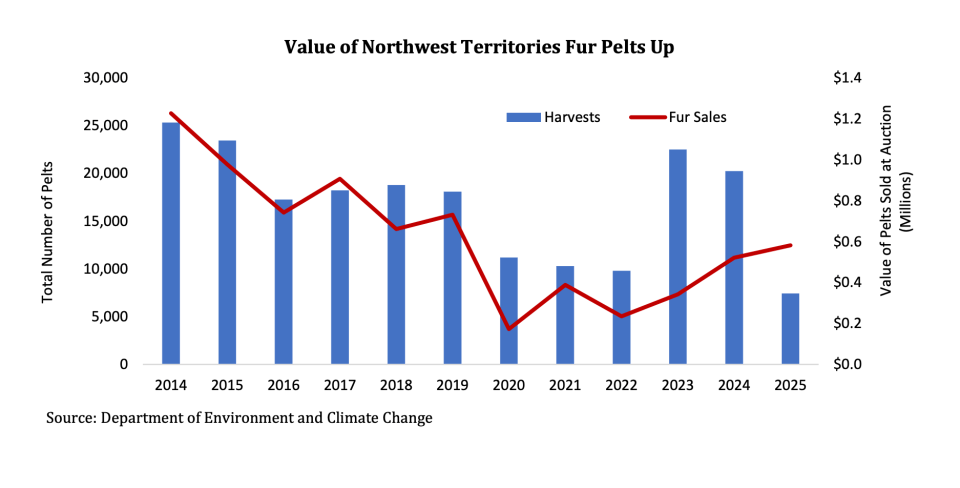
In her latest budget address, finance minister Caroline Wawzonek said higher fur sale prices are “promising.”
According to the territory, while the number of NWT fur pelts sold at auction decreased 61 percent from 2024 to 2025, sales increased 11 percent in value over that period.
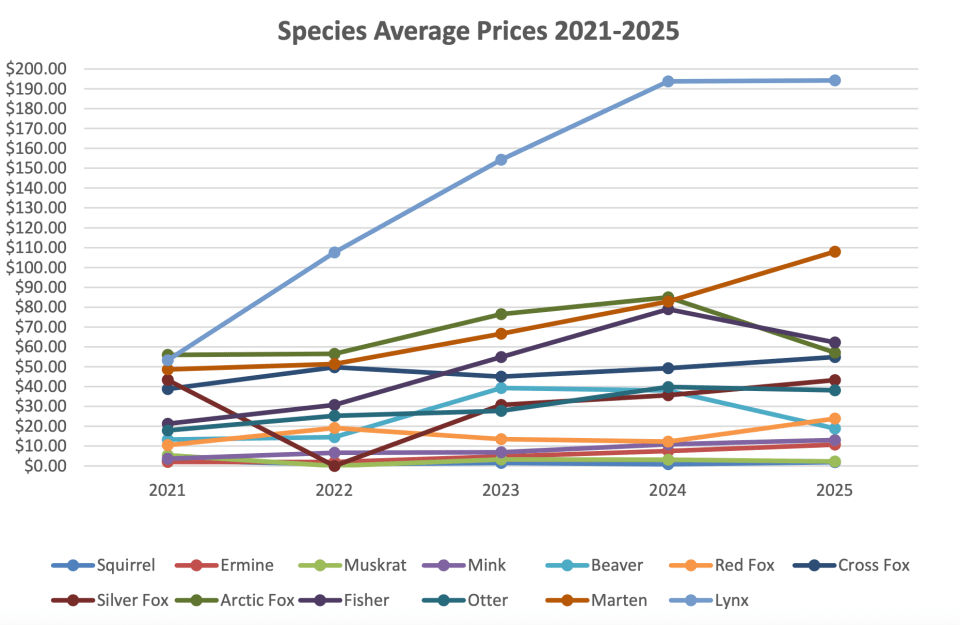
Trappers made more than $580,000 in total sales last year, with sales of marten accounting for nearly 60 percent of that.
In its market forecast for 2026, the Genuine Mackenzie Valley Fur Program listed marten, lynx, wolverine, wolves, grizzly bears, fisher, red fox, mink and muskrat as “species in demand.”
‘Surge in demand’ from China, South Korea
Chiasson attributed the high sale prices and large quantity of fur sold at last month’s auction in North Bay to “a surge in demand from Asian markets,” particularly buyers from China and South Korea.
There is also strong demand for fur from the North American and European market, he added, noting beaver and marten pelts sold at the highest price were purchased by a Canadian buyer, while an American buyer paid the highest price for fisher and wolverine skins.
Advertisement.
Advertisement.
The auction also saw buyers from Italy, Greece, Spain, Portugal, the UK, Finland and Denmark.
Chiasson said strong demand for fur, including from the NWT, is expected to continue at the next North Bay fur auction in June.
“There’s demand for volume in the market in a way that we haven’t seen in quite a few years,” he said, adding that sold-out inventory at the March auction “means there will be people looking for more fur at the June auction, for sure.”
Correction: April 9, 2026 – 9:17 MT. This article initially stated the highest sale for marten was $429. In fact the highest price paid was $418.50.
