


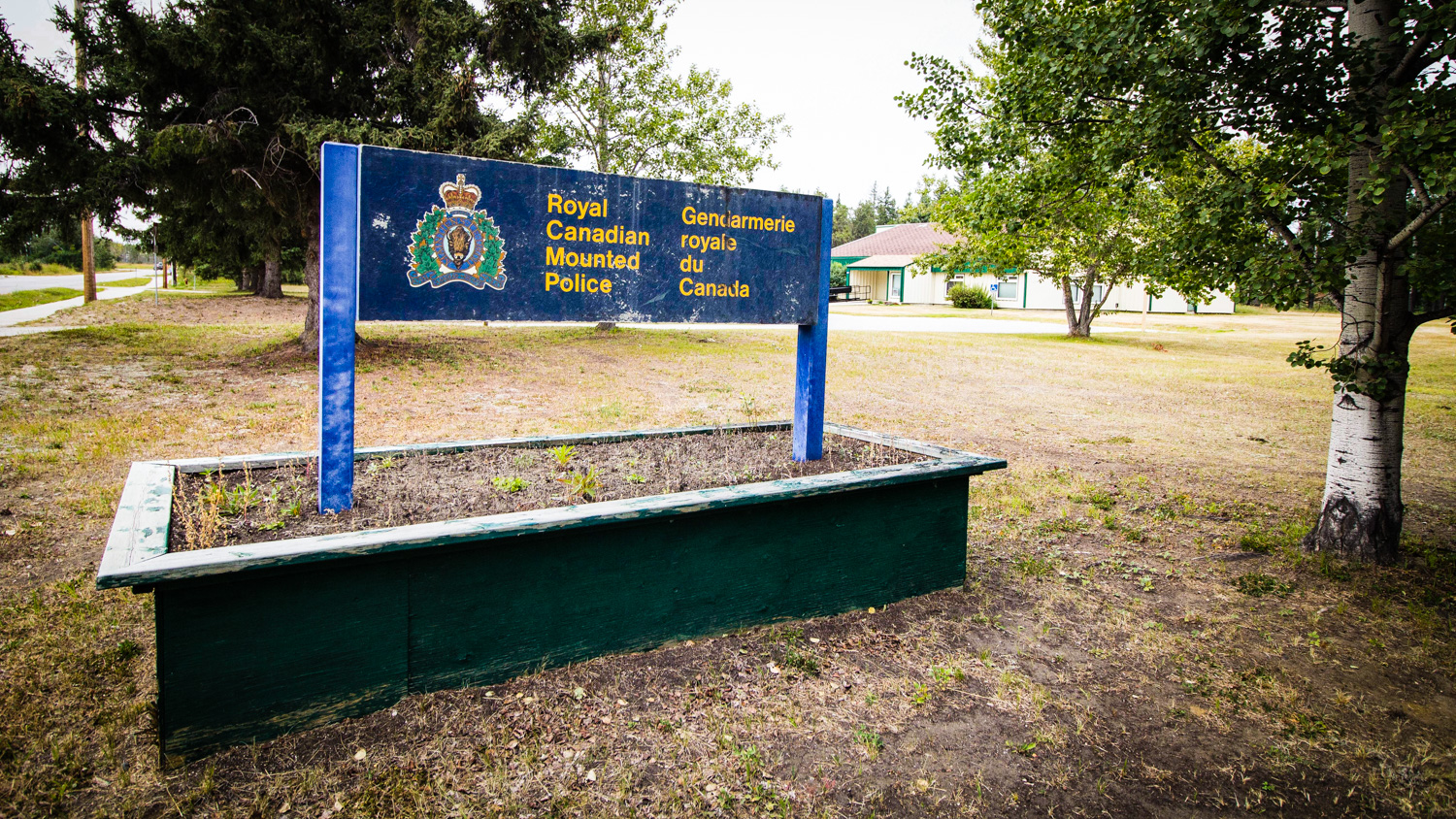
An NWT Supreme Court judge has ruled that a written statement obtained through “police trickery” can be used as evidence against a Fort Smith man.
Dallas Abraham is facing a dozen charges – including sexual assault, assault with a weapon, assault causing bodily harm and uttering threats – related to events alleged to have occurred in July and August 2024.
RCMP arrested Abraham in Fort Smith in September that year following a public appeal regarding his whereabouts.
The following day, after lodging Abraham in RCMP cells overnight to sober up, police advised him of his Charter rights and he spoke to two lawyers.
RCMP then took Abraham into an interview room, where he was again advised of his right to remain silent and that anything he said could be used as evidence against him. He then gave a video-recorded statement.
Advertisement.
Advertisement.
Following that interview, an officer told Abraham if there was anything he wanted to say to the complainant, he could write it down in a letter and the officer would make sure she saw it.
After the officer left the room, Abraham wrote a four-page letter that the police subsequently collected.
The officer later testified he had no intention of giving the letter to the complainant. He said he had suggested the idea to Abraham with the aim of collecting evidence against him.
Abraham’s lawyer, Balji Rattan, had sought to have the letter thrown out as evidence as police had not expressly advised him it could be used as evidence against him.
Advertisement.
Advertisement.
Crown prosecutor Trevor Johnson argued while there was some police trickery in obtaining the written statement, it was still given voluntarily. He noted Abraham was advised of his rights numerous times and spoke to two lawyers before he was questioned.
In a ruling on Wednesday, Justice Sheila MacPherson sided with the Crown, saying the law did not require police to take the additional step of specifically telling Abraham that the letter could be used against him.
She found the officer had used “minor deceit” to obtain the written statement and that courts have found such tactics to be acceptable in other cases.
“I find nothing particularly shocking in an officer asking the accused whether he wishes to write a letter to the complainant and, if so, falsely stating that the officer would give it to her,” MacPherson wrote.
“The conduct of the police in soliciting a letter was an acceptable police technique which, in the circumstances, does not amount to conduct which would shock the community.”
Abraham is set to face a jury trial on the charges in Fort Smith beginning on September 14.
