


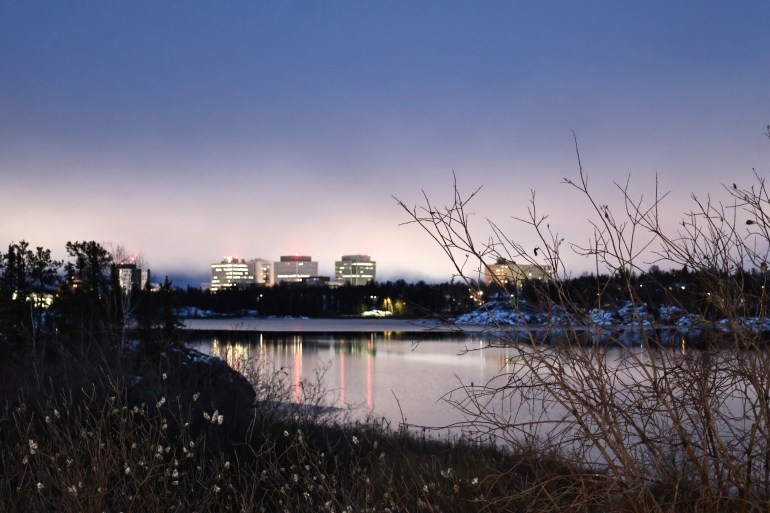
Two groups come together on Thursday to anthropomorphize a Yellowknife lake.
An evening event at the Prince of Wales Northern Heritage Centre – titled “Hello, I am Frame Lake” – asks: what if we treat a neglected lake as a person?
The discussion is facilitated by the NWT Wildlife Federation and Fly Kid Foundation.
“How would past, present and future stories be told about Frame Lake if we assume she was a person with all the rights associated with citizenship, rather than the more modern view of lakes and rivers as merely a resource for use and exploitation?” the groups asked in a description of the event.
“How would we thrive together? How would we communicate? How would we care for her? How would we document her life as an elder?
Advertisement.
Advertisement.
“She can provide harvesting and recreation opportunities. Why have we neglected to support her ability to support us and other creatures? What are the clues from her past and what problems can we help her solve to regain her former self identity?”
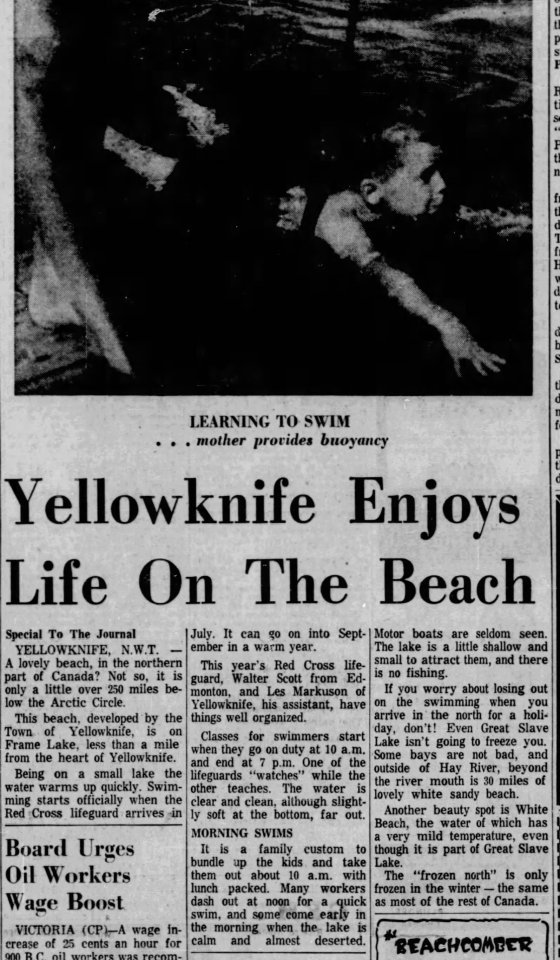
Frame Lake, at the heart of Yellowknife, was once a swimming destination and home of McNiven beach, where families would hold picnics with a lifeguard on duty.
For decades, there have been no fish and it hasn’t been safe to swim or harvest nearby edible plants. Signs around the lake warn of high arsenic levels.
Researchers say the lake became rich in nutrients as a result of urban runoff, use of the lake as a winter snow dump and, potentially, dumping.
Advertisement.
Advertisement.
Urbanization around Frame Lake, particularly the building of a causeway in 1975, slowed the flow of the lake, causing more nutrient build-up with nowhere to go. That led to an increased growth of plants.
From 2024: Cleaning up Frame Lake takes more than one approach
Those plants released carbon dioxide and consumed oxygen when they died and rotted in winter. Oxygen levels became so low that even by the 1970s, the lake could no longer support fish.
Now, attempts to aerate the lake and repair its ecosystem are under way.
Brian Heppelle, from the Fly Kid Foundation, talked with Cabin Radio about Thursday evening’s free event. Doors open at 6:30pm. Here’s what to expect.
This interview was recorded on April 29, 2026. The transcript has been edited for length and clarity.
Ollie Williams: Introduce the concept. Why are we turning Frame Lake into a person?
Brian Heppelle: I think people can relate to living things. People say I can read the water as a fly fisher. Well, I perfectly believe that it’s allowed to talk back, right?
Advertisement.
Advertisement.
What I like about Frame Lake is it sits in the heart of our community. It sits within eyeshot of people that provide services for us, whether that’s the military, the legislature, the museum, City Hall, recreational facilities that have just been built, the hospital.
All these things truly get reflected in the lake, but also people reflect that back into their emotions towards it. To start a discussion which says, “Hello, I’m Frame Lake,” is, I think, a reasonable proposition.
Why do we need to have that discussion now?
It’s not a matter of timing. I think it’s a matter of opportunity.
The lake had its own birth. It has its own life. It has its own current. It’s on, shall we say, maybe life support. You might compare it to somebody who’s being intubated in a hospital. We do that to try to support life, but our hope is you get off life support, that you can self sustain.
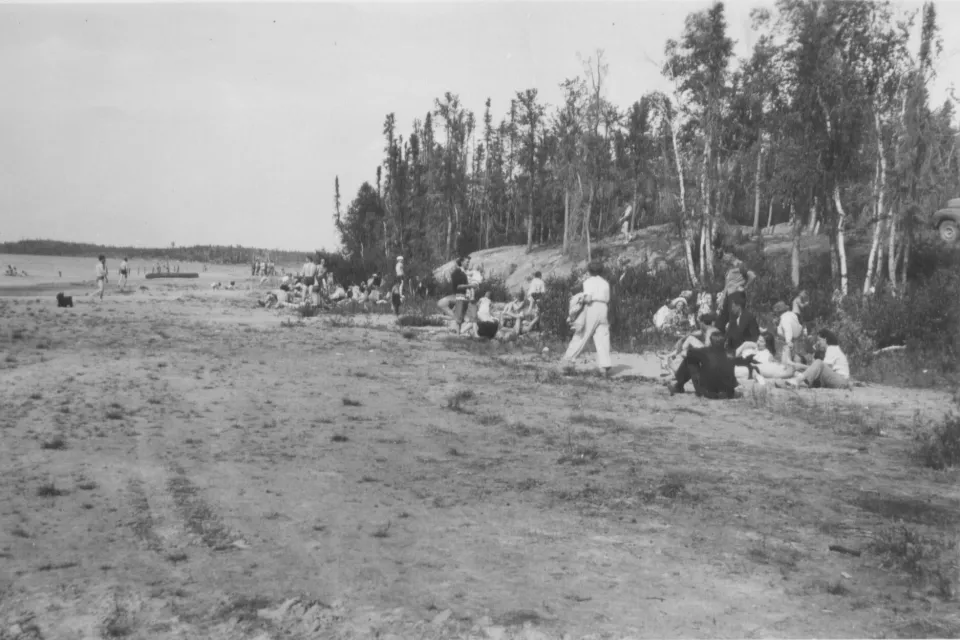
There are historical documents we pulled from the museum, which is where we’re holding the event, that show how people used that lake for recreation and other activities. If it was like that, can it be like that again?
There will be individuals, we hope, at the meeting that understand a bit more about the science of the lake, a bit more about the history of the lake and possibly the Indigenous culture. I just think it makes sense to have a conversation.
What does the lake mean to you?
Advertisement.
Advertisement.
Ever since I moved to Yellowknife, it’s been important to me. I live adjacent to it and I have since 1999.
You think back to the pandemic, when more people used it as a place to get out and about. It’s less relevant what it means to me, and more relevant what it means to other folks as a group, as a collective, as that beating heart of a community.
If people want to come out and be a part of this conversation, what do they need to know?
It’s on May 7. We have a meet and greet at the Prince of Wales Northern Heritage Centre at 6:30pm. The main discussion starts at 7pm till about 8pm.
