


Advertisement.
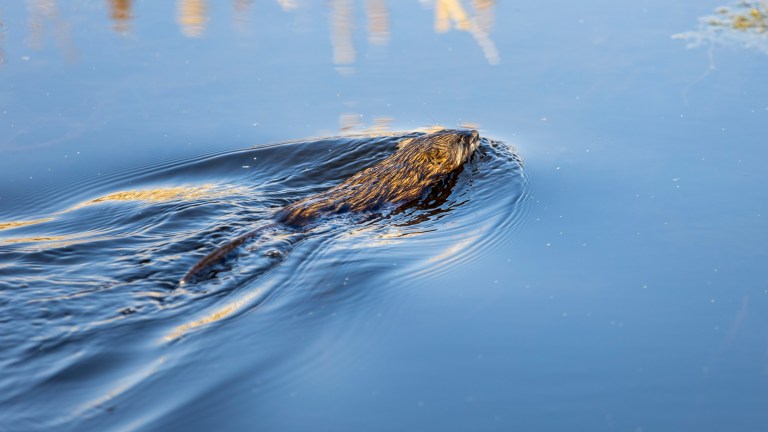
The NWT Species at Risk Committee says it has assessed the common muskrat as a species of special concern amid persistent drought.
The committee, which is tasked with assessing the biological status of species that may be at risk in the territory, announced the new assessment for muskrat on Wednesday.
It said climate change and dams are contributing to persistent drought conditions that are affecting muskrat habitat across the NWT.
“Artificial flow regulation is modifying natural seasonal changes in water levels and impacting delta ecosystems – important habitats for muskrat,” the committee stated in a news release.
Advertisement.
Advertisement.
“Although common muskrat remains widely distributed throughout the NWT, knowledge holders have observed declines in abundance, in particular in the Mackenzie Delta, and have expressed concerns about the species and the threats it may be facing across its range.”
Species are classified as being of special concern under the NWT’s Species at Risk Act if they may become threatened or endangered in the territory because of threats and biological factors.
Wood bison still assessed as ‘threatened’
Also on Wednesday, the committee said wood bison are still considered threatened in the NWT. That means the species is considered likely to become endangered if nothing is done to address factors that could lead to its extinction.
According to the committee, the population of wood bison in the territory is small, at around 2,760 animals (excluding populations in Wood Buffalo National Park). It said the total number of bison has declined over the last 15 years.
Advertisement.
Advertisement.
While some regions have experienced increases in animal numbers and expansion of bison range, the committee said communities in the NWT’s South Slave region and northern Alberta have concerns about population declines and disease.
A management or recovery plan is required for species listed as being of special concern, threatened or endangered under the NWT Species at Risk Act.
The committee issued several recommendations to help revive wood bison and muskrat populations, including:
- encouraging respectful and responsible harvest;
- developing and implementing long-term monitoring programs;
- improving coordination and sharing of information on population surveys and outcomes;
- promoting research, including documentation of Indigenous and community knowledge;
- investigating and adopting road safety measures to reduce collisions; and
- upholding principles in transboundary water agreements.
The committee encouraged people to share observations of wood bison and muskrat on iNaturalist or by email to the NWT government.
