



Advertisement.
The owner of Diavik wants the NWT government to shut down an environmental oversight board before the mine closes. The board says it should remain in place until reclamation of the site is complete.
The Environmental Monitoring Advisory Board, or Emab, is the independent watchdog for Diavik. It was established as a requirement under the environmental agreement for the diamond mine, which is owned by Rio Tinto, and is made up of representatives from the parties to that agreement.
Matthew Breen, chief operating officer for Diavik, wrote to NWT environment minister Jay Macdonald in January asking him to wind down and conclude Emab as the mine begins its closure phase.
At the time, Breen said Diavik’s preference would be for the board to conclude its work by the end of March 2026 – the same month that production ended at the mine. He provided a second option of March 31, 2027.
Advertisement.
Advertisement.
Emab said it “strongly disagrees” with Diavik’s request.
The board has instead proposed a more gradual wind-down process that would see it continue operation through the mine’s closure and post-closure phases.
In Diavik’s submission, Breen argued that concluding Emab would remove regulatory duplication. He said while the board played a necessary role in the early years after the environmental agreement was signed in 2000, the territory has since “undergone transformative and regulatory reforms,” including the creation of the Wek’èezhìı Land and Water Board.
“The robust, transparent and inclusive co-management regulatory regime we have in the NWT does not require an independent oversight body,” he wrote.
Advertisement.
Advertisement.
Breen further argued that Emab has not meaningfully shown the role it would play during the mine’s closure, nor what value continuing its operations would bring.
Funding for the board could be used more efficiently during closure of the mine to benefit Indigenous groups, he said.
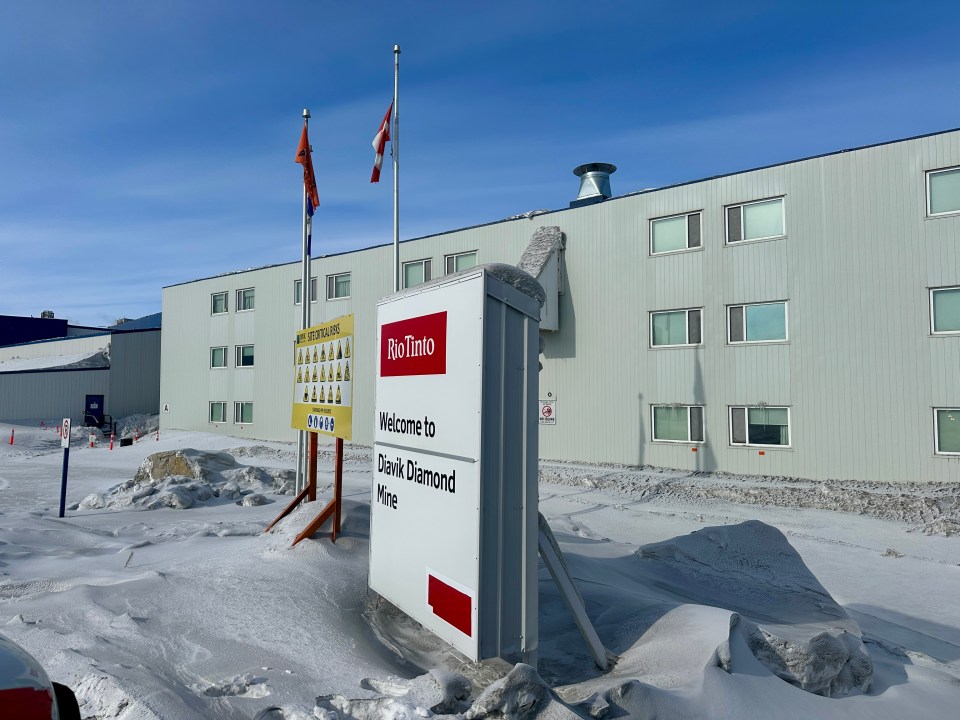
Diavik is the first diamond mine to go through a planned closure process in the NWT, Breen noted, saying “demonstrating how this can be done successfully” is important to both Rio Tinto and regulators.
In a statement to Cabin Radio, Diavik spokesperson Garrett Hinchey said the request to wind down and conclude Emab aligns with the environmental agreement for the mine.
The agreement states that once Diavik ends commercial production, the minister may “set a schedule for winding down and concluding the operation of the advisory board.”
‘You can’t skimp’ on closure, board says
In its response, Emab argued Diavik’s proposal is inconsistent with the requirements of the agreement and that its mandate continues until the site has been reclaimed and abandoned.
The board particularly disagreed with Diavik’s interpretation of the term “winding down.”
The board said gradually wind down operations in line with the mine’s closure and post-closure phases would include adjusting its workload based on monitoring needs, with periodic assessments around years 2030 and 2035.
Advertisement.
Advertisement.
Emab asserted that it continues to provide “unique value” through independent oversight of both the mine and regulators, alongside its role in representing community perspectives.
Closure of a mine is an important phase with potential risks that requires “continued oversight rather than reduced scrutiny,” the board said, adding there are no mines in the NWT that have successfully completed a full life cycle from development to reclamation.
“We remain essential for accountability, environmental protection, and community involvement, and should only conclude our work once all Diavik’s closure and monitoring obligations are fully complete,” the board wrote.
Board chair Charlie Catholique, from Łútsël K’é, told Cabin Radio he’s “a little bit disappointed” by Diavik’s request to have Emab shut down early next year.
“I wonder how my people will feel back home because they came to my community, they said they’re going to open up the mine, so people were happy, all the promises were made,” he said. “It’s a different story now today.”
Catholique said he’s not against the mine but wants to ensure accountability and transparency during the closure of Diavik, and that community perspectives are included.
“I’m just worried about my way of life on the land,” he said.
“We want to see people use the land again after the mine closure. To drink the water again, to eat fish again, to hunt and you can camp there, no contamination. We would like to see that after this mine closure, that’s why we want this Emab to stay on and work together with the company.”
Advertisement.
Advertisement.
Board vice chair Marc Whitford said while Diavik has done well preparing for closure, the next phase is “a pretty delicate time.” He and Catholique said Emab still has a role in ensuring closure and post-closure are done properly, with the land, water, wildlife and cultural use front of mind.
“You can’t skimp on that,” Whitford said, expressing concern about cost-cutting as mines are “crying their hearts out right now” amid a poor market for diamonds alongside other financial struggles.
“This is the only land we have,” he said. “That’s why we have to protect the land and we have to restore it and we have to make it livable.”
Mixed views on future of Emab
There are nine parties to the environmental agreement for Diavik, including five Indigenous groups: the Tłı̨chǫ Government, Łútsël K’é Dene First Nation, Yellowknives Dene First Nation, North Slave Métis Alliance and Kitikmeot Inuit Association.
Since February, the NWT government has been consulting with all parties to the agreement regarding Diavik’s request to shut down Emab.
The Tłı̨chǫ Government said it supports the idea.
Brett Wheler, acting director of lands for the Tłı̨chǫ Government, said Emab has been “a really valuable oversight body” but the Tłı̨chǫ Government feels it is appropriate for the board to finish its work as the mine closes.
The Tłı̨chǫ Government is happy with closure and reclamation plans for the mine and work that has been completed so far, Wheler said, and is comfortable relying on oversight from the land and water board. Like Diavik, he said the regulatory environment has changed since Emab was formed.
Advertisement.
Advertisement.
Wheler said parties to the environmental agreement still need to collaborate but they may do so through different forums.
Whitford, who is also the president of the North Slave Métis Alliance, said his organization has given “unequivocal support” for Emab to continue its work.
According to Emab, the Kitikmeot Inuit Association has also provided a letter of support for the board to continue operating through closure of the mine.
A 2022 letter from the GNWT to Diavik states that, at that time, the North Slave Métis Alliance, Kitikmeot Inuit Association, federal and territorial governments had all expressed support for the board continuing to operate through closure of the mine, while other parties had not responded. That year, Diavik first began discussing the prospect of winding down Emab following production.
The Yellowknives Dene First Nation, Łutsel K’e Dene First Nation and Kitikmeot Inuit Association did not respond to Cabin Radio’s request for comment by the time of publication.
The NWT government said in a statement that the environment minister is expected to review all input and make a decision on Diavik’s request regarding the future of Emab by June 26.
Diavik plans to complete active closure by 2029
Regulators approved a final closure and reclamation plan for Diavik earlier this year. Rio Tinto has also signed closure agreements for the mine with the Tłı̨chǫ Government and North Slave Métis Alliance.
Indigenous groups are meeting with Diavik in Yellowknife this week to develop a traditional knowledge-based monitoring program for the mine site.
Advertisement.
Advertisement.
Active closure work is expected to take until 2029, followed by a monitoring period that could last into the 2040s before Rio Tinto relinquishes the site.
Diavik officials have said they want to close the mine responsibly and successfully and set an example for other mining companies.
“Diavik is proud of its socio-economic and environmental record over the life of its operations, and we intend to maintain that record throughout closure, which has been carefully planned with input from Indigenous and government partners,” spokesperson Hinchey wrote.
“Our focus remains on closing responsibly and closing with care.”
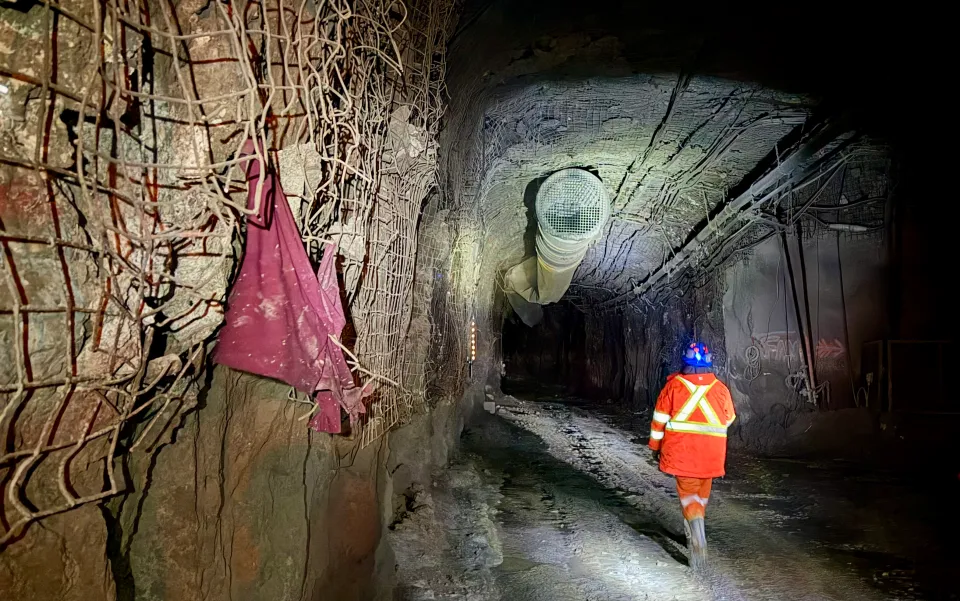
Sean Sinclair, closure manager at Diavik, told Cabin Radio during the final day of production at the mine that the majority of earth works, or moving of rock, as part of closure is complete.
He said demolition of structures on the site is expected to take two years, while the mine will also need to be flooded.
“Our goal is to create a safe and stable site that doesn’t require a permanent site presence,” he said.
