



NWT patients say they’re struggling to access care through the medical travel system. Issues include excessive administrative red tape, a lack of escorts and spotty communication between patients and healthcare providers.
The territory’s medical travel policy covers transportation costs to get people from one place to another for necessary medical care. It’s based on the principle that the cost of medical travel should not be an economic barrier to insured health services for NWT residents.
But Lauren Seabrook, who lives in Yellowknife, is trying to bring attention to “systemic failures” she experienced during a recent series of experiences travelling for care.
Seabrook works for the NWT’s health authority as a pediatric occupational therapist and has a combination of several conditions.
In February 2026, she attended what she thought would be a 90-minute outpatient gastroenterology appointment at Yellowknife’s Stanton Territorial Hospital. Instead, she was admitted and started on peripheral parenteral nutrition (delivering nutrients through a vein). A few days later, she was transferred to the Royal Alexandra Hospital in Edmonton.
Advertisement.
Advertisement.
Her experience there is one that she’s still trying to process, she said.
The care team in Edmonton didn’t know she was an NWT resident and answered her questions about follow-up care with references to Alberta-based programs, which she couldn’t access unless she was an Alberta resident. When she was discharged after three weeks in hospital, it was without instructions on how to remove the stitches or what to do if things went wrong.
Subsequent issues meant she had to return to the emergency room at Stanton multiple times, while trying to coordinate care with specialists in Edmonton. At one visit, she said, a general surgeon at Stanton suggested using glue to seal her leaking tube and hope it would last until a scheduled tube exchange the following week. Later, a delay in sending documents between the Stanton ER and Edmonton meant she had to wait more than 36 hours to access care, during which time she didn’t have any nutrition or hydration.
Back in Edmonton, asked about her follow-up care, she explained that she didn’t have any.
Advertisement.
Advertisement.
“I sobbed on the procedure table, literally sobbed. A nurse had to wipe away my tears and hold my hand,” Seabrook said by email.
“Everyone in the room was shocked – not by my medical condition, but by the fact that I had no access to basic, coordinated care.”
In the past month, she wrote, five healthcare professionals have told her it is time to seriously consider leaving the NWT.
In a phone call with Cabin Radio, Seabrook said she genuinely didn’t know where she would be if she didn’t have a background in healthcare.
“I’m so grateful for medical travel … but the amount of stress and just hardship that it added took away from trying to focus on getting better,” Seabrook said.
“It’s not straightforward. Sometimes I think that it’s designed not to be, because it’s almost cruel.”
She said her experience highlighted critical failures in the healthcare system when it comes to communication and continuity of care between the NWT and Alberta – red tape that harms patients and a lack of accountability.
Ultimately, she said, one healthcare worker told her the NWT was simply not equipped to manage complex medical needs like hers, meaning she would be better off somewhere else.
Advertisement.
Advertisement.

In August and September 2025, NWT resident Warren Glaser travelled from Yellowknife to Edmonton for medical consultations with a vascular surgeon and a lung specialist. He said he refused an escort at the time because he didn’t feel it was necessary.
In March 2026, he had to go to Edmonton for an eyelid surgery that involved sedation. The surgeon told him he needed an escort but, for this new trip, he said he was denied an escort because he had said he didn’t need one previously.
“I had the letter that I sent them from the surgeon … and it clearly stated escort needed,” Glaser said.
“They said, well, that’s policy, and just left it at that. They wouldn’t explain it any further.”
He was also told he could only stay at Larga Edmonton, which offers accommodation for northerners on medical travel, if he didn’t bring an escort. If he brought his wife, they couldn’t both stay there.
“They said, you find your own place to stay and arrange travel and everything else, and we’ll give you $50 a night for a hotel room, $18 a day for food and $12 for taxis,” he said. “I sure don’t know of any place that you can eat for $18 a day.”
He has another trip coming up to get two stents put in – he’s still waiting on confirmation of the date – and worries he’ll be put in the same position.
“We’re seniors living on Canada Pension and Old Age Security,” he said. “Putting out that kind of money, that’s a hardship.”
Advertisement.
Advertisement.
What do doctors think?
Mimmi Thompson, a family doctor who also works on labour and delivery in Yellowknife, said medical travel can also frustrate healthcare providers.
Thompson, who is the NWT Medical Association’s current president, said the process is inefficient and comes with a high administrative burden. Currently, program assistants shoulder much of that, she said, taking away from other care they could support.
She also understands concerns about how escorts are handled.
Fielding requests for escort letters in situations where it’s not medically necessary and doesn’t fall within the criteria for a non-medical escort can also be difficult for providers, Thompson said.
But she believes there are many situations where patients can benefit from having someone with them – whether that’s to help them navigate the process, understand and retain information, provide additional clinical information they may not volunteer themselves, or create a more culturally safe place in a healthcare setting.
“Sometimes we end up feeling like we’re having to be gatekeepers for this public funding, and that can sometimes put us at odds with the therapeutic relationship with our patients,” she said.
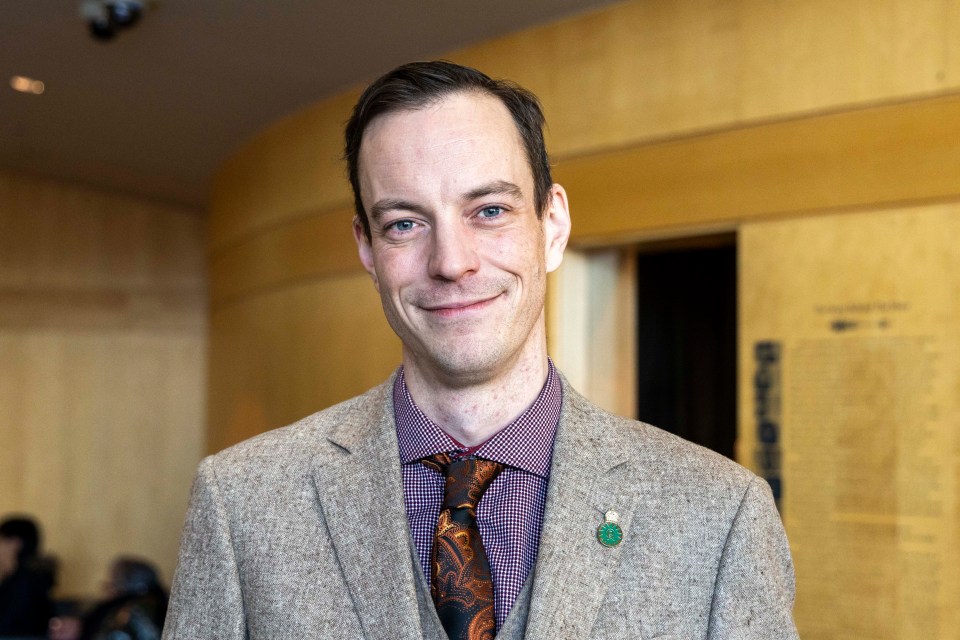
Range Lake MLA Kieron Testart has been vocal about what he said is a need for the GNWT to establish a policy around non-medical escorts.
Escorts must be approved by the GNWT Medical Travel Office in advance, but people can fall through the cracks when they require an emergency medevac.
Advertisement.
Advertisement.
“I’ve literally had constituents whose loved ones, spouses, family members have been struggling, clinging to life, and they’re being contacted by Zoom to give instructions to medical care teams,” Testart said.
He highlights a lack of flexibility around exceptions for complex cases.
The GNWT’s Medical Travel Exceptions Policy exists for those circumstances, stating its purpose is “to allow the Department of Health and Social Services to consider extraordinary health needs and/or demonstrated undue financial hardship because of individual or unique circumstances.”
But Testart said every time an MLA tries to help someone get an exception, “the minister says no, it’s outside the policy.”
“Which is obtuse, because the whole point of the policy is you can make an exception for cases that don’t fall into the norm,” Testart said.
Regarding Seabrook’s case, he added: “No one should be telling a northerner: ‘You know what? You should leave, we’re just never going to be able to help you.'”
How a new pilot system will work
The NWT government has been hearing about medical travel concerns for years.
For example, President Garry Bailey of the NWT Métis Nation said he has pressed for work to address issues like a lack of escorts, last-minute reservations and Elders required to get through long days of medical travel with no rest.
Advertisement.
Advertisement.
Sometimes people will find out they’re travelling the next day without even knowing what they’re travelling for, Bailey said. “They should be well informed about what their issues are, what they’re going there for.”
Bailey said NWT health minister Lesa Semmler “is aware of all that” after an April meeting.
“She did say that they’re going to be working on implementing some new rules in the next three months,” he said, “so we’ll be following up with them to see.”
Meanwhile, the GNWT has a separate concern of its own: cost. A recent report from the territory showed both case numbers and costs for medical travel have steadily increased over the past three years.
To try to address both cost and user experience, the NWT’s health authority is about to start a two-year pilot program that uses newly introduced nurse case managers to coordinate medical travel appointments.
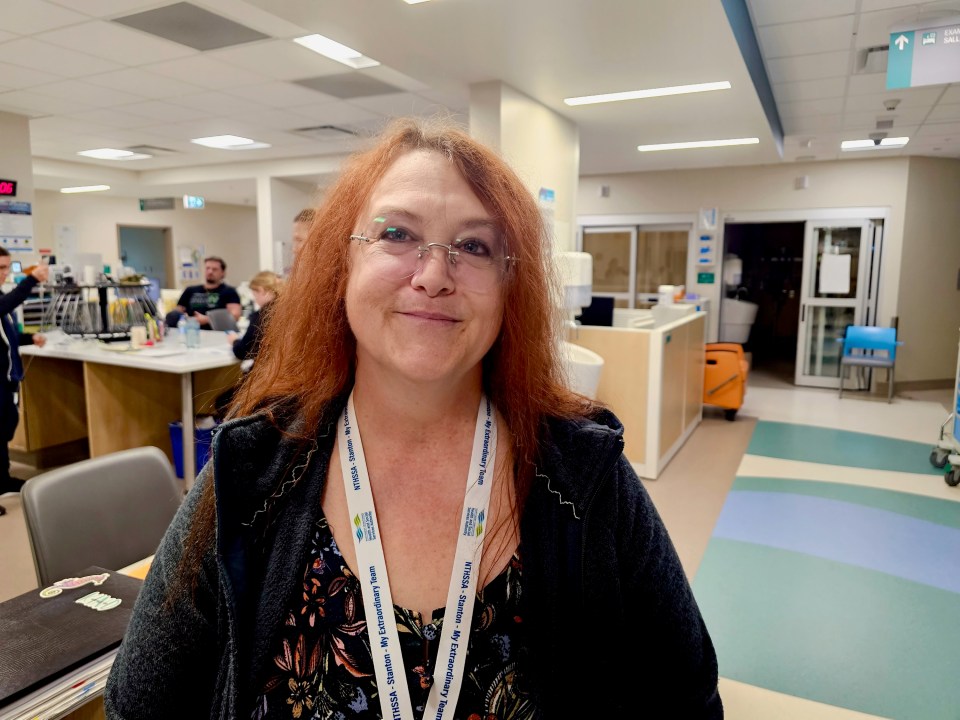
Jennifer Torode, the health authority’s chief operating officer, said she believes this program is “going to radically change people’s experience.”
“We know that it’s stressful, it’s disruptive, it’s costly to the patients and families,” Torode said. “It’s costly to the territory and at the same time, some of the travel we believe can be avoided with better coordination.”
The new roles don’t change the policy, Torode noted, but the case managers will be instructed that if someone clearly needs support or an escort, they should be helped through the system in a way that’s likely to result in approval.
Advertisement.
Advertisement.
“If some advocacy work is necessary within that … we’re going to help do that and smooth that for the patient, so it isn’t as stressful,” said Torode.
While a case manager likely won’t be heavily involved in every single case, Torode said, she thinks they will have eyes on them all.
“This is actually the first time that we’ve had a role that’s focused specifically on real-time clinical review of medical travel, looking at whether the travel is needed, if it could be avoided, and how to coordinate it the best way we can for the patient,” Torode said.
The pilot will start in Yellowknife, be refined through feedback, and then the health authority will consider expanding to other areas, Torode said, like Inuvik and potentially Fort Smith.
A data-driven analysis of the pilot will also look at the experience in the smaller communities of Fort Resolution and Łútsël K’é, which rely on Yellowknife as a hub, to see the impact of case managers.
Simultaneously, Torode said, the health authority is looking at equipping smaller health centres with better technology for virtual visits at the clinic. “We do that right now, but there’s some technology we don’t have that we would like to look at getting,” she said.
Torode added that patients have a role to play in coordinating medical travel.
When somebody is receiving care through Alberta Health Services, she said, many of those clinics communicate directly with the patient, not through the NWT’s health authority.
Advertisement.
Advertisement.
“I think some of our patients are shocked when they call us up and say, ‘I haven’t heard about my travel down there for this,’ and we don’t even know about the appointment because AHS doesn’t inform us,” she said.
“There is no mechanism for many of these to come to us except through the patient … if they get a letter in the mail with an appointment on it, come into the clinic and tell us about it.”
Are the changes enough?
Thompson said she thinks the case managers are a “positive step” that will hopefully reduce avoidable medical travel costs and improve patient experience.
“I think this will work really well to make sure that we can ensure that travel happens when it is necessary, but it’s optimized in that circumstance,” she said.
The NWT Medical Association – which represents the territory’s physicians – has also been advocating for modern digital health infrastructure and improved diagnostic imaging capacity.
Patients and staff have long complained about the inability of NWT and Alberta electronic medical records systems to exchange information. “We’re advocating for more seamless access to patient information across jurisdictions to improve the continuity of care for patients,” said Thompson.
The association is also calling for a new CT scanner in Inuvik and an MRI in Yellowknife, which Thompson said would strengthen regional diagnostic capability, reduce travel time for patients and free up resources currently used to transfer patients south.
Earlier this year, she said, medical leaders from the NWT, Nunavut and Yukon sent a letter to federal ministers about these recommendations.
Advertisement.
Advertisement.
Though they also met with NWT MP and federal cabinet member Rebecca Alty in April, along with the Canadian Medical Association, Thompson said “we have yet to hear a comment back from the federal government on our letter.”
‘You’re losing people’
Torode noted that there is a difference between the medical travel nurse case managers’ role and “the actual medical travel policy work that is happening at the department level.”
According to the Department of Health and Social Services’ website, work is under way to modernize aspects of the Medical Travel Policy.
In an emailed statement, the department told Cabin Radio “there are updates planned to policy language for implementation in the fall of 2026, but the benefits themselves are not changing. Communications of these policy changes will be launched over the summer of 2026.”
The department said its work will reflect feedback heard directly from residents and through the health and social services system, including input gathered during constituency tours, engagement with regional wellness councils and advice from an Indigenous advisory board.
In its statement, the department said its team “also reviews appeals and exception data to better understand issues that come up most often for residents.”
Seabrook still has no structured follow-up care, she said, since she can’t access Alberta’s outpatient support programs unless she’s a resident and the NWT doesn’t have anything to match.
She is now planning to leave the NWT and move to Alberta to access care.
Advertisement.
Advertisement.
“It’s really unfortunate that it wasn’t something that I chose to do, it’s something that I’ve been forced to do,” she said.
“I understand that I’ll always have to advocate for myself and everyone has to … that’s just the system and the world we live in. But it should not be this difficult.”
Things need to change so that patients don’t have to advocate for themselves to a point of harm, and so that the trauma of going to get care doesn’t make things worse, Seabrook said, “because you’re losing people.”
